Decide what arrives here
A console table beside the front door has different work to do from one behind a sofa. Keys, post and a bag may land on the first; books, a lamp and a drink might belong on the second. Empty the surface and look at what you removed. The objects that return every day are a better starting point than a photograph of someone else's beautifully bare hallway.
Choose one main task for the table. If it receives post, give unsorted envelopes a shallow tray rather than letting them spread under a vase. If it supports a lamp, leave enough room around the base to reach the switch without moving anything. A narrow surface becomes frustrating quickly when every task requires rearranging a display.
Let the wall do some work
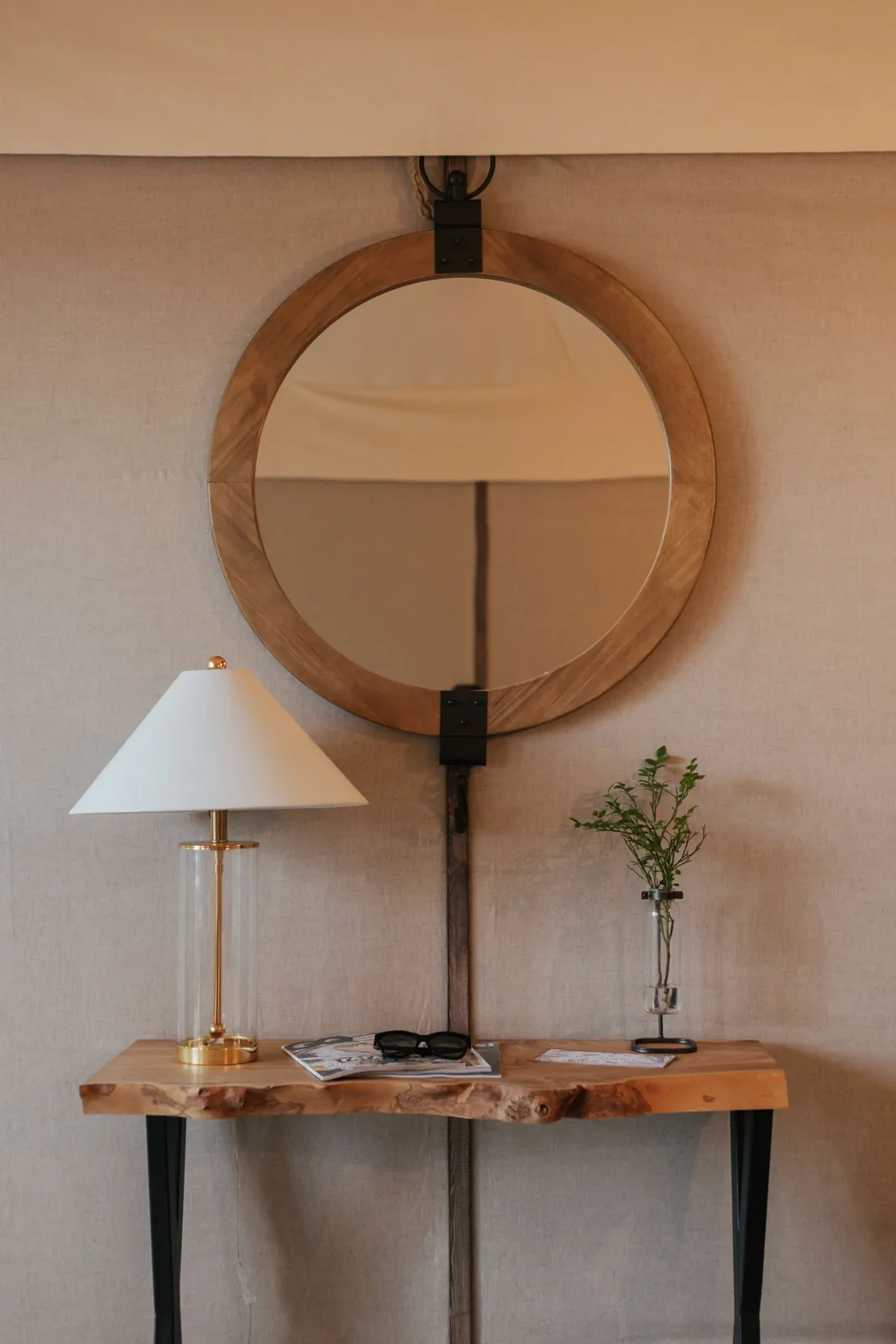
A picture above the console can supply the height that people often try to create with several tall objects. Try the artwork in position before making any new fixing, and check how it relates to the table from the doorway. The aim is a comfortable connection between the two, rather than filling every centimetre of wall.
A mirror may be more useful where someone checks their coat before leaving. Look at its reflection, however: a mirror that mainly shows an open utility cupboard can make the entrance feel busier. Follow the correct fixing instructions for its weight and wall type, particularly if the console itself is a lightweight piece that cannot provide any support.
Arrange a few different shapes
Start with the largest object you intend to keep, then add something lower beside it. A rounded jug and a flat dish make a different outline without needing a large collection. Leave visible tabletop between groups so the pieces can be understood separately. This is especially helpful on dark timber, where a crowded display can become one indistinct band.
There is no requirement to arrange everything in threes. Two useful items can look entirely complete. If the table is unusually long, a lamp at one end and a loose group at the other may feel more natural than a small ornament placed at regular intervals. Check the view while standing as well as while seated nearby.
Resolve the small irritations
Loose cables, unstable dishes and objects that catch a sleeve are often what make a console feel untidy. Route a lamp cable safely towards its socket without trapping it or creating a trip hazard. Put felt protection under rough pottery if it suits the table finish. Choose a key dish with enough weight to stay put when someone reaches into it.
Use any lower shelf selectively. A basket can hold scarves, but only if its opening is easy to access and it does not project into the walking route. Leaving that shelf empty is also a valid choice, particularly in a tight hallway where the view of the floor helps the furniture feel lighter.
Test it on an ordinary day
Leave the arrangement in use for a few days before buying another accessory. Notice whether post escapes its tray, whether the lamp is pleasant in the evening and whether visitors have somewhere to set an item down. Adjust the practical details first. A refresh succeeds when the console is easier to live with, not just when it looks good immediately after being cleared.
A console feels considered when its everyday job and its display leave room for each other.
A Swishover guide · Practical ideas to adapt to your own home.
Spotted something we should improve?