Notice where the room feels distant
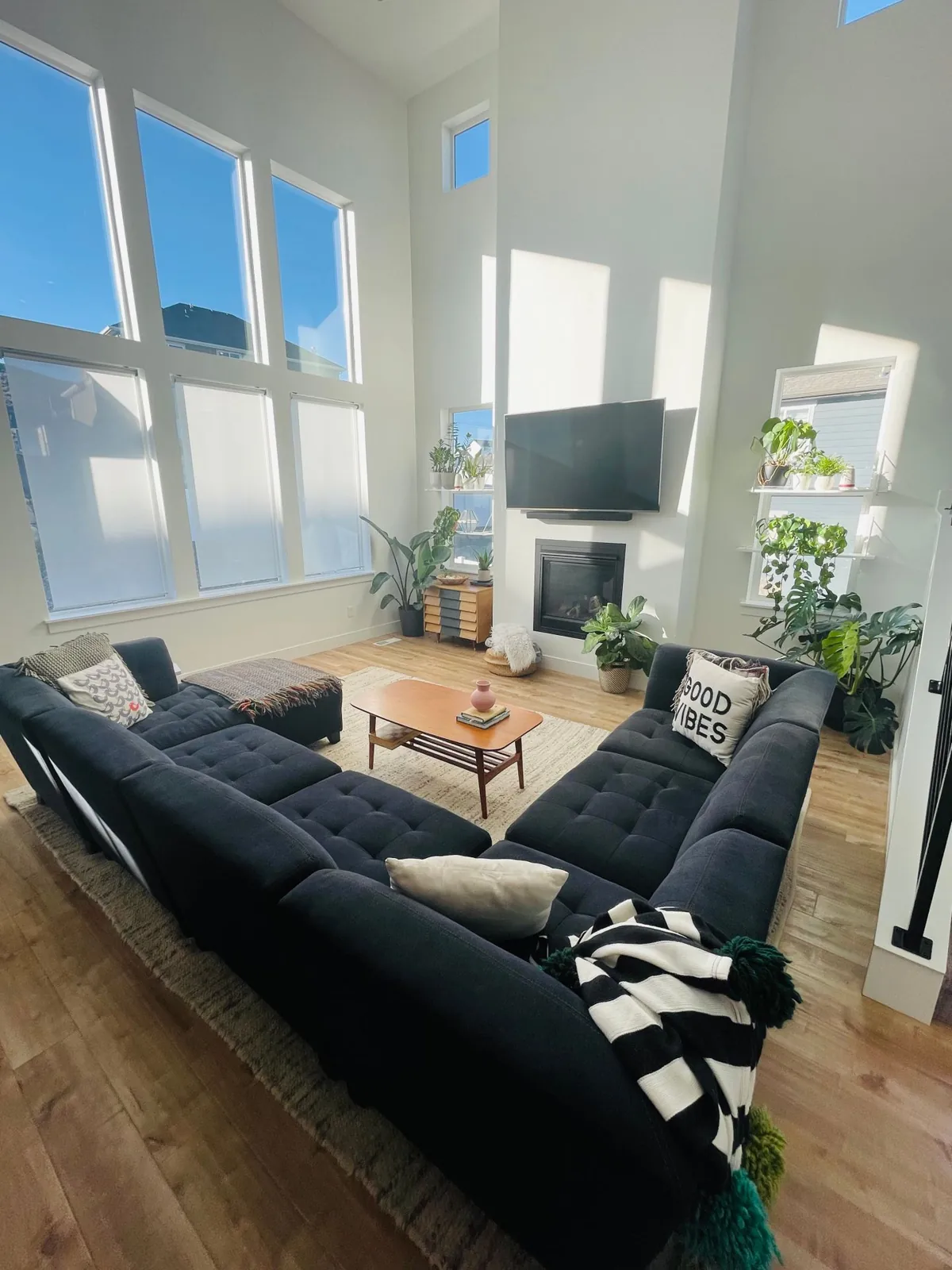
Tall ceilings can be beautiful, but a room may feel unsettled when all its visual interest sits far above the furniture. Look at the view from a seated position. Are the walls around you bare while a small pendant hangs near the ceiling? Is the furniture scattered so widely that the height exaggerates the distance between people?
Start with the parts of the room used at body level. A comfortable seating group, useful surfaces and nearby light can change the atmosphere before any decorating work. The aim is not to make the ceiling appear low, but to make the occupied part of the room feel deliberate.
Gather furniture into a clear group
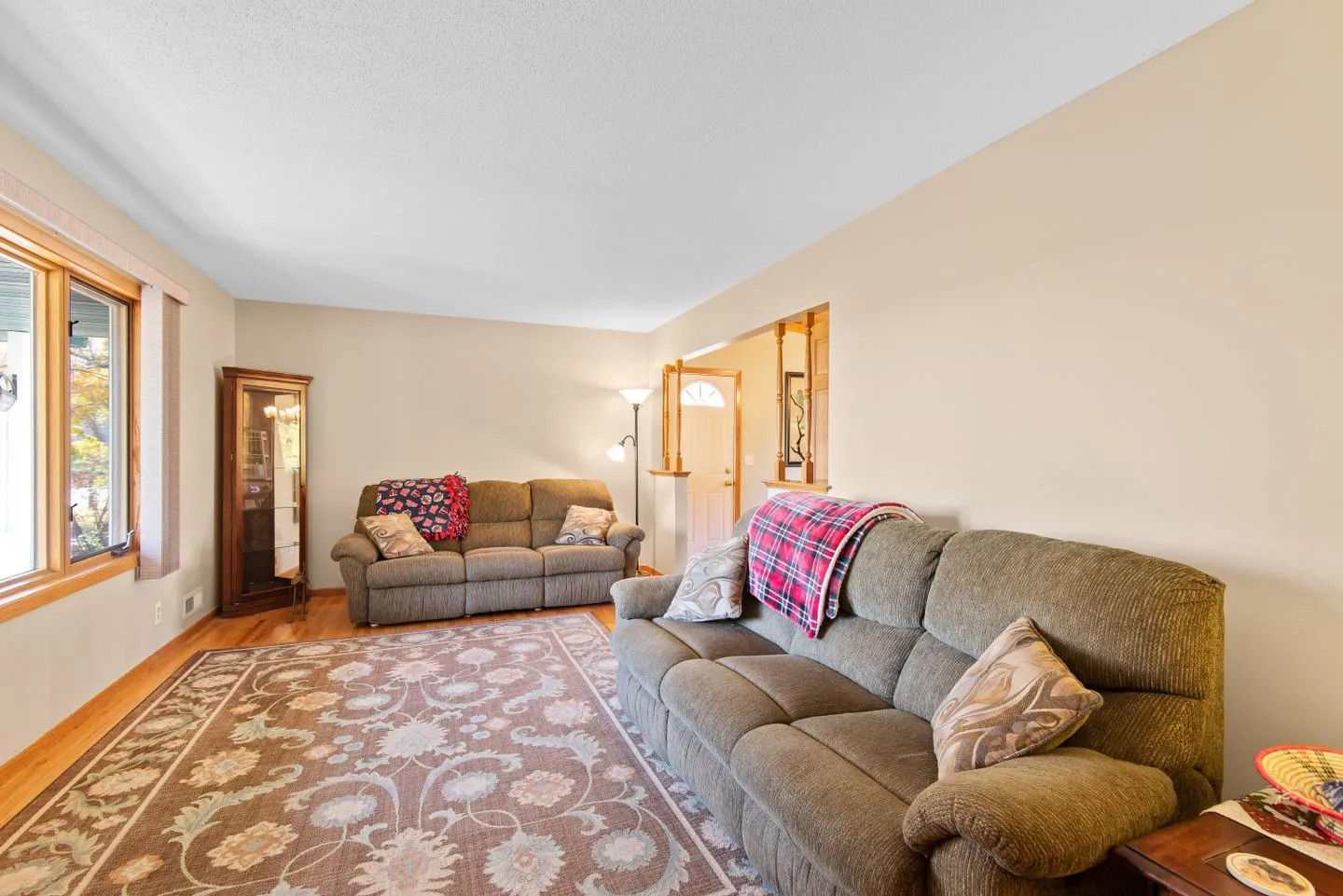
In a large, tall room, furniture pushed against every wall can leave an empty centre and make conversation feel remote. Try bringing seats closer together, with routes around the group rather than through it. A rug can help define that area, provided its size and placement suit the furniture and floor.
Choose pieces with enough presence for the room, but do not assume everything must be oversized. A substantial sofa alongside a lighter chair can feel balanced. What matters is the relationship between the pieces and the distances between them, not a rule that tall rooms require uniformly large furniture.
Put light where people are
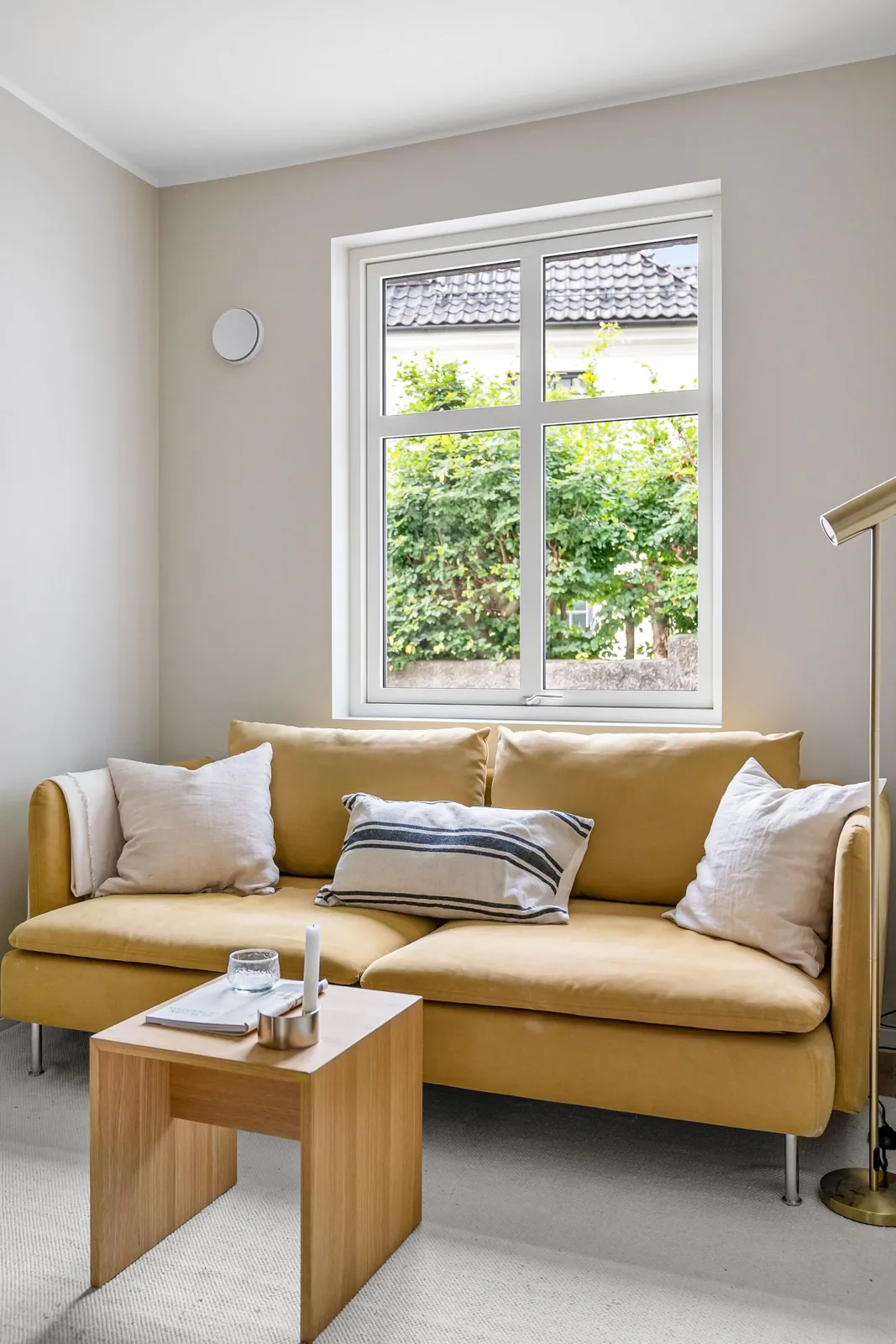
Lamps and appropriate lower-level lighting can give the room a more comfortable evening scale. Place them near reading, conversation or work areas rather than evenly distributing them purely for symmetry. Check glare from the usual seats and keep cables out of routes.
If a pendant is to be lowered or replaced, consider clearances, the fitting's requirements and how the space beneath is used. Use a qualified professional for electrical changes. A decorative light over a table behaves differently from one above an open walkway, so the position should respond to the activity below it.
Give walls a readable composition
A single tiny picture can look lost on a tall wall, but filling the whole height with art is not the only alternative. A larger piece or a coherent group placed in relation to furniture can create a settled composition at a comfortable viewing level. Leave the upper wall quieter if that suits the room.
Paint can also influence proportions. A deliberate change of colour or a treatment related to existing architectural features may help, but test the effect before committing. Avoid adding a horizontal line simply because it promises to lower the ceiling visually; it should have a convincing relationship with doors, windows and the room's character.
Use fabric with sufficient presence
Curtains can connect the upper and lower parts of the room, particularly around tall windows. Their length, fullness and material should suit both the architecture and the practical need for privacy or light control. A thin, undersized arrangement may emphasise the room's scale without adding comfort.
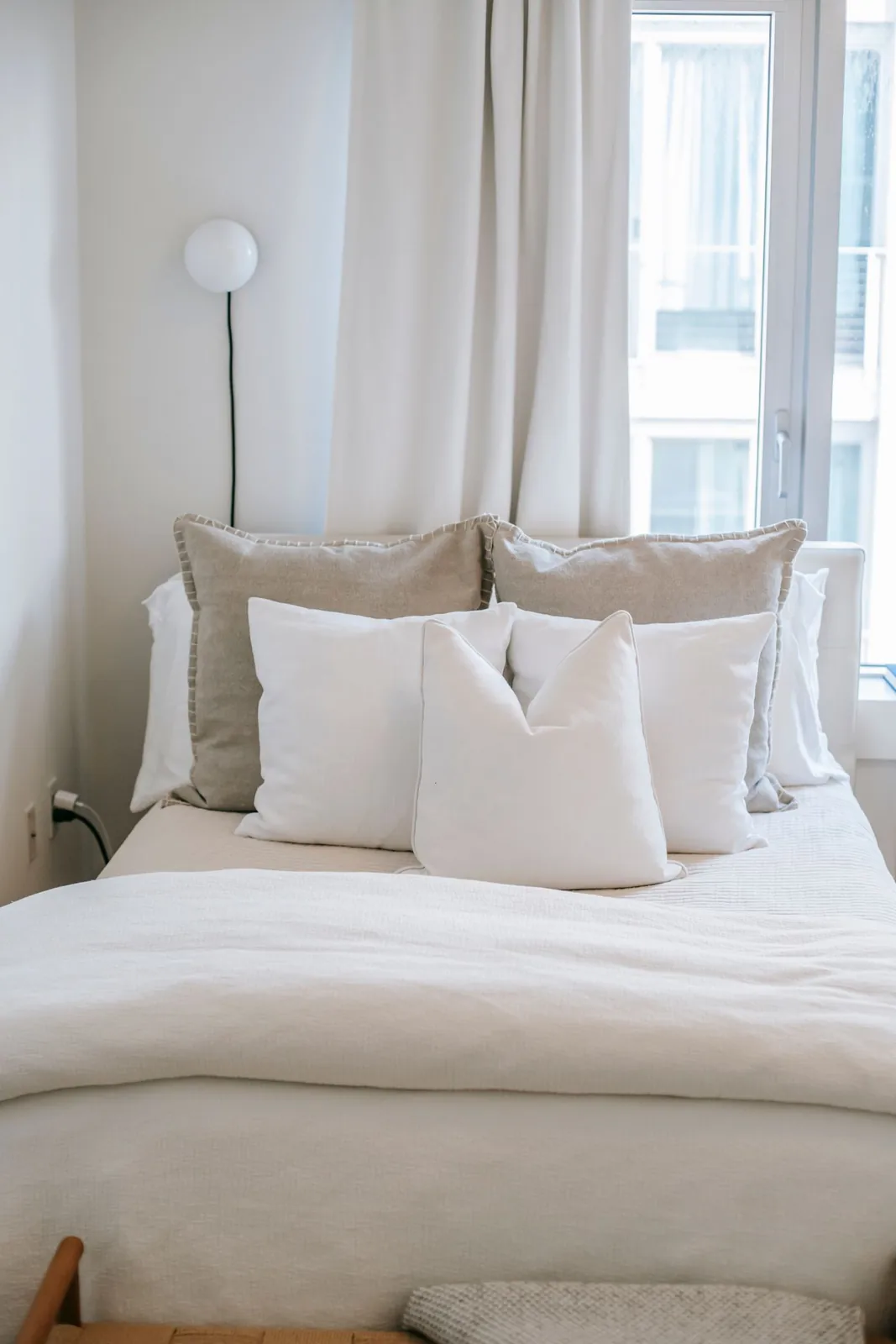
Other textiles can soften the occupied area, but choose them for use rather than filling space. A suitable rug, upholstered seat and a few cushions may be enough. Finish by sitting in the room after dark. If the furniture, light and surrounding surfaces feel comfortably related, the height can remain an asset rather than something that needs to be disguised.
Build a settled lower layer of furniture, light and texture, then let the ceiling remain generous.
A Swishover guide · Practical ideas to adapt to your own home.
Spotted something we should improve?