Choose what deserves open storage
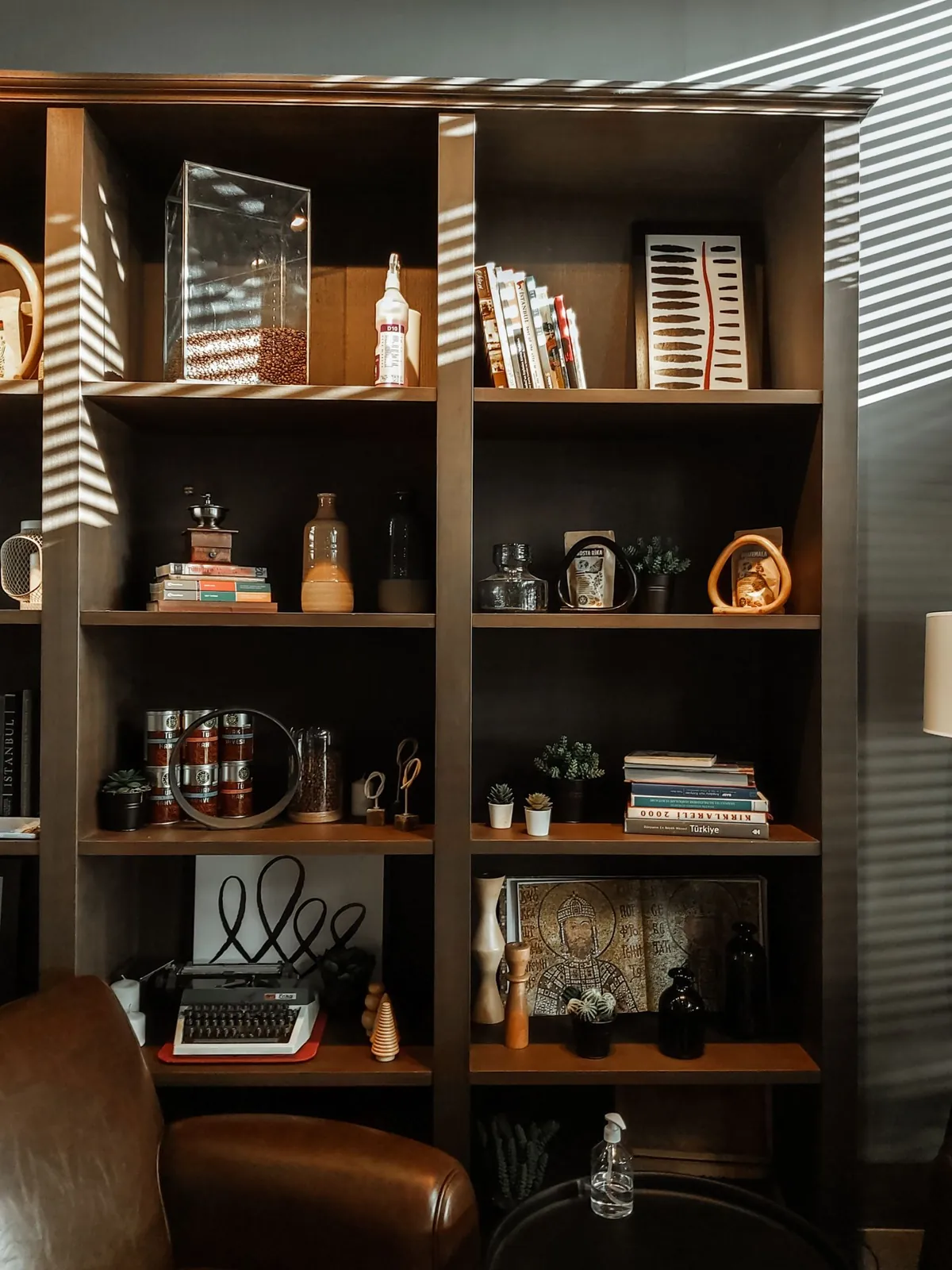
Open shelves expose both useful belongings and the small disorder that closed cupboards conceal. Start with objects you use often enough to justify the dusting: everyday bowls, books, a favourite jug or a few work materials. Items that need dark, dry or protected storage may belong elsewhere. A shelf is not obliged to hold every decorative object in the room. Select a few groups that make sense together, then put the remaining things back into their proper homes. This gives the shelf a practical purpose before you consider its appearance and prevents styling from becoming a way of distributing unused possessions across more surfaces.
Work with weight and reach
Check the shelf and fixing specifications before loading it, particularly with books or ceramics. Distribute weight according to the furniture instructions and keep heavy objects where they can be lifted comfortably. A large serving bowl stored overhead may look good but be awkward to remove with both hands. Everyday pieces should sit towards the front without projecting over the edge. Leave clear space above them so a hand can grip a rim or handle. If several shelves are adjustable, change the spacing to fit the actual contents rather than retaining equal gaps that waste height around short stacks and squeeze taller items.
Build groups around real use
A small breakfast group might contain bowls, mugs and a jar of teaspoons. A reading shelf could hold books upright beside a box of bookmarks and glasses. These practical relationships usually look more convincing than objects grouped only because their colours match. Use a tray when it makes several small items easier to move, not simply to add another layer. Keep stacks modest so the item needed most often is not trapped at the bottom. If a basket hides loose belongings, give it a single purpose and make its opening easy to reach. The label can be discreet, but the contents should be predictable.
Balance solid and open areas
Step back and look at the whole shelving unit rather than styling one compartment at a time. A row of equally full shelves can feel heavy, while a little uncovered surface lets the objects read clearly. Put a taller piece near a group of lower items, then leave some space around both. Repeated materials, such as wood and white ceramic, can connect the arrangement without forcing a strict palette. Avoid filling every gap with a tiny ornament; it adds handling and dusting without necessarily improving the composition. Books can provide colour and rhythm on their own, so there is no need to turn their spines away.
Make cleaning part of the design
An arrangement that takes twenty minutes to dismantle will be difficult to maintain. Keep the most frequently wiped shelves simple, especially in kitchens where grease can settle. Washable containers are useful near food preparation, while delicate woven baskets may suit a quieter living room. When cleaning, take the opportunity to remove anything that has not been used or enjoyed. Do not let temporary objects such as receipts quietly become permanent residents. After a week, check whether the useful items remain easy to retrieve. If the decorative pieces keep being moved aside, reduce them or give them a shelf with a different purpose.
Display useful groups, respect the shelf load and leave enough room to lift each object out.
A Swishover guide · Practical ideas to adapt to your own home.
Spotted something we should improve?