Gather the intended contents
A basket bought because it looks useful often becomes a home for unrelated things. Start with a specific group: sofa blankets, spare towels, cables or a current craft project. Gather those items and judge their volume. This reveals whether you need a shallow open container, a deeper basket or a different form of storage entirely.
Keep incompatible items separate. Damp textiles, food and delicate paperwork have different storage needs, and an attractive basket does not resolve those differences. Check that the contents are suitable for the material and environment. A decorative container should not be assumed safe for food contact or wet storage without appropriate product information.
Measure the opening, not just the outside
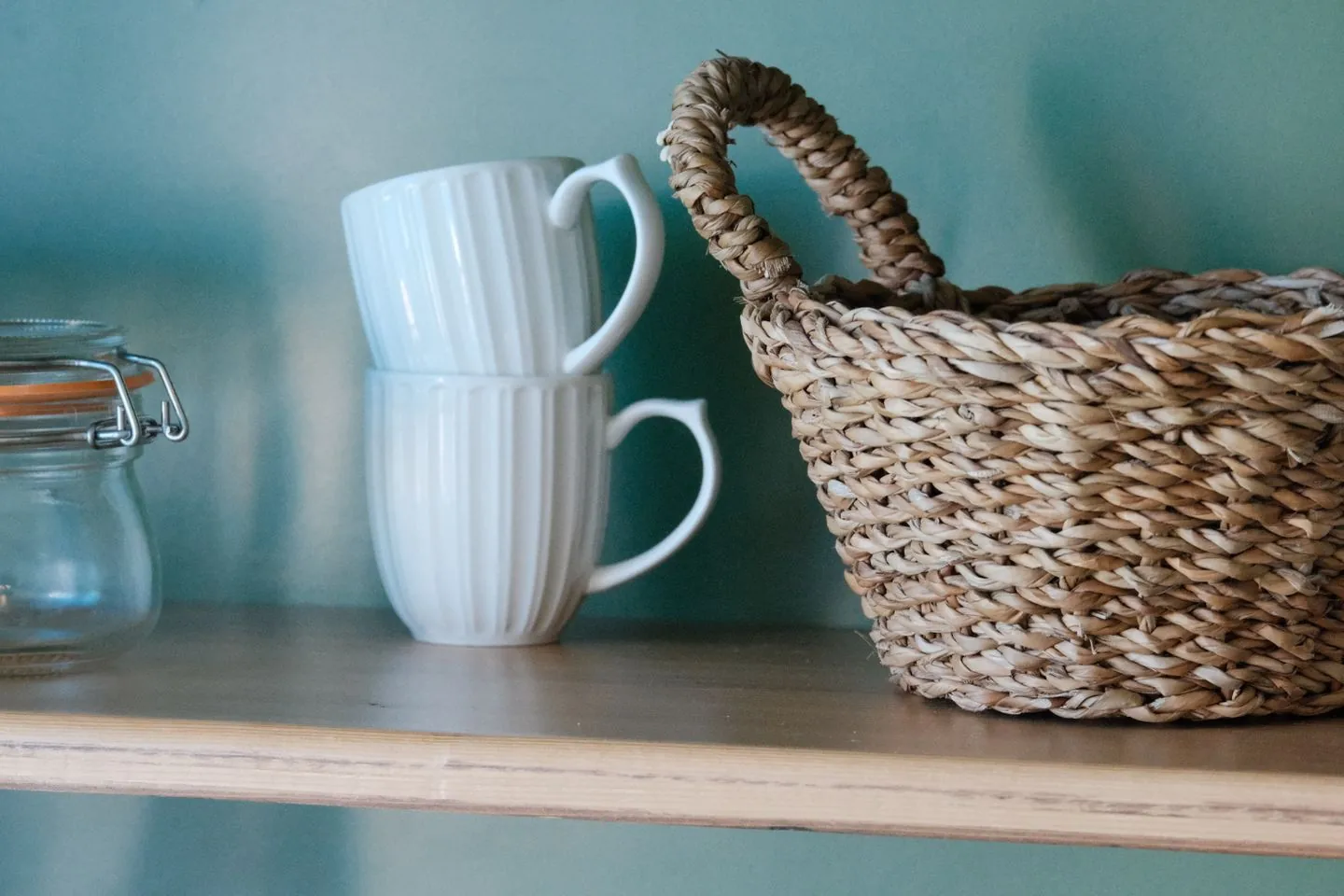
Basket sides may slope, and handles or a thick rim can reduce usable space. Check internal dimensions and the size of the opening. A rectangular object may fit the base but be difficult to insert through a narrower top. On a shelf, allow room to grip and lift the basket rather than buying something that fits so tightly it cannot be removed comfortably.
Consider the filled weight. A large basket of blankets may be manageable, while the same size filled with books can be difficult to lift. Choose a container and handles intended for the load, and avoid carrying more than is comfortable. If the basket will mostly stay in place, make sure the contents remain accessible without repeatedly lifting it.
Match the structure to the task
A soft fabric basket can fold away but may slump when partly empty. A rigid woven basket keeps its shape but may have a rough interior or base. Smooth plastic or another suitable material may be easier to wipe in some settings. Compare those practical differences before choosing a finish that matches the room.
Inspect edges, weave ends and handles for anything that could snag fabrics or scratch furniture. A liner can help in some cases, provided it fits and can be cared for appropriately. Do not use a liner to disguise a damaged or unsuitable structure. The basket should be sound before it is filled with items you want to protect.
Decide whether a lid helps
A lid conceals contents and may reduce dust, but it adds an action every time something is retrieved. For frequently used toys or throws, an open basket may encourage easier returns. For occasional items, a lid may be useful if it fits securely and remains simple to handle. Test where the lid will go while the basket is open.
Avoid stacking containers unless they are designed for that arrangement and remain stable. A lower basket that requires several others to be moved may become effectively inaccessible. Storage works best when its effort matches the frequency of use. Daily items should not need a small dismantling project every time they are wanted.
Leave a little spare capacity
Do not fill the basket so tightly that returning one item takes careful packing. Some open space makes the system easier to maintain and helps contents remain visible. Review the group when it starts to overflow rather than immediately buying another container. A well-chosen basket gives a specific set of belongings an understandable home; it should reduce searching, not merely hide a growing collection of undecided objects.
The right basket fits its contents, its shelf and the movement needed to use it.
A Swishover guide · Practical ideas to adapt to your own home.
Spotted something we should improve?