Start with what the window needs to do
A bedroom may need privacy and useful control of early light, while a living room may need softer daylight without losing the view. Decide which needs matter most. Curtains can contribute to comfort and appearance, but do not assume every fabric provides the same privacy or light reduction simply because it looks substantial in a photograph.
Observe the room at different times. Check the view from outside where appropriate and safe, especially after dark when interior lights are on. Think about how often the curtains open and close. A fabric that is pleasant as a static decorative panel may be less suitable when it needs frequent handling or full coverage every evening.
Measure the intended fitting
Follow the curtain supplier's measurement instructions for the heading and track or pole you will use. Measurements may be based on the fitting rather than the window frame itself. Record width, drop and any relevant clearance carefully. Do not transfer measurements from an old pair without checking whether their heading and intended fullness match the new design.
Consider radiators, furniture, handles and doors near the window. The chosen drop should work with those features and the room's normal use. Avoid fabric arrangements that conflict with heating guidance or drag into busy routes. A longer curtain is not automatically more elegant if it collects dirt or prevents easy movement in the actual space.
Compare fabric and lining together
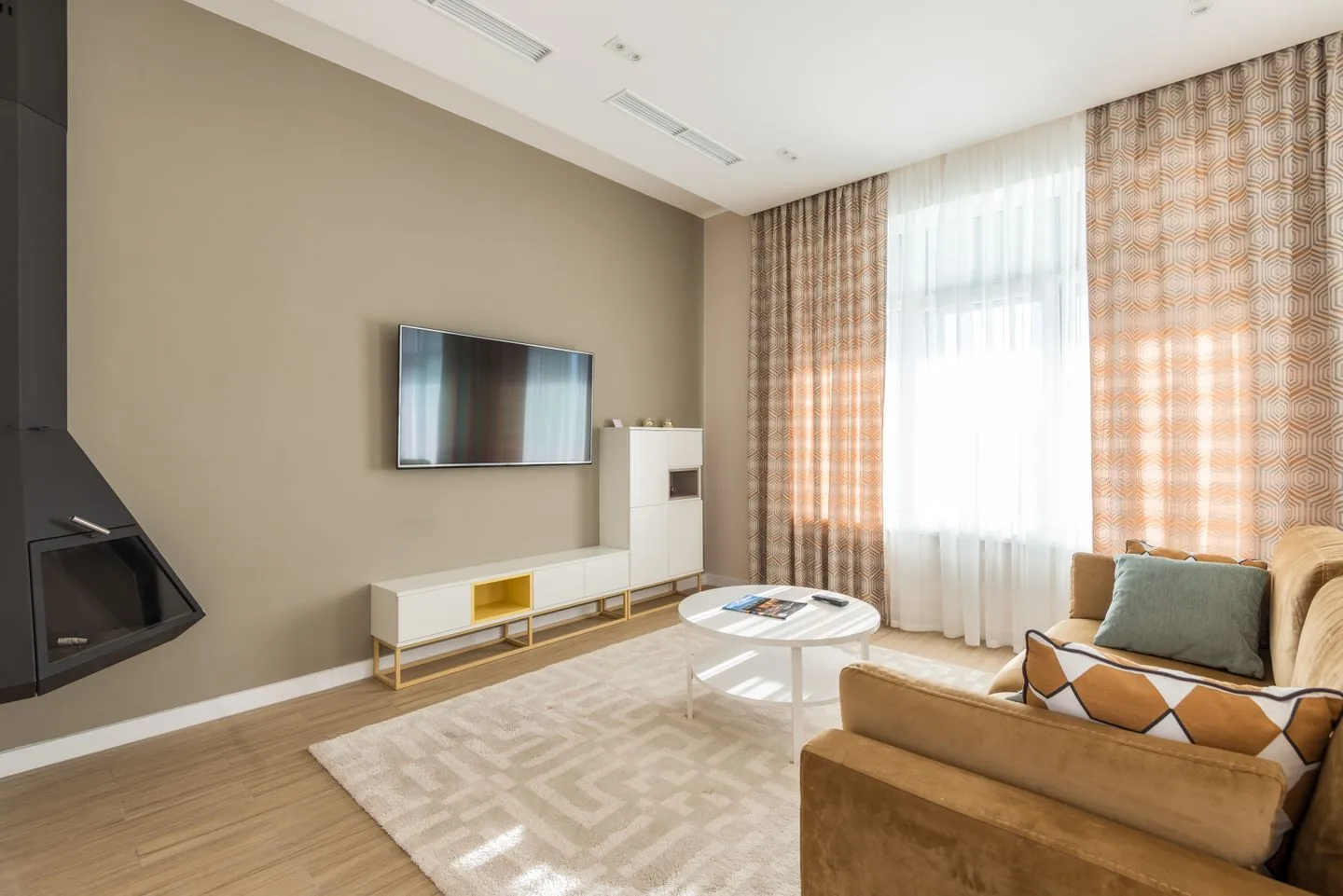
Look at samples in daylight and with room lights on. Hold them against the colours already present, but also examine how they transmit light. Lining can change the drape, weight and performance, so confirm the complete specification. If a particular level of light control is important, ask exactly what the product is designed to provide.
Care instructions matter for a large textile that may be difficult to remove and clean. Check whether professional cleaning is required and whether the fabric is suitable for the room's conditions. A kitchen-adjacent window and a quiet bedroom may create very different maintenance demands. Choose a realistic routine rather than focusing only on the initial appearance.
Check operation and support
The track or pole must suit the curtain weight and the wall or ceiling construction. Use appropriate fixings and professional help where needed. Heavier curtains may require more support than the existing fitting provides. Do not assume a pole is adequate simply because it held a lighter pair before.
Check the opening space at the sides of the window and whether the curtains can stack back as intended. Follow all safety guidance for cords, chains and accessible controls, particularly where children are present. The arrangement should open smoothly without climbing, stretching awkwardly or pulling against an unstable fitting. Daily use is a major part of whether the purchase succeeds.
Review the order before committing
Confirm whether quoted sizes refer to each panel or the pair, and check the heading, lining, quantity and alteration terms. Made-to-measure items may have different return conditions, so verify details before ordering. Keep the measurements and specification together. A well-chosen curtain should look settled when open, provide the required coverage when closed and work with the household's routine rather than demanding careful rearrangement every time.
Measure the fitted arrangement and choose curtains for how the room is used throughout the day.
A Swishover guide · Practical ideas to adapt to your own home.
Spotted something we should improve?