Notice the approach
The front door starts to make an impression before anyone reaches the handle. Walk towards it from the normal approach and look for the practical things a visitor needs: a visible number, a clear route and somewhere safe to stand while waiting. A small decorative change works best when these essentials already feel straightforward.
Clear away anything that has accumulated temporarily, including empty pots or parcels that have found a permanent home. Check that the door can open fully and that nothing narrows the route unnecessarily. In shared buildings, respect the building's rules and keep communal access and escape routes clear. A welcoming entrance must remain easy for other people to use.
Choose a detail suited to exposure
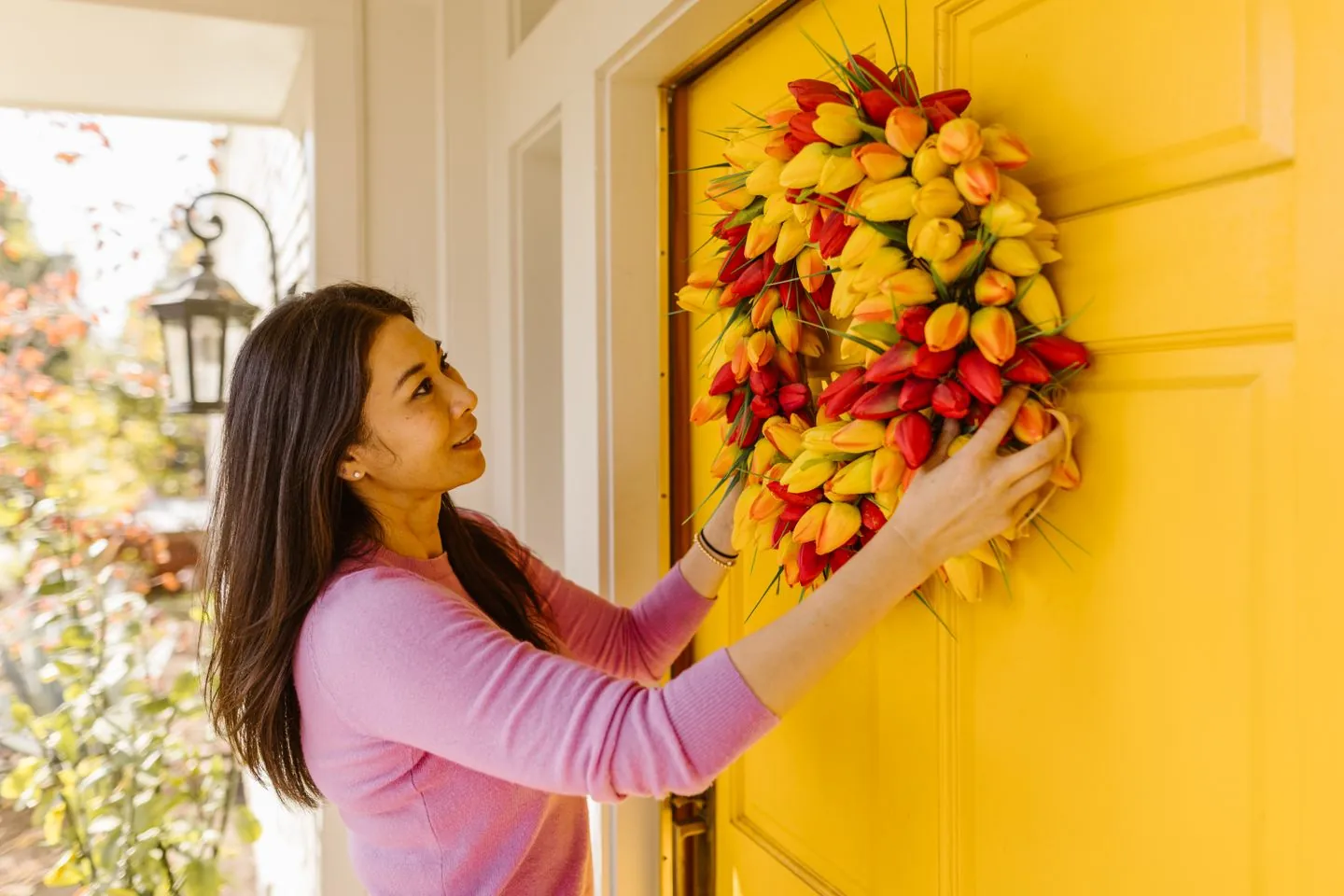
A sheltered porch gives accessories different conditions from a door open to rain and strong sun. Choose materials intended for the actual location. A decorative indoor basket may deteriorate quickly outside, while a pot without suitable drainage can become difficult to manage. Product suitability matters more than whether an object looks attractive on the first dry afternoon.
If the detail is a plant, select it for the light, weather and care you can provide. Leave space for growth and avoid leaves that catch people as they pass. A stable, appropriately sized container is more useful than several small pots that scatter around the threshold. Consider how the pot will be moved for cleaning or seasonal care.
Give the number room to be read
A clear house number can provide a pleasing visual detail while doing a real job. Look at contrast, size and placement from the approach rather than only from beside the door. Decorations should not cover it, the letterbox, a doorbell or any required signage. If replacing a number or fitting, use suitable fixings and obtain permission where the property or shared entrance requires it.
Avoid adding an electrical feature as a casual styling task. Lighting and doorbell installations may need appropriate professional work and must suit outdoor conditions. If the existing entrance is poorly lit, treat that as a practical project rather than trying to solve it with decorative indoor lights or cables run through a doorway.
Keep the threshold uncomplicated
A doormat should fit the available space, remain stable and allow the door to operate. Check the surface beneath it and the manufacturer's guidance for outdoor use. Thick edges, curled corners or a mat placed on an uneven step can be awkward. A simple mat in the right size often looks better than a striking one squeezed into an unsuitable gap.
Use the entrance in wet weather before deciding the arrangement is finished. Can someone shake out an umbrella without hitting the pot? Is there room to put down a bag while finding keys? Does water collect beneath an accessory? These ordinary details determine whether the refresh remains pleasant after the novelty has worn off.
Let upkeep be the finishing touch
Clean the door and fittings using methods suitable for their materials, and keep the immediate area swept. A single healthy plant or clear number beside a cared-for door can feel more welcoming than several themed decorations. Choose a detail you can maintain easily, then give it space. The entrance should suggest an approachable home while continuing to work smoothly every day.
Keep the door easy to approach, identify and open; decoration comes after those jobs.
A Swishover guide · Practical ideas to adapt to your own home.
Spotted something we should improve?