Decide which furniture belongs together
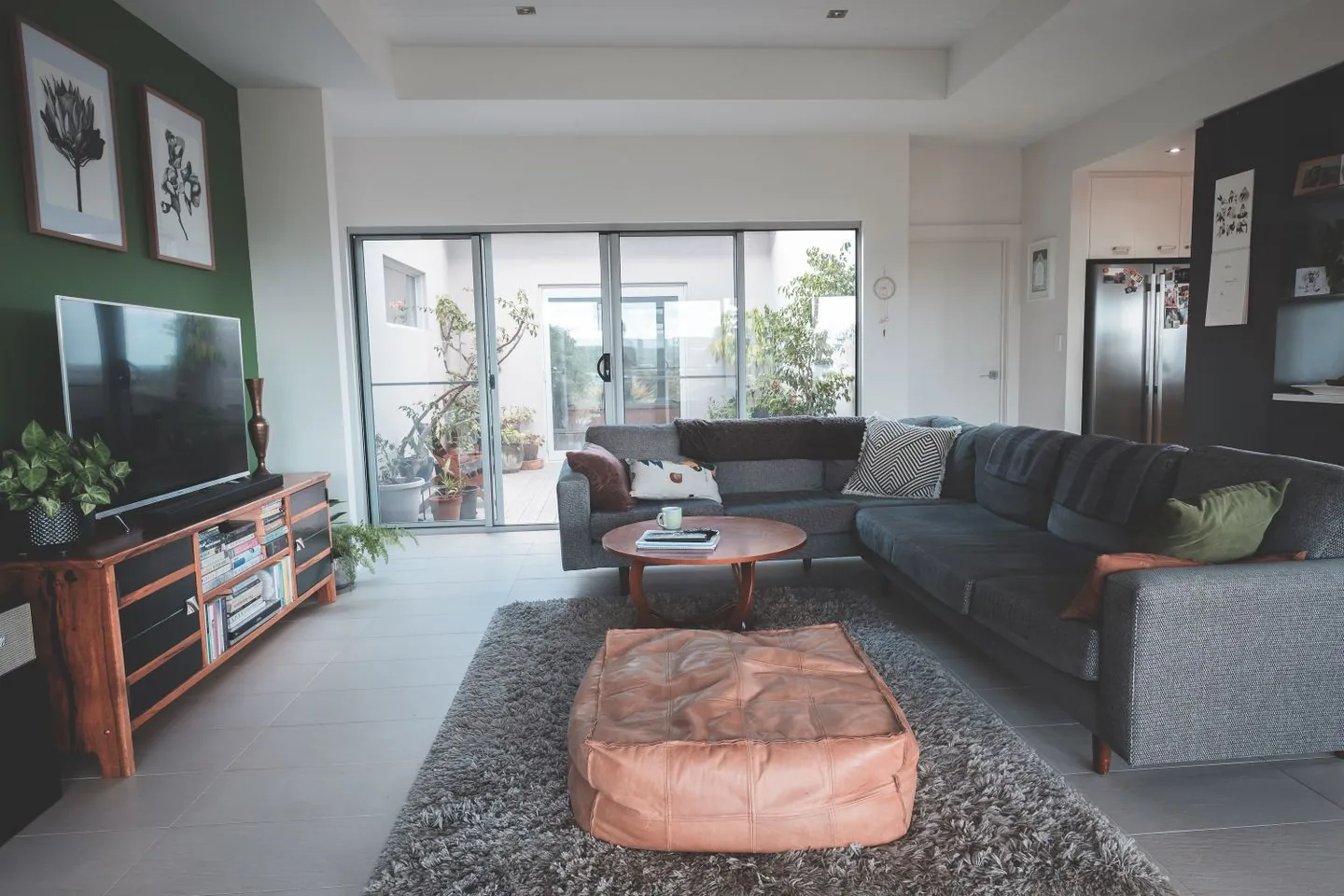
A rug can make a seating group feel connected when its edges relate clearly to the sofa and chairs. Start by identifying the group it should serve rather than choosing a size from the empty floor. In a living room, this may be the conversation area around a coffee table. In an open-plan space, the rug can distinguish that area from dining or circulation.
Look at the existing rug and ask why it feels small. Perhaps it sits alone beneath the coffee table while every chair floats outside it. A larger footprint may help, but the useful goal is a coherent relationship between furniture and rug, not simply the biggest textile that fits within the walls.
Mark the proposed edges
Measure the room and outline the candidate size with low-tack tape suitable for the floor, or use paper markers. Include the actual sofa and chair positions. Try a layout where the front feet of the main seating rest on the rug, or where the whole group fits on it, depending on the space. These are starting points to test rather than fixed rules.
Walk around the outline and check the route into the room. Keep edges from landing awkwardly where feet regularly step or chairs move. Open doors fully and note floor vents, hearth clearances and other features that need access. A generous rug should support the layout without obstructing the room's practical requirements.
Check the furniture transitions
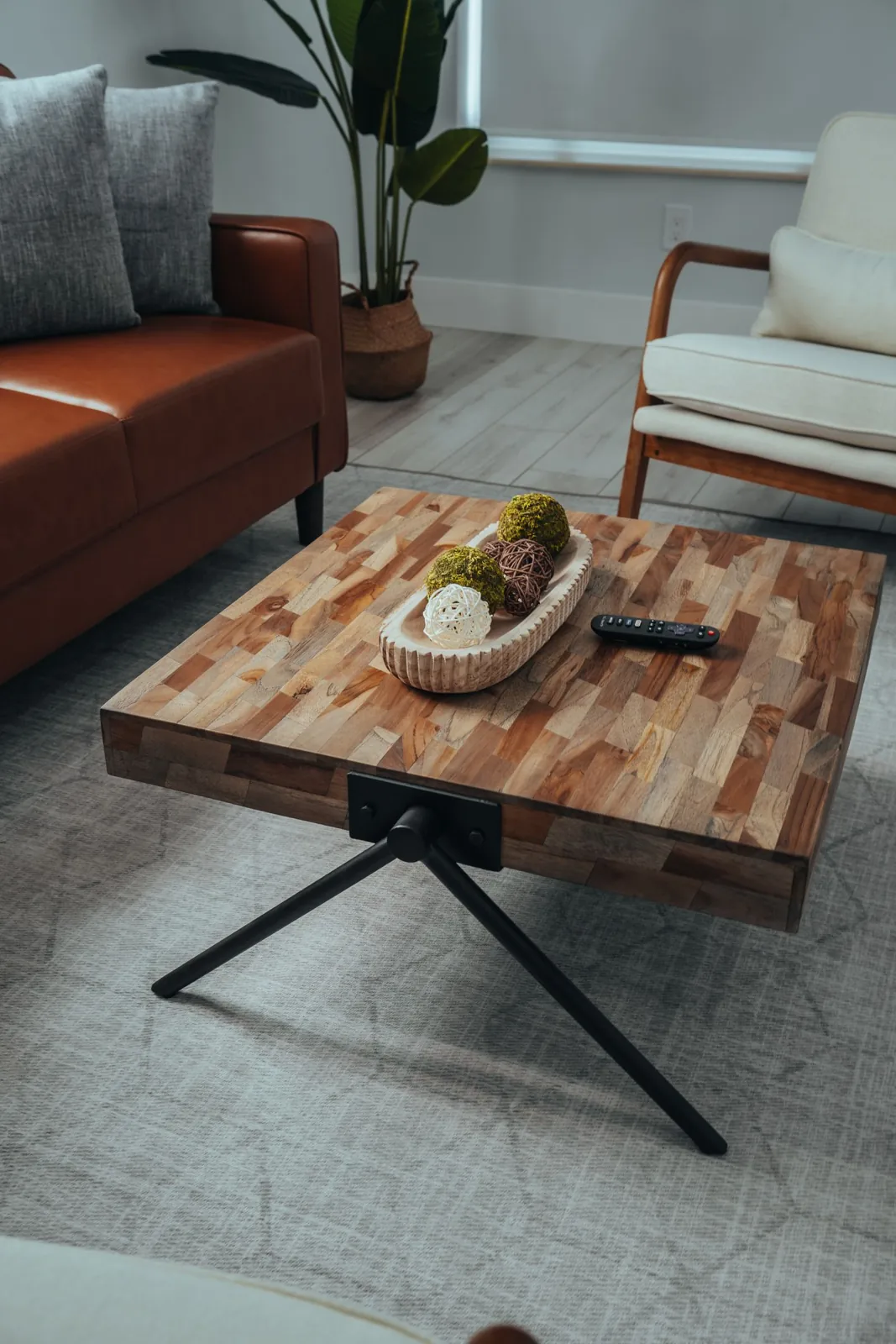
A chair with some feet on a thick rug and others on the floor may feel uneven. Test stability and comfort with the intended rug thickness in mind. Coffee tables and lightweight side tables also need a steady base. In a dining area, allow enough rug beyond the table for chairs to move as they are used, rather than catching the edge every time someone sits down.
If the room has an unusual shape, a standard rug may not align with every wall. Focus on the furniture group and main sightline. It is often better for the rug to sit deliberately within one zone than to chase the room's outline and leave an awkward strip beside the seating.
Consider colour at the larger scale
A colour that looks subtle on a small rug can become a major feature when spread over much of the floor. Compare samples or images with the existing upholstery and flooring, and consider how daylight changes the room. A patterned rug can connect several colours, while a quieter one may let other furnishings stand out. Avoid assuming pale always means spacious or dark always means heavy; contrast and placement matter.
Think about the room's actual use when considering material, pile and care requirements. A larger rug also means a larger cleaning task. Check the manufacturer's guidance and whether the household can manage routine care without moving an impractical amount of furniture.
Fit and secure it appropriately
Use a suitable underlay where required, chosen for both rug and floor, and follow installation guidance. Check that edges lie flat and do not create a trip point. Avoid improvised adhesives that could damage the finish beneath. Once furniture is back, view the room from the entrance and from the seats. The rug should make the group feel settled while leaving the route around it clear. If the arrangement still feels disconnected, adjust furniture slightly before concluding that more accessories are needed. The larger rug is most effective when it changes how the main pieces relate to one another.
Measure around the furniture group, test the edges in use and choose a suitable rug and underlay for the floor.
A Swishover guide · Practical ideas to adapt to your own home.
Spotted something we should improve?