Follow one breakfast from start to finish
Think through a normal breakfast rather than an ideal leisurely weekend meal. You might make toast and tea, prepare porridge or simply pour cereal before leaving. Notice which cupboards open, where the bowl lands and how far you carry things. Repeated crossings between distant storage points can make a small task feel more hurried than it needs to be.
Keep food stored according to its requirements. Convenience is not a reason to leave refrigerated ingredients out overnight or decant products without retaining useful information. The setup can bring suitable dry goods and crockery closer together while leaving perishable items in the fridge until they are needed.
Clear a proper preparation patch
Choose a section of worktop where a bowl, plate or chopping board can sit comfortably. Remove objects that do not need to live there, and leave the surface easy to clean. A decorative tray can organise a few items, but it should not consume the very space needed to prepare breakfast. The empty patch is part of the arrangement.
Position appliances according to their instructions, including clearances, heat and electrical requirements. Do not squeeze a toaster beneath unsuitable storage or stretch a kettle lead across a working route just to create a visually neat corner. The practical setup should remain safe when more than one person is moving around the kitchen.
Put everyday crockery within an easy sequence
Store the bowls, mugs or plates used most often where they can be reached without unloading other items. It may make sense to keep them near the preparation area, but the best position also depends on the dishwasher or washing-up space. Try to reduce effort at both ends of the routine rather than improving breakfast preparation while making putting away much harder.
Allow two people to work
If several people eat different things, avoid a system that requires them to queue at one narrow cupboard. A little separation between drinks and food preparation may help. Watch the kitchen in use and adjust modestly. The aim is not to create a rigid station for every activity, but to prevent the most predictable collisions.
Make the place to eat ready
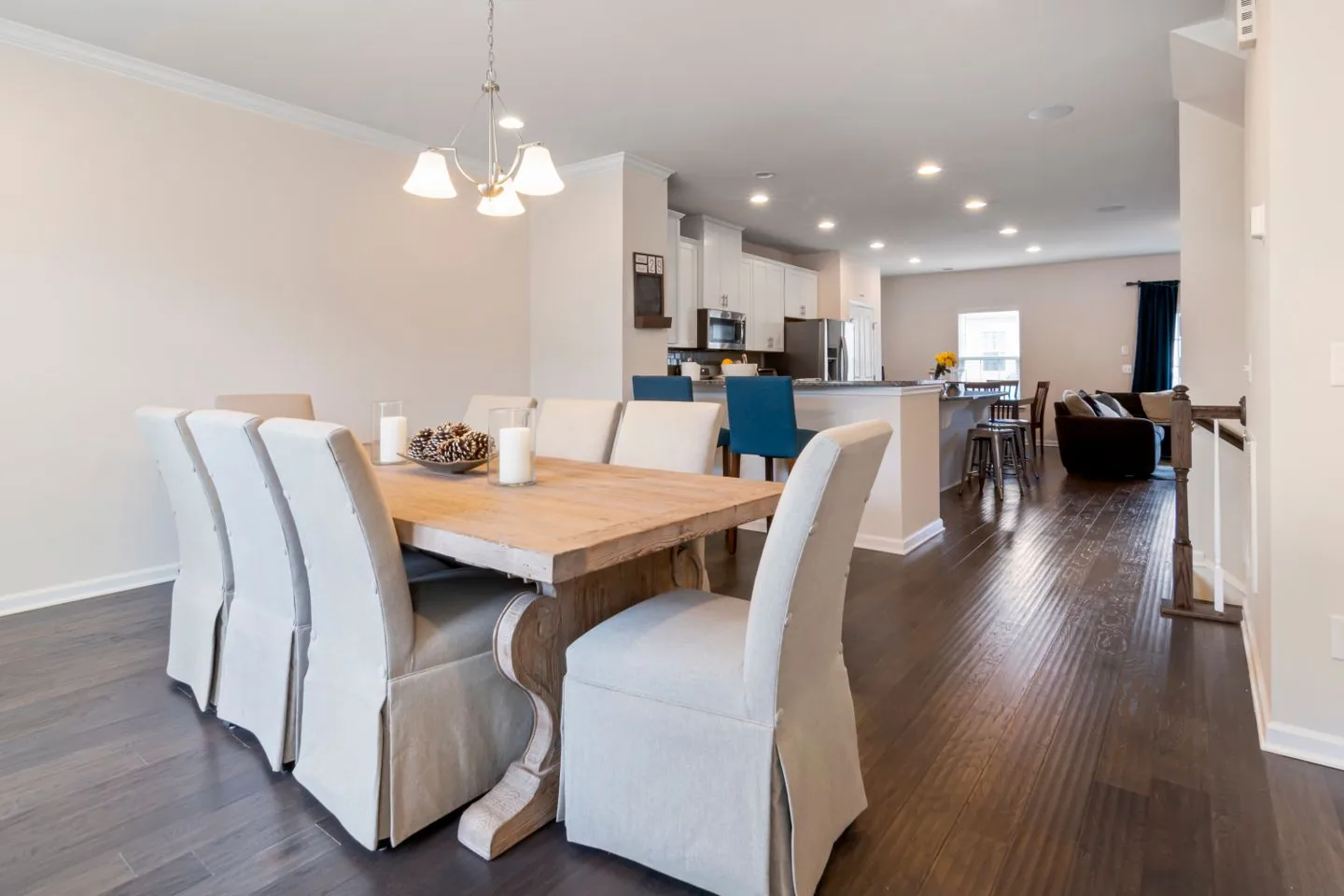
Leave enough clear table or counter space for the people who normally use it. If the dining surface also holds paperwork, provide a defined place to move that work rather than pushing it into a pile at one end. Chairs should be accessible without carrying dishes around bags or stored boxes.
Prepare only what genuinely helps the night before. Setting out clean crockery may save a little time if it remains hygienic and undisturbed, while filling the table with every possible breakfast item can make the morning feel busier. A simple ready surface is often more useful than a complete display of jars, napkins and accessories.
Design the clearing-up as well
Keep the route from the eating place to washing-up straightforward. A small tray may help carry suitable items, provided it is manageable and stable. Put food away promptly as required and return the preparation patch to a clear state. When the setup is working, breakfast leaves less residue across the kitchen and the room is ready for the next task without a second round of organising.
Arrange for the breakfast you actually make, with clear preparation space and a simple route to the table.
A Swishover guide · Practical ideas to adapt to your own home.
Spotted something we should improve?