Start with the meal you are serving
The food determines much of the table setting. A meal served from shared dishes needs clear space in the centre, while individually plated food may leave more room for a small arrangement. Think through the sequence before placing decorative objects. You should not have to remove half the table as soon as the first dish arrives.
Check the number of comfortable places with chairs pulled out. Do not assume an extra setting fits simply because another plate can be squeezed onto the surface. Guests need room to sit, move their arms and reach a glass. If the table is tight, simplify the setting and serve from another suitable surface rather than crowding every item into the middle.
Use the crockery you have confidently
Matching plates can look lovely, but a mixed collection can work just as well when arranged with care. Look for a small connection, such as similar colours or proportions. Use pieces appropriate for the food and in sound condition. A decorative dish should not be used for serving unless it is suitable for food contact and the intended temperature.
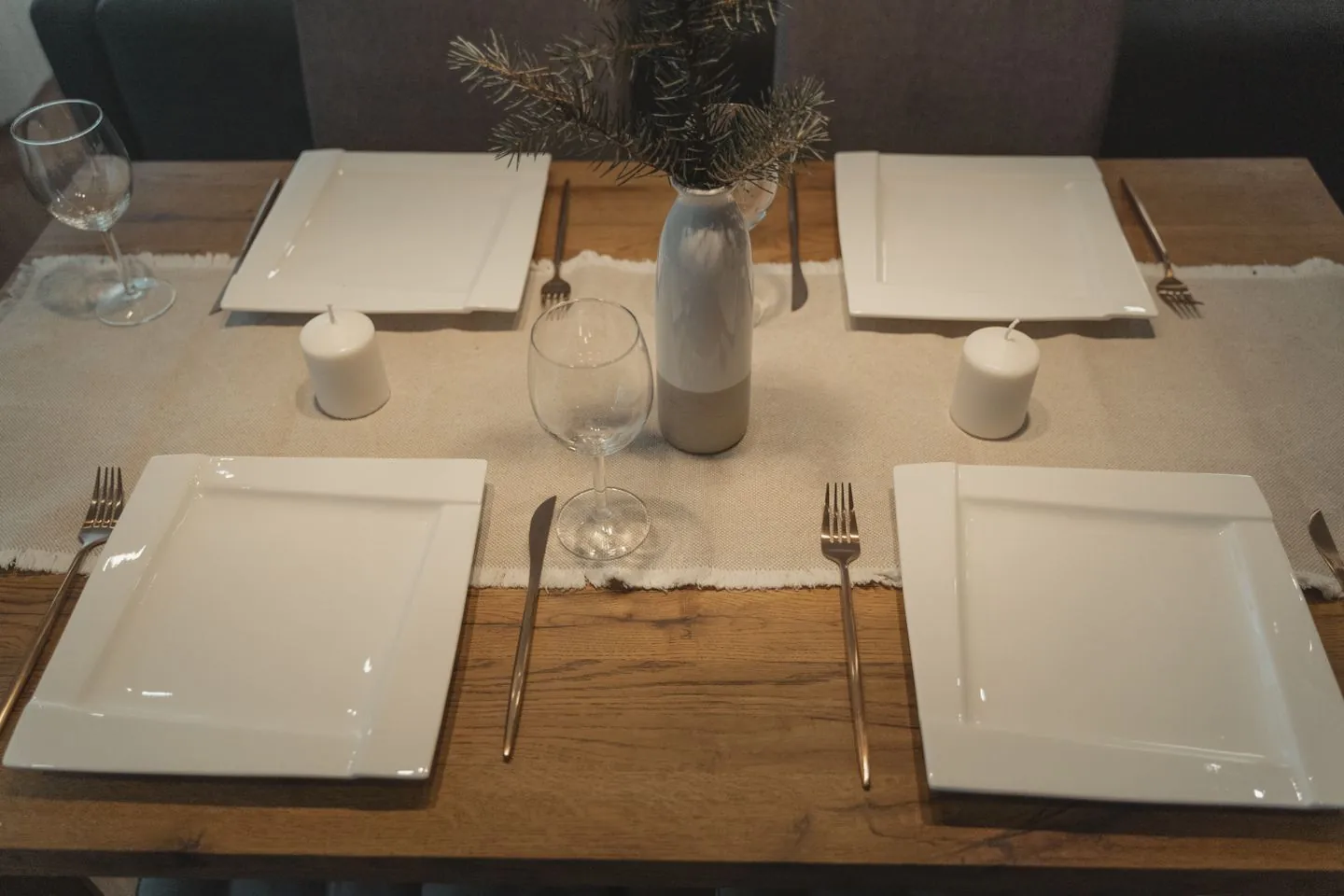
Set out only the cutlery and glasses needed for the meal. Extra pieces can make an informal table feel cluttered and leave guests uncertain about what is coming. Keep spare items nearby if they may be useful later. The aim is ease, not a formal arrangement that requires everyone to interpret it correctly.
Add softness without complication
Napkins, placemats or a tablecloth can give the setting a relaxed finish. Choose clean textiles whose care suits the occasion, and check that they sit steadily beneath crockery. Protect the table appropriately from heat and moisture; a decorative fabric alone may not do that job. Avoid long loose ends where they could catch a passing person.
One textile colour may be enough to connect a mixed set of plates. There is no need for elaborate folding. A simply placed napkin is easy to use and quick to reset. If the tabletop itself is attractive, leave some of it visible rather than covering it automatically. The room's existing character can be part of the setting.
Keep the centre low and movable
A small vase or bowl can provide a focus without interrupting conversation. Check the sightline while seated, not just while standing over the table. Strongly scented flowers may compete with food or bother a guest, so choose carefully or leave flowers out. A useful serving dish can itself be the centre of the arrangement.
If using candles, follow safety guidance and keep flames well away from textiles, foliage and reaching hands. Suitable battery alternatives can offer a simpler option. Whatever you choose, make it easy to move in one action when the table needs more space. Decoration should support the gathering rather than impose a choreography on it.
Leave the last few minutes for practical checks
Put drinking water within easy reach, check that chairs are stable and clear the route between the kitchen and table. Keep a suitable place available for hot serving dishes. Ask about dietary needs in advance as appropriate, without turning the table setting itself into a complex project. Once friends arrive, the most welcoming detail is a table that allows you to sit with them comfortably rather than keep rearranging objects around the food.
Leave room for people and serving dishes, then add one simple detail you enjoy.
A Swishover guide · Practical ideas to adapt to your own home.
Spotted something we should improve?