Decide how many seats are genuinely needed
A dining corner should suit the people eating there most days. If that is two people, a permanent arrangement for six may take space from the kitchen or living area without earning it back. Occasional visitors can be planned for with a suitable extending table or extra chairs stored elsewhere, provided the extended arrangement actually fits.
Write down the other jobs the table performs. Homework, sewing and laptop work may need a different surface from quick breakfasts. That does not mean buying the largest table available. It means making sure the useful depth remains after a fruit bowl, lamp or other everyday object has taken its share.
Measure with a chair pulled out
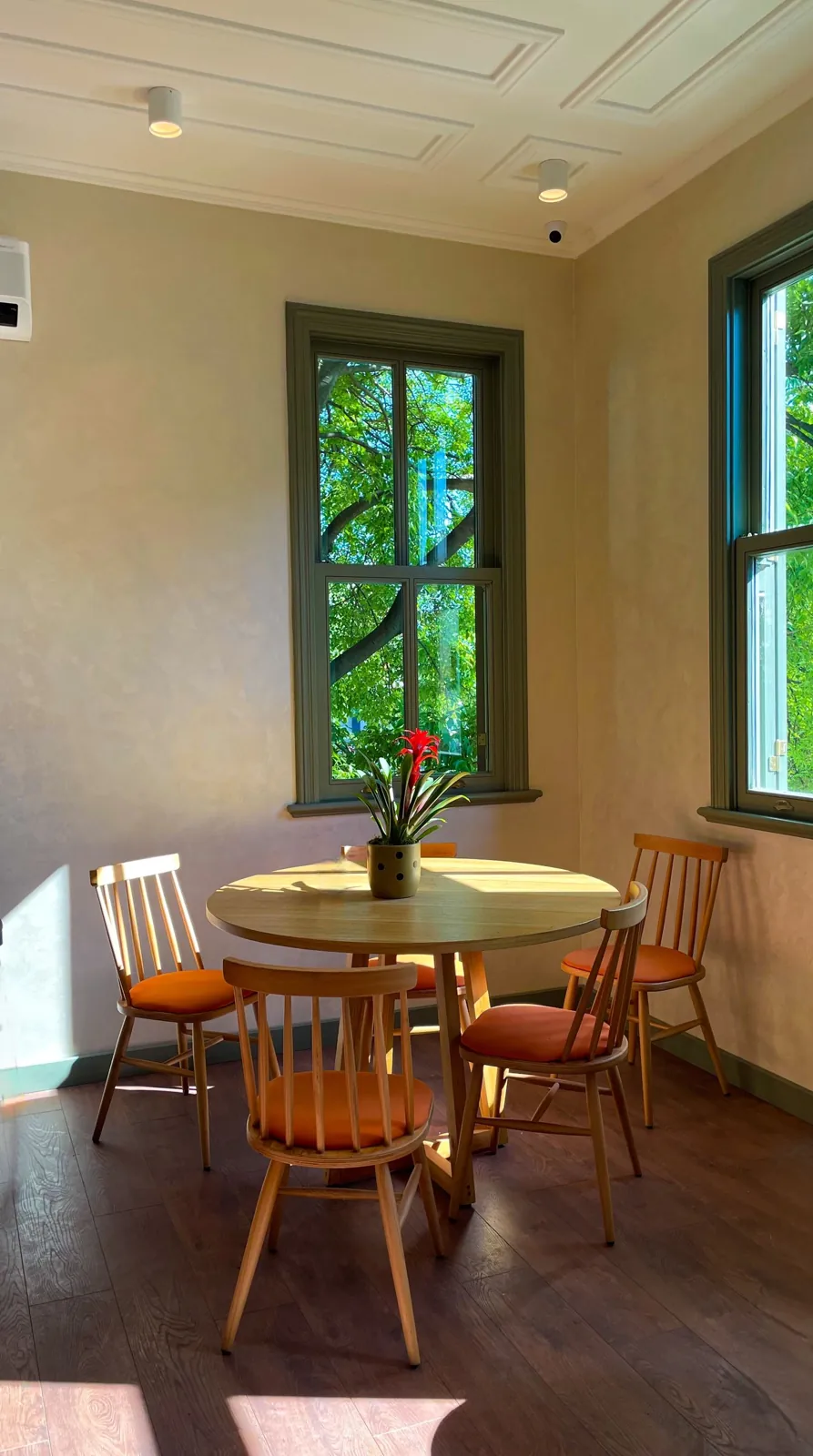
The table's dimensions tell only part of the story. Sit on a chair in the proposed position, move it back as you would to stand up and ask someone to pass behind. Repeat near walls, cupboard doors and the main route through the room. A neat empty arrangement can become surprisingly awkward at mealtimes.
Round tables remove sharp corners from a tight route, but they are not automatically more space-efficient. A small rectangle against a wall may work better for two everyday seats. Look at where the legs sit: a pedestal or inset support can make chair placement more flexible, while an apron can affect legroom.
Use the corner without trapping people
A bench against a wall can reduce the space needed behind one side of the table. It works particularly well when the household does not mind sliding along to sit down. It is less convenient if several people need to get up frequently or if mobility makes sideways movement difficult. Try the action before committing to a built-in solution.
Keep the bench comfortable enough for the meals you actually eat. A cushion can soften a hard seat, but it should stay in place and be easy to clean. Check that its added height does not bring knees uncomfortably close to the underside of the table.
Give daily objects a nearby home
Napkins, coasters and the things used to set the table should be easy to reach without living permanently across the eating surface. A nearby drawer or shallow shelf may be all that is needed. Avoid adding a deep sideboard if it makes the route to the kitchen more difficult.
For a table that doubles as a work surface, a portable box can hold papers and a laptop between sessions. Choose somewhere specific to put that box when dinner begins. Otherwise the clearing routine merely transfers the clutter to the floor, where it becomes another obstacle around the chairs.
Make it feel like somewhere to sit
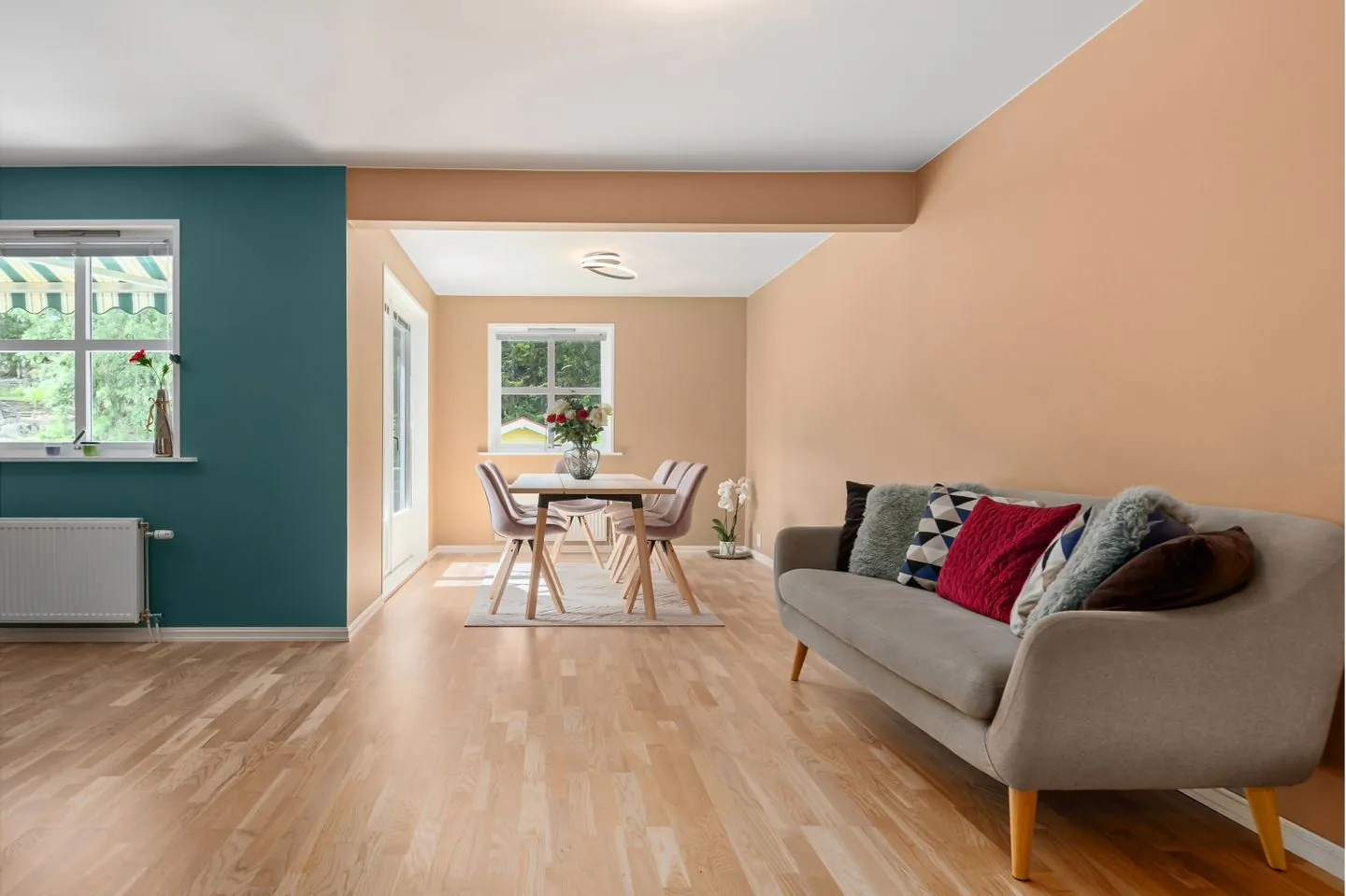
The corner needs a little visual definition, particularly in an open room. A piece of art, a change in wall colour or a well-positioned light can give it identity without adding furniture. If you use a rug, check that chairs remain supported as they move and that the material suits likely spills and crumbs.
Finish with a realistic meal test. Put out plates, serving dishes and drinks rather than judging the table with a single vase in the centre. If everyone can eat, stand and reach what they need comfortably, the corner is doing its job. Decoration can then stay simple enough to move in one easy step.
Choose the table around occupied chairs, not just the empty footprint.
A Swishover guide · Practical ideas to adapt to your own home.
Spotted something we should improve?