Find the usable part of the window
The brightest patch of a room is not always its most comfortable seat. Direct sunlight can create glare on a page, while a draughty window or nearby radiator can make a long reading session unpleasant. Sit in the proposed place at the time you usually read. Notice both the light on the book and the temperature around your shoulders and feet.
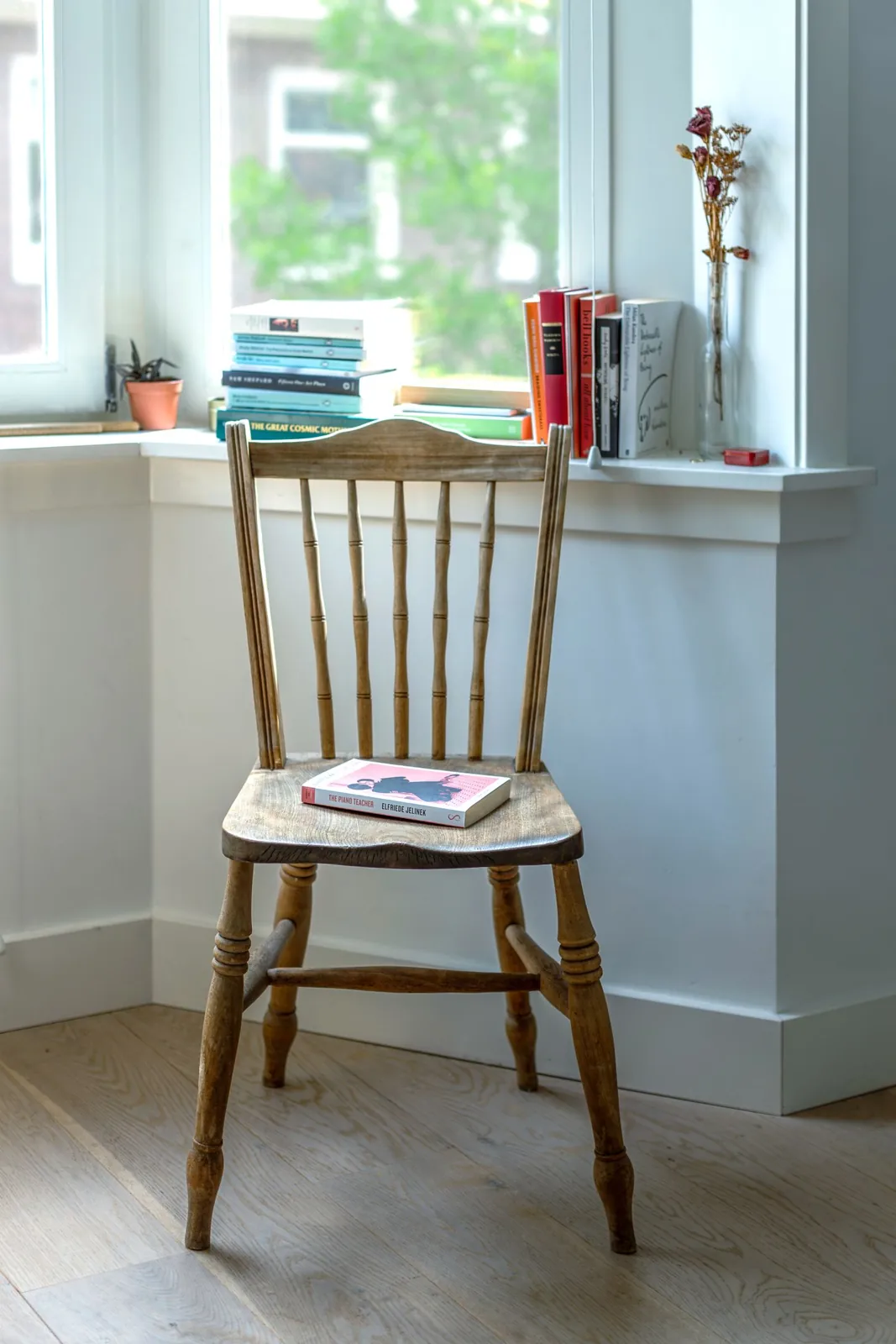
Try turning the chair slightly rather than placing it squarely in front of the glass. Light coming from one side can be easier to manage, and the angled position may preserve access to curtains or a window handle. Keep any ventilation and heating arrangements unobstructed.
Choose support before silhouette
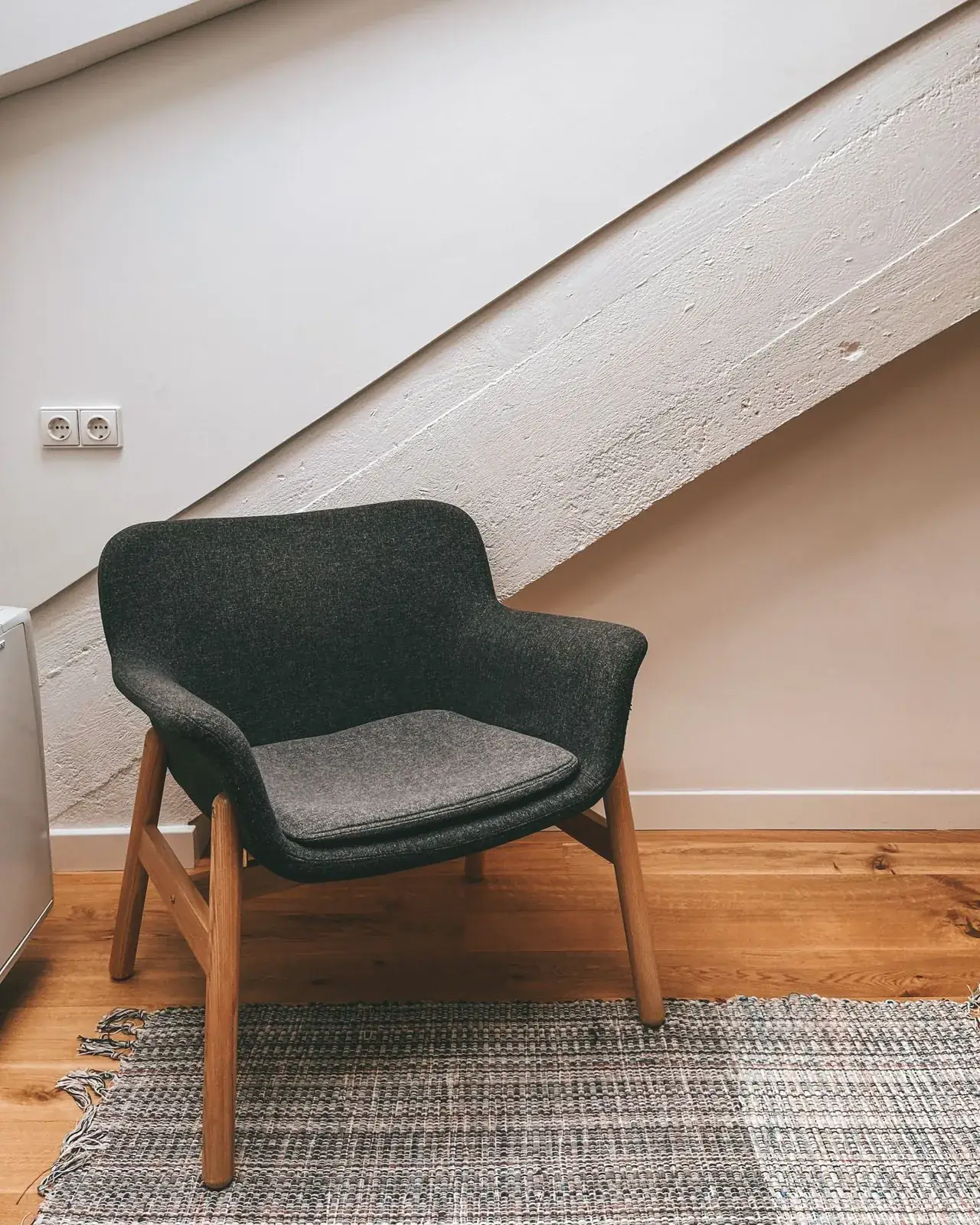
A chair that looks inviting can feel quite different after twenty minutes. Think about the position in which you read: upright with a hardback, curled up with a novel or with a book supported on your lap. Seat depth, arm height and back support all affect that position. A cushion may help with fit, but it cannot always correct an unsuitable chair.
Use a chair you already own to test the location before buying anything. Move it for a few evenings and note what feels missing. You may discover that the chair is perfectly good and only needs a footrest, or that the corner is better suited to shorter reading sessions than a large lounge chair would suggest.
Put the little necessities within reach
A useful reading spot needs somewhere stable for a drink and whatever else you reach for repeatedly. That might be glasses, a pencil or a phone used as an audiobook player. Place the surface where your hand naturally goes while seated, rather than where it looks centred in the room.
Avoid overloading a tiny table with a lamp, plant, candle and stack of books. If the lamp occupies most of the top, a separate reading light or a slightly different table shape may work better. Candles should not sit among loose papers or close to curtains, so they are rarely the simplest choice for a compact window corner.
Make evening light part of the plan
Daylight changes, and a window becomes a dark backdrop after sunset. Add a light that illuminates the reading area without shining directly into your eyes. An adjustable lamp lets you experiment with the direction. Check for reflections if you read on a screen, and keep the cable close to the wall rather than across the approach to the chair.
A separate, softer light elsewhere in the room can make the corner feel less isolated. You do not need a complicated lighting scheme. The practical test is whether you can settle down, see the page clearly and move around the room without stepping between a bright pool of light and complete darkness.
Keep the collection small
Store the books you are currently reading nearby and keep the larger collection wherever it fits best. One modest shelf or basket can be enough. A growing tower on the floor makes cleaning harder and often turns the chair into an overflow storage area rather than a place to sit.
Leave the seat ready to use. Put the throw over an arm, return finished books and resist filling the last open space with another decorative object. The success of a reading corner is not its size. It is how little rearranging you have to do when you finally have time to read.
Plan for the light, temperature and reach of an ordinary reading session.
A Swishover guide · Practical ideas to adapt to your own home.
Spotted something we should improve?