Name the two jobs precisely
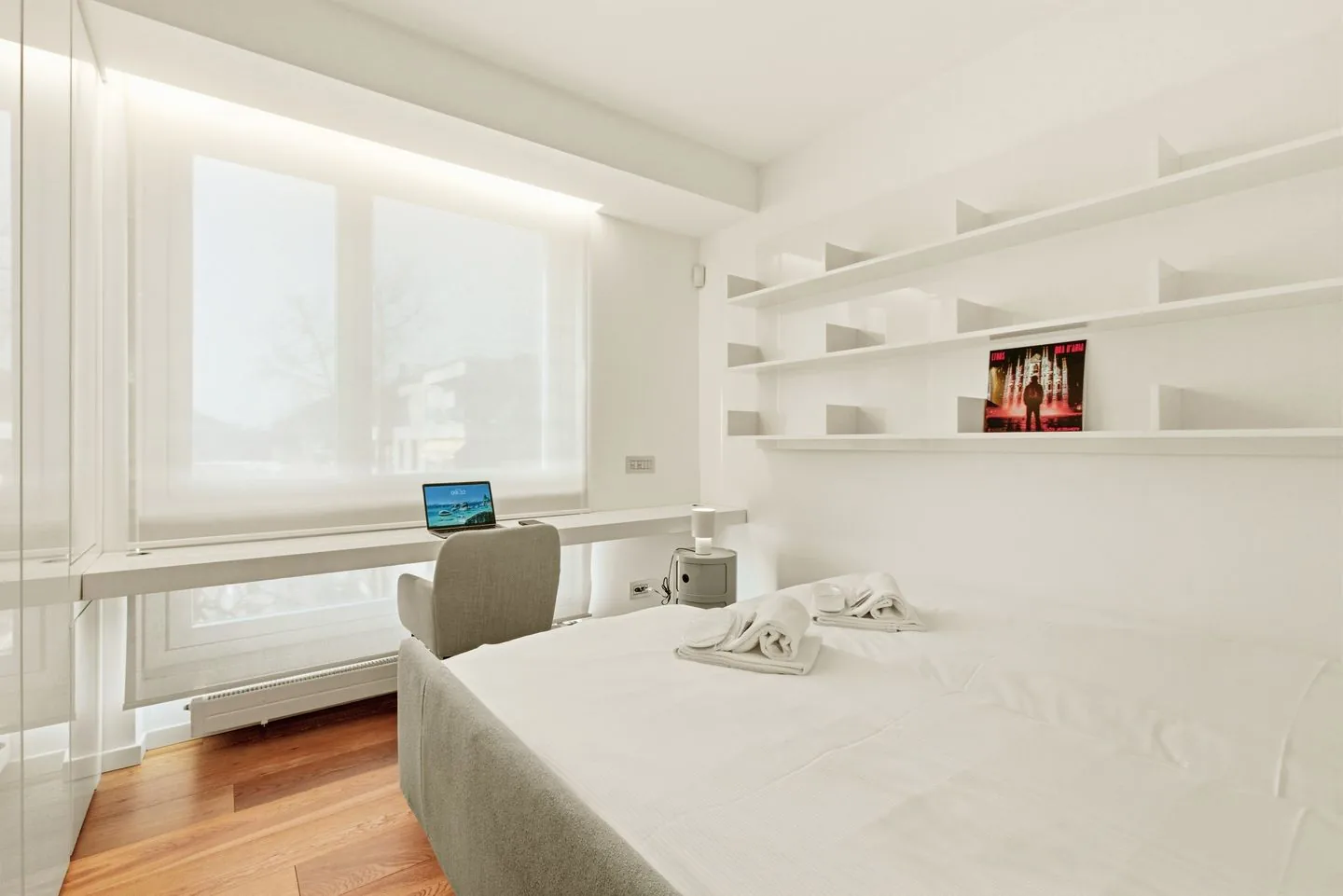
“Multi-purpose” can become a polite description for a room full of unrelated things. Be specific about the two activities you want it to support. Working at a desk and hosting an occasional overnight guest is a clearer brief than office, guest room, gym, laundry room and general storage.
Decide which role happens most often and which has less flexibility. Daily work may deserve the best light, while a visiting relative's access needs may determine the sleeping arrangement. Neither decision should be made solely by how often a piece of furniture appears in photographs of spare rooms.
Draw both arrangements in full
Sketch the room in its everyday state and its alternative state. Include open doors, pulled-out chairs and any unfolded bed or table. Check the route between the door, window and main activity area in both versions. A plan that works only while everything is closed does not represent actual use.
Mark every item that moves during the change. Then assign each a destination within suitable space. If the plan depends on moving a heavy chest or leaving equipment on the landing, simplify it. Flexible furniture earns its place through an easy routine, not merely through having hinges.
Let storage belong to an activity
Give each role a clear section of storage. Work materials might occupy a closed cabinet, while guest bedding has a separate shelf. Mixing them creates a search every time the room changes and can expose private papers or delicate equipment to unnecessary handling.
Store items in a way that preserves readiness. Clean bedding should remain dry and easy to find; hobby tools should be contained safely according to their use. Avoid packing the storage to its limit. A little spare capacity makes it possible to clear a surface quickly without rebuilding the entire cupboard arrangement.
Make shared furniture genuinely suitable
One table may support both work and crafts, but check the different demands on its surface, height and lighting. Protect finishes appropriately and allow time to clear one activity before starting another. A guest bed used as a daytime sofa needs comfortable support for sitting as well as sleeping.
Do not force a single item to perform incompatible jobs merely to reduce the furniture count. Sometimes two compact, well-positioned pieces are more useful than one elaborate convertible design. Test the action of changing any adjustable furniture before committing to it, including whether its intended user can manage it comfortably.
Create a short changeover routine
Write a few practical steps: put work equipment away, move the chair, open the bed and bring out bedding. Rehearse them once with the room fully in use. Any missing storage destination or awkward movement becomes obvious before a visitor arrives or an important task begins.
Consider how each role sounds as well as how it looks. A quiet workspace beside a noisy appliance may not support concentrated work, even when the furniture arrangement is efficient.
After the secondary use ends, restore the primary arrangement promptly. Otherwise the room can remain half prepared for both roles and comfortable for neither. A dual-purpose room should not feel like a continuous compromise. With clear priorities and a simple reset, it can provide two useful experiences at different times without demanding a larger home.
Choose a primary role and make the second one possible without a full-room shuffle.
A Swishover guide · Practical ideas to adapt to your own home.
Spotted something we should improve?