Check the conditions first
Balconies vary considerably in exposure, permitted use and structural capacity. Follow the building's rules and any available load guidance before adding heavy planters, storage or furniture. Do not attach objects to rails or alter barriers without appropriate permission. A compact outdoor space benefits from restraint for practical reasons as well as appearance.
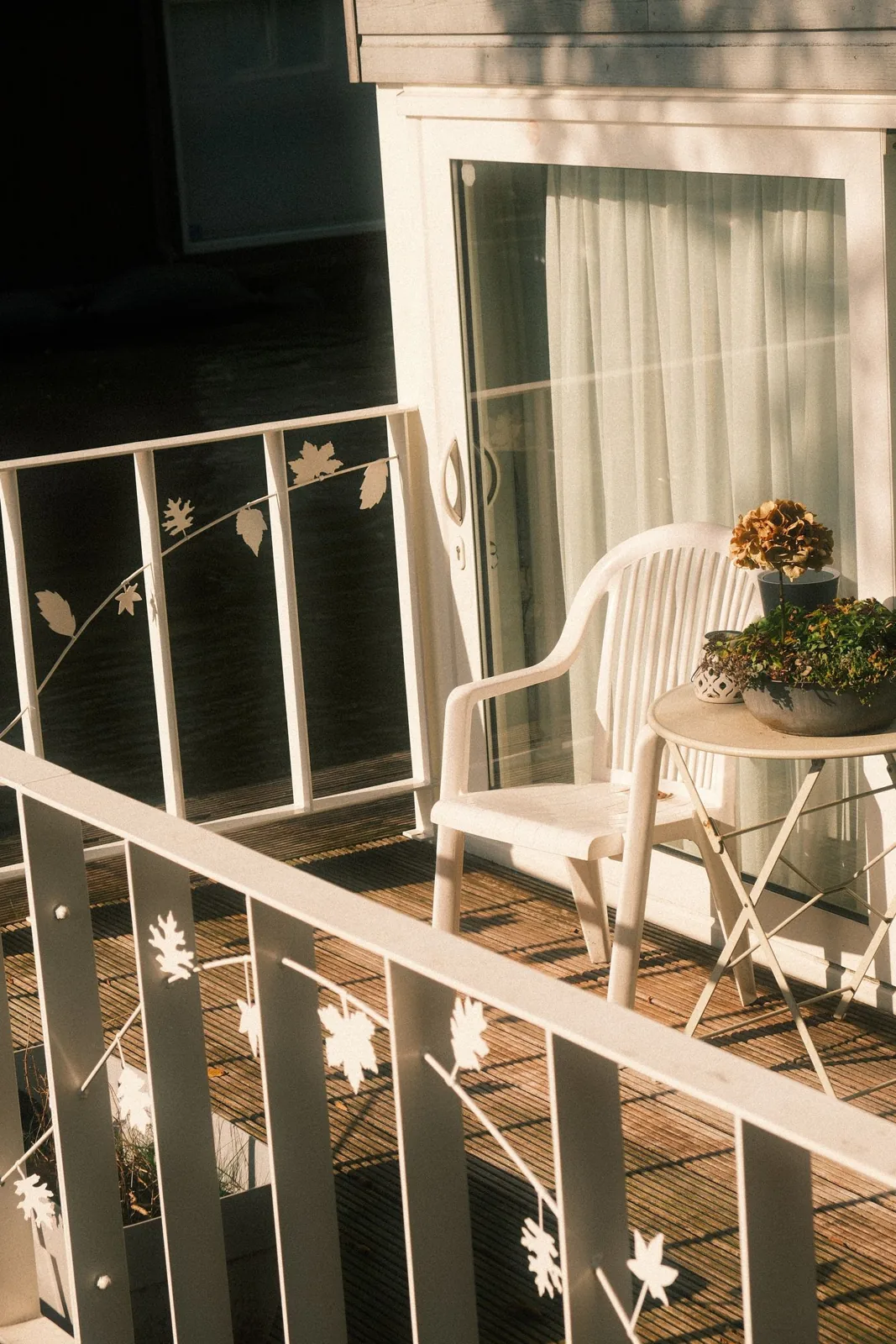
Notice wind, rain and sun across the day. A sheltered-looking corner can still catch gusts, and a seat that is pleasant in the morning may be uncomfortable later. Those observations should guide materials and placement rather than choosing a scene from a photograph and trying to reproduce it.
Give the door its full movement
Open the balcony door completely and mark the area it needs. Keep that route straightforward, including any threshold. Furniture that has to be shifted every time you go outside soon discourages use. If the balcony provides an important access route, preserve that function at all times.
Look at the view from inside too. A very tall chair back or a dense row of containers can make the adjoining room feel more enclosed. Lower furniture or fewer plants may give a better balance between a usable balcony and a pleasant interior outlook.
Choose one main activity
Decide whether the balcony is mainly for a morning drink, reading or growing a modest collection of plants. A tiny space can support more than one activity, but one should lead. Trying to include a dining set, loungers and a storage bench usually leaves no comfortable place to move.
For occasional seating, suitable folding furniture can help, provided there is somewhere sensible to store it and it remains stable in use. Check the dimensions when occupied, not only when folded. A narrow table is useful only if your knees and cup can fit comfortably around it.
Keep planting manageable
Choose plants suited to the exposure and containers with an appropriate drainage arrangement that complies with building requirements. Consider the filled weight and how watering will work. A planter that is difficult to reach may become neglected, while water draining onto neighbours or walkways creates another problem.
Use a few plants with differing shapes rather than buying many small pots to fill gaps. Keep containers stable and well inside safe boundaries. Avoid arrangements that encourage climbing near balcony rails, particularly where children may use the space, and never allow planting to compromise the protective barrier.
Make softness easy to remove
Outdoor cushions can make a simple chair inviting, but they still need care and storage appropriate to their materials. Choose only as many as you can bring in or protect conveniently. If the routine requires several trips each evening, the cushions may end up indoors while the balcony remains unused.
An outdoor rug is optional. Check whether the flooring and exposure suit it, whether it will hold moisture and whether its edges remain secure. Sometimes a clear, easy-to-clean floor feels more comfortable than another layer that needs regular lifting and drying.
Prepare for changing weather
Have a plan for securing or bringing in lightweight objects before windy conditions. Decorative lanterns, loose textiles and small tables should not be left where they could become hazards. Follow product guidance for outdoor lighting and keep cables from obstructing the doorway.
Finish by sitting outside with the drink or book you imagined using there. Can you reach the table, open the door and move back inside easily? If so, resist adding more simply because a corner remains empty. The balcony should offer a change of pace, not a new collection of things to manoeuvre around.
Plan around the door, exposure and one activity you want to enjoy outside.
A Swishover guide · Practical ideas to adapt to your own home.
Spotted something we should improve?