Keep the passage honest
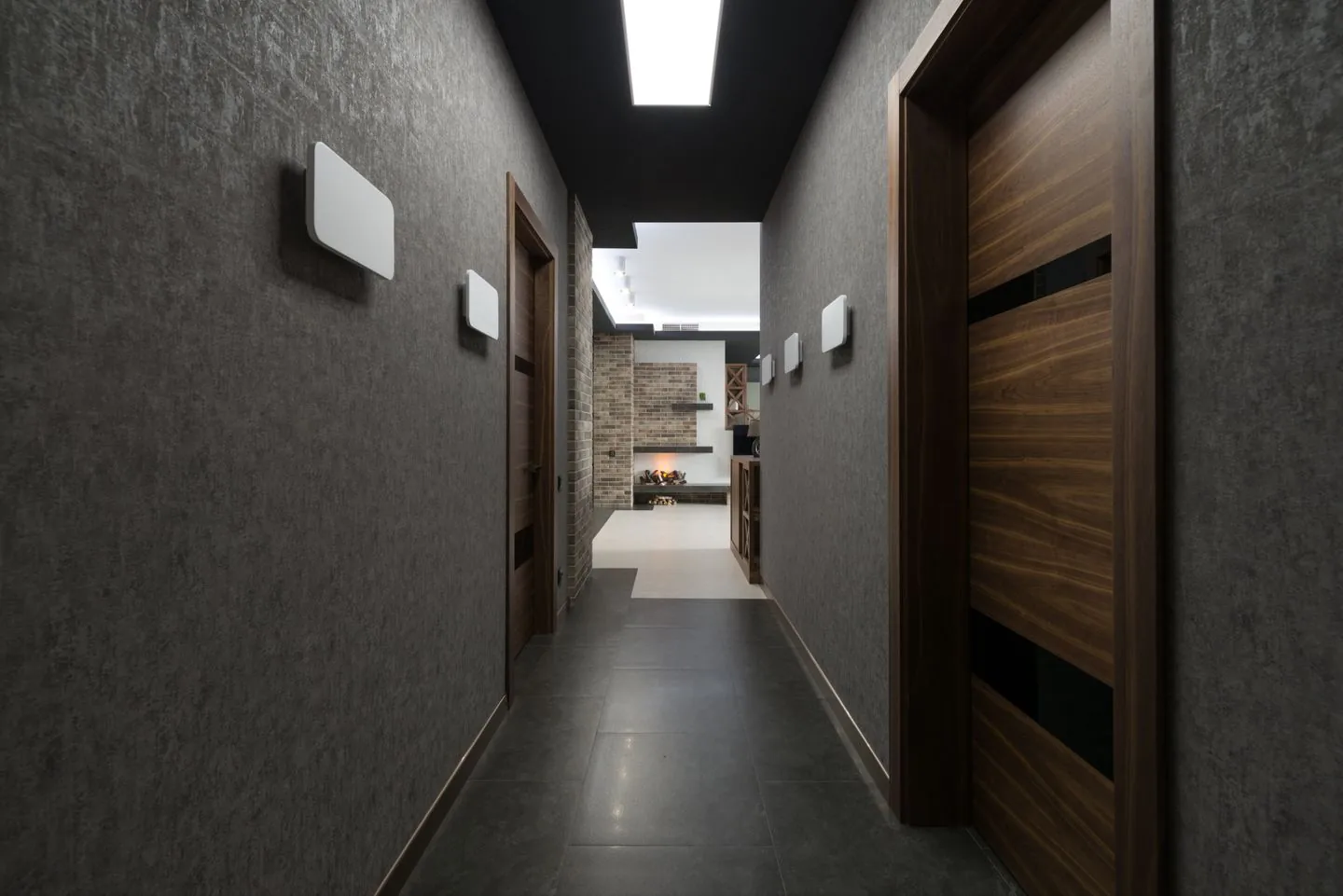
A hallway's first job is movement between rooms. Start by checking the narrowest point with doors open and people passing. Furniture may fit against a wall yet still project into the place where shoulders or bags travel. Remove temporary piles and test the route before deciding that the hall needs a console or bench.
Look at the ends as well as the middle. A cupboard near the entrance or a chair outside a bedroom can affect how the whole passage works. Keep access straightforward, especially where the hallway forms part of an escape route.
Decide where the eye should pause
A very long, uninterrupted wall can emphasise distance. One larger artwork or a small, coherent group can create a visual pause. Place it where there is enough space to see it comfortably, rather than scattering pictures at regular intervals simply to fill the wall.
The far end may benefit from a focal point, but it does not have to be furniture. A paint colour, an artwork or a door with an appealing finish can be enough. Avoid placing an object there if it blocks a useful doorway or narrows a turning space.
Give light a consistent route
One bright light at the entrance can leave the far end feeling neglected. Assess how the existing lights distribute illumination and whether compatible lamp choices improve consistency. Electrical changes should be planned with a qualified professional, particularly in areas where suitable placement is limited.
Mirrors can reflect available light, but check what they actually reflect before fixing one. A mirror facing a dark cupboard will not create daylight. Position it for a useful view and consider whether reflections of several doors make the passage feel visually busier rather than calmer.
Choose floor treatments carefully
A runner can soften footsteps and connect a sequence of doorways, but it needs to suit the floor and remain secure and flat. Check door clearance and avoid a size that ends awkwardly across a busy threshold. Follow the flooring and rug guidance for an appropriate underlay.
Pattern changes the emphasis. Long stripes can reinforce the corridor effect, while a quieter or broader pattern may feel less directional. There is no obligation to use a runner at all; a clear, well-kept floor can be the most practical choice in a heavily used hall.
Make storage shallow and specific
If storage is needed, decide exactly what belongs there. A compact shoe unit or a few well-positioned hooks may solve an entrance problem without requiring a deep cabinet. Check that the stored objects do not project further than the furniture itself, especially bulky coats and bags.
Avoid using the hallway as general overflow. Every extra category brings more objects into a space that people must continually pass through. Store only the things connected to arriving, leaving or the nearby rooms, and give the remaining possessions homes where they are actually used.
Let some length remain quiet
After adding light, art and any necessary storage, leave sections of wall undecorated. Repeating a feature at every available point can make the hallway feel more relentless, not less. The pauses between objects are part of the rhythm.
Walk the full route at different times of day. Notice whether you slow down to avoid something, whether a dark patch makes finding a door awkward and whether the end feels welcoming. Adjust those details first. A successful long hallway feels easy and composed while still behaving like a passage through the home.
Use light and a few deliberate stopping points rather than lining every wall with objects.
A Swishover guide · Practical ideas to adapt to your own home.
Spotted something we should improve?