Distinguish the daily coat from the reserve
Bulky outerwear needs more room than its hanger suggests. Start with the coats being worn now, including the weather layers each person genuinely needs. Move out-of-season coats and occasional formal outerwear to suitable storage elsewhere. The entrance should handle daily arrivals rather than the complete collection. This is especially useful in a small home, where a crowded rail can spread coats over shoes, bags and the floor. Check pockets before moving anything away, and clean garments according to their care labels. A coat that needs attention should not disappear into a storage bag only to be rediscovered when cold weather returns.
Give shoulders enough room
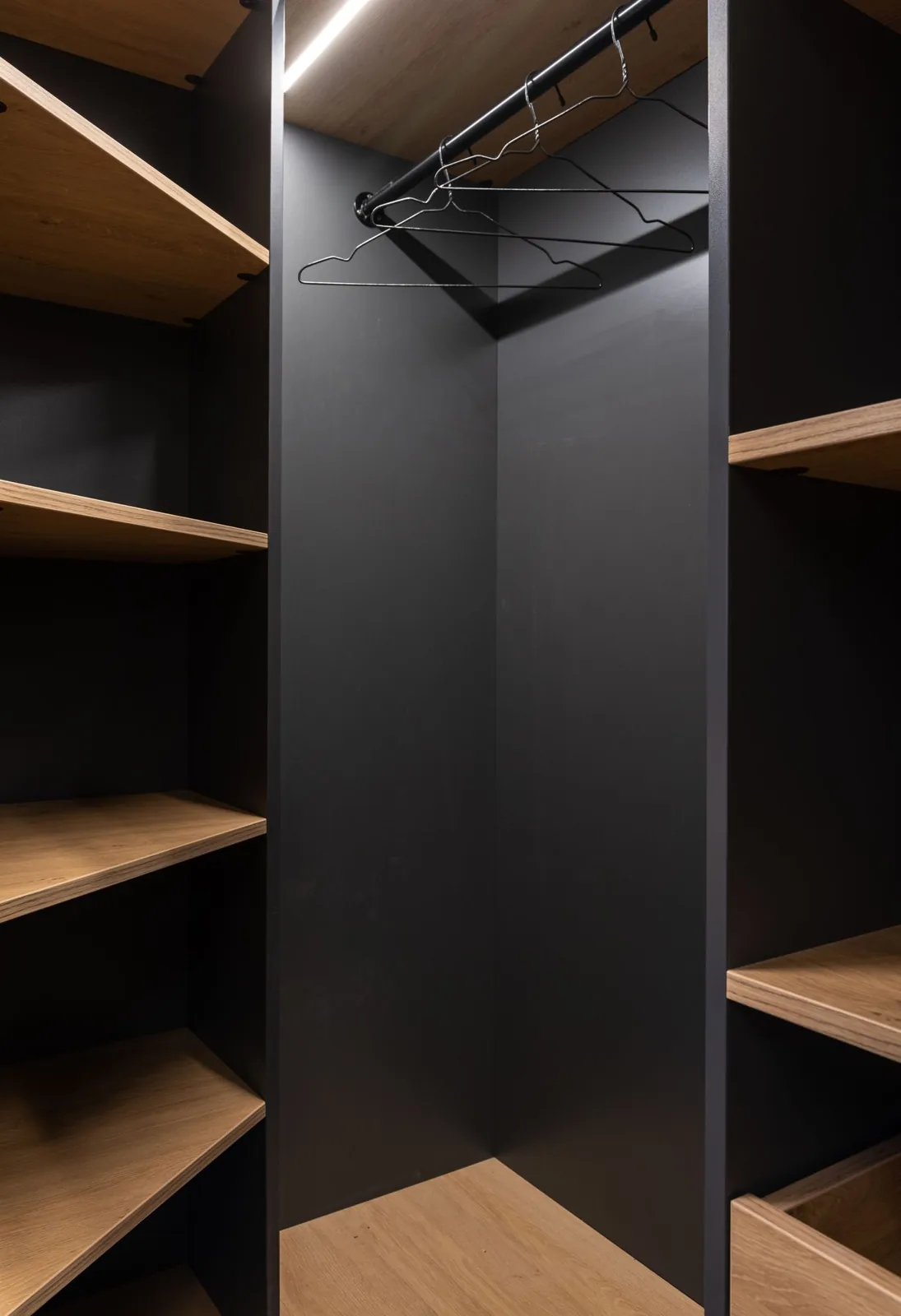
Use hangers that support the garment appropriately and leave space between coats so sleeves do not knot together. A shallow cupboard may not accept conventional sideways hanging; a suitable front-facing rail can work for a small collection, but the rear garment will be less convenient. Test the arrangement with the actual coats and keep the most frequently worn one nearest the opening. Hooks offer quick access for suitable garments, though heavy coats may pull on small loops or distort if hung carelessly. Follow the garment's care guidance and choose fittings rated for the load, installed appropriately for the wall.
Allow wet outerwear to dry
A coat arriving damp needs a suitable drying position before it is enclosed among dry clothing. Keep it away from strong direct heat unless its care instructions permit that treatment, and allow air to circulate around it. A crowded sealed cupboard is not a drying space.
If the entrance cannot accommodate this stage, identify another practical location that does not obstruct doors or walking routes. Protect vulnerable flooring from drips and return the coat to its normal home once dry. Leaving every coat permanently in the drying area turns a temporary solution into a second overloaded rail.
Use seasonal storage carefully
Choose clean, dry storage appropriate to the fabric and filling. Some garments benefit from breathable covers; others have specific requirements that should guide the choice. Avoid compressing structured coats or down-filled items unless their manufacturer permits it. Label the storage clearly and keep it accessible enough for an unexpected change in weather. A high shelf can hold light folded outerwear where suitable, but heavy boxes should remain at a manageable lifting height. Store hats and scarves separately if they keep slipping from coat pockets or becoming lost beneath sleeves.
Let each person see their place
In a shared entrance, a defined portion of rail or a labelled hook can prevent one person's bulky coat from taking every available position. Allocate space according to real needs rather than insisting each garment takes the same width. Children need reachable storage that does not encourage climbing. Keep low coat hems clear of dirty footwear, and check that an open door does not sweep hanging garments into the wall.
Reduce the repeated obstruction
After a week, identify the coat that repeatedly ends up on a chair. Its assigned place may be too high, too crowded or inconvenient when arriving with bags. Adjust that position before adding more rules. If all the daily coats still exceed the available space, move one less-used layer farther inside or consider a more suitable storage piece. Preserve a little room between garments; that margin makes both drying and retrieval easier. A small entrance feels more manageable when outerwear has a limited, workable role rather than unlimited permission to accumulate.
Keep the current rotation small, support garments properly and dry damp coats before enclosing them.
A Swishover guide · Practical ideas to adapt to your own home.
Spotted something we should improve?