Choose a place where paper is handled
An everyday paper tray works best near the place where you read post, complete forms or check dates. That may be a desk, a kitchen shelf or a small home-office cupboard. The entrance can collect incoming letters briefly, but it is not necessarily where decisions happen. Choose a location with enough light and a nearby clear surface for opening envelopes. Keep private material away from casual view if the space is shared or visible to visitors. The tray should be easy to reach without becoming the room's main decorative feature. A simple container in the right place is more useful than a large filing system elsewhere.
Define what the tray accepts
Use the tray for paper that still needs a decision or action. Old manuals, sentimental cards and long-term records need separate homes. Remove obvious unwanted material when it arrives, and handle sensitive information appropriately before disposal. Avoid putting unopened post beneath a stack of already-read leaflets, where the next important letter becomes difficult to distinguish.
If several people receive paper, decide whether one shared tray is clear enough or whether small named sections would help. Keep the categories limited. A tray divided into many subtle statuses can create another task every time a letter arrives, while one undifferentiated pile may conceal deadlines.
Separate action from reference
A folder within the tray can hold items awaiting a specific action, such as a form to complete or a receipt needed for a return. Put the relevant date into the calendar or reminder system you actually use rather than relying on the paper's position to keep it visible. Keep supporting pages together with a clip or folder so a task is not scattered across the tray.
Reference material that will be needed later should move into an appropriate file, physical or digital. If scanning, check that the scan is complete and readable and consider whether the original needs to be retained. Do not discard important originals simply because a photograph exists on a phone.
Keep the tray small enough to notice
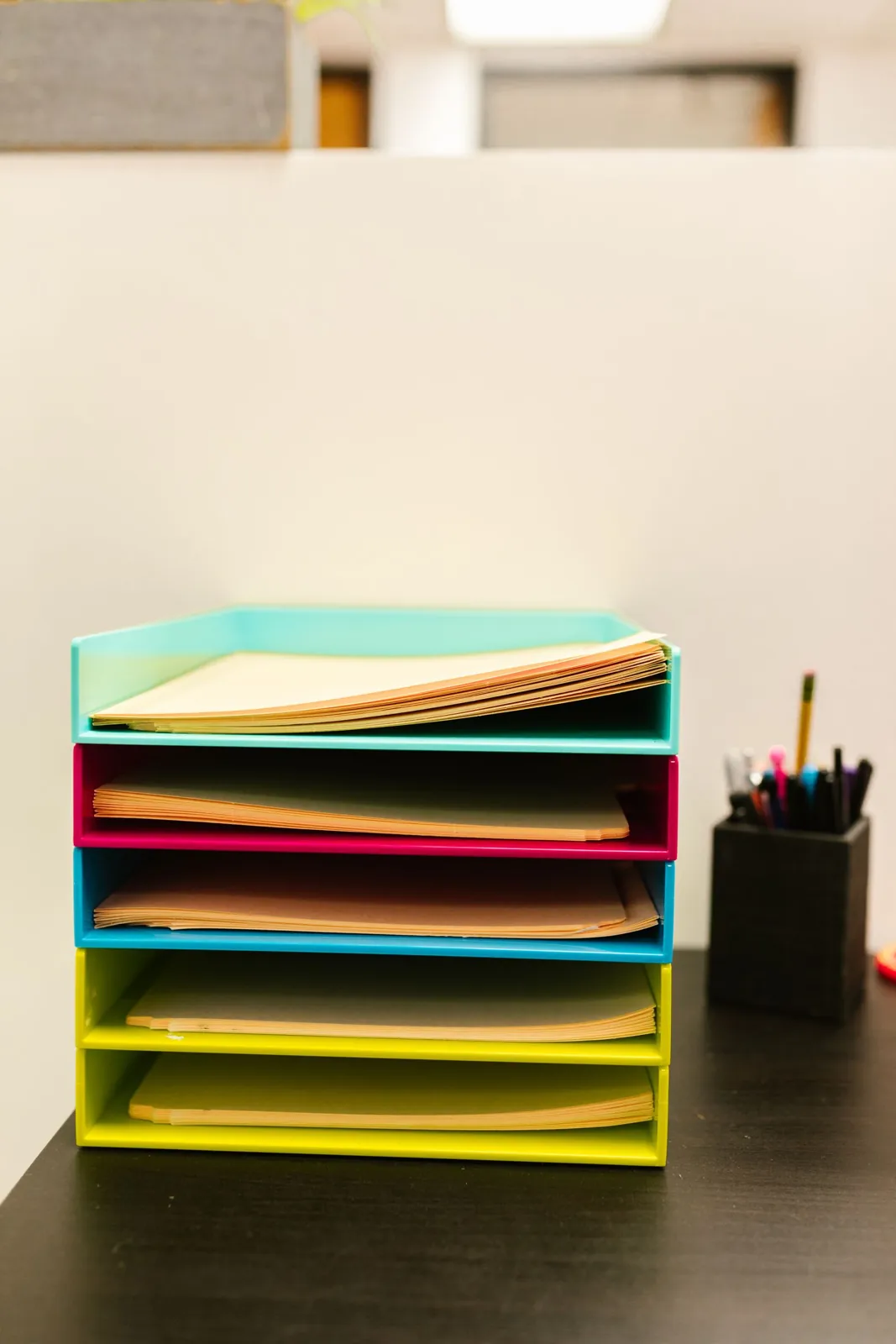
Choose a tray that fits the normal volume of incoming paper rather than the largest one the furniture can hold. Its boundary should make an accumulation visible. A shallow tray is often easier to review than a tall box whose lower contents disappear. Leave room beside it to sort a handful of pages without spreading across the whole dining table. Keep a pen and any routinely needed envelopes nearby if they help finish small tasks. Do not add spare stationery in such quantities that the working paper loses its space.
Review at a useful moment
Pick a regular opportunity that fits the household, such as after opening the week's post or before planning the next few days. Take each item out and decide its next destination: action, reference, another person or appropriate disposal. Avoid simply straightening the pile and returning it unchanged. If a task cannot be completed immediately, record its next step and keep the relevant papers together. The tray should become lighter through decisions, not through moving its contents to an unseen drawer. When it repeatedly fills too quickly, reduce the categories it handles or increase the frequency of review rather than adding a second identical pile.
Let the tray hold undecided or active paper briefly, with dates recorded and reference material filed elsewhere.
A Swishover guide · Practical ideas to adapt to your own home.
Spotted something we should improve?