Begin with the child's version of the room
Watch how toys are chosen and used before organising them. Children may recognise a group as cars, animals or building pieces rather than the finer categories an adult would choose. Keep the main groups broad enough to understand quickly. A system that requires sorting every block by colour may be satisfying to arrange but difficult to maintain after ordinary play.
Separate toys that need adult supervision, contain small parts unsuitable for younger children or require secure storage. Follow the toys' age guidance and keep different ages' needs in mind in a shared room. The daily open storage should contain the things children can use and return appropriately. Other materials can have a clearly separate, adult-managed home.
Choose containers that show their purpose
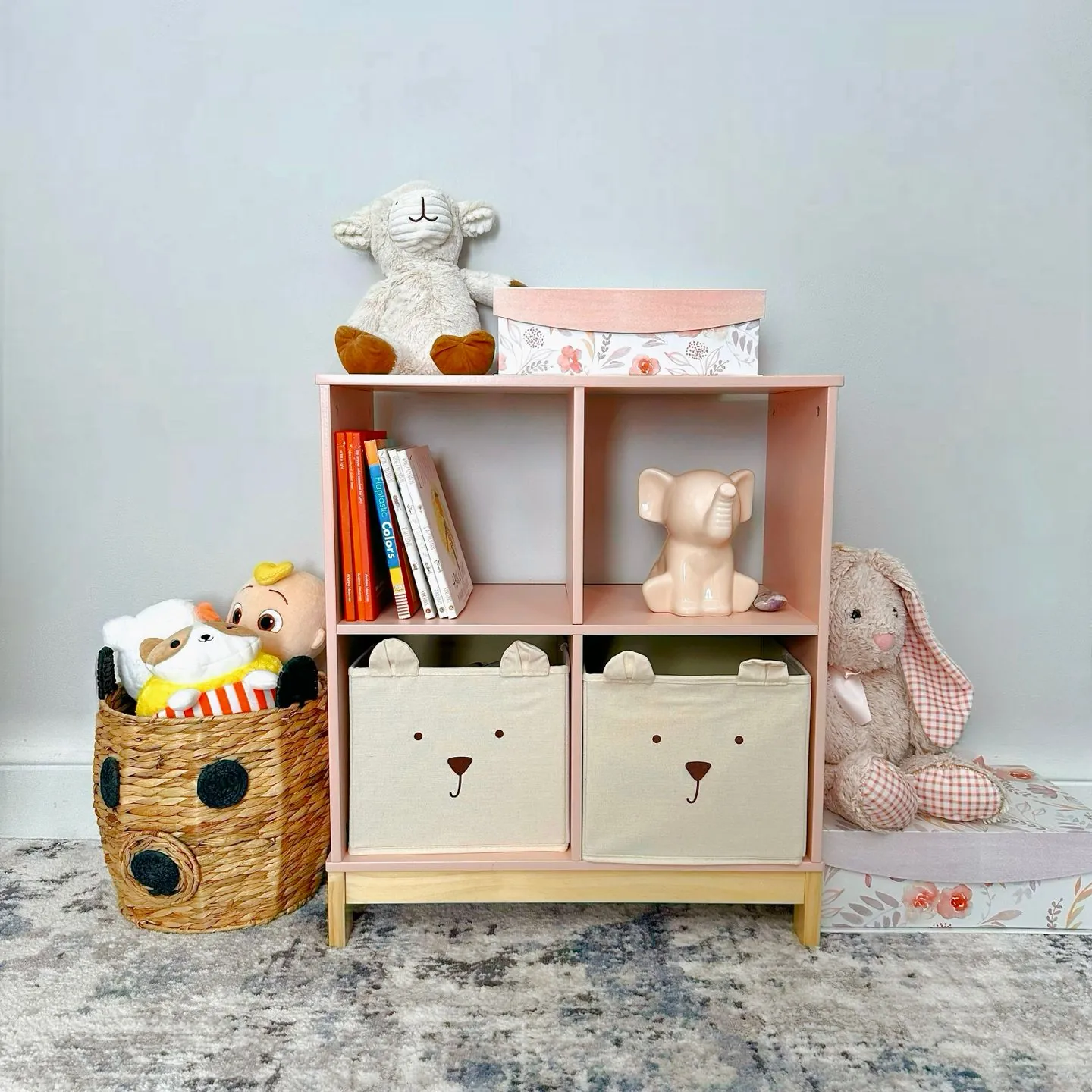
Shallow open tubs make it easier to see a collection without emptying everything onto the floor. Very deep toy chests can bury small favourites and encourage repeated tipping out. Use a larger basket for bulky soft toys if that suits them, and a smaller rigid box for pieces that need to stay together. Choose containers with smooth edges and manageable weights.
Pictures can help children recognise a category before they read. A simple image of a car on the vehicle tub is more useful than a decorative label with an unfamiliar word. Keep labels consistent enough to be understood, but do not let making them become the main project. The most useful clue is still the visible contents and the place where the tub returns. Keep game instructions with their pieces so starting again does not depend on finding a missing booklet.
Keep access safe and realistic
Place everyday toys at a reachable height and follow the storage furniture's anchoring and load instructions. Avoid putting desirable toys high enough to encourage climbing. Check lids, hinges and openings for suitability to the household, especially where young children use the furniture independently. A heavy basket full of blocks should not require lifting down from above a child's head.
Leave floor space where a tub can sit during play without blocking the route through the room. If storage is in a living room, make the return path short enough that children do not have to carry loose pieces across the house. A mobile container can help only if it moves safely and has a clear parking place; otherwise it becomes another obstacle among the toys.
Make room for unfinished play
Not every construction needs to be dismantled at bedtime. A low shelf or tray can hold one current project, provided it remains safe and does not obstruct normal use of the room. Defining that space makes it easier to distinguish an unfinished game from scattered unused pieces. Keep the arrangement modest so it does not become a second permanent storage area.
Tidy together using the visible groups rather than expecting the labels to teach the whole routine. If a category is repeatedly confusing, simplify it. Rotate toys only when it helps the household, storing clean complete groups where an adult can find them. Leave some spare capacity in each tub so returning pieces is easy. An understandable system allows a few mistakes and still restores enough order for the next activity.
Use broad recognisable groups, safe reachable storage and one clear place for an unfinished project.
A Swishover guide · Practical ideas to adapt to your own home.
Spotted something we should improve?