Measure the opening as well as the shelf
Shallow cupboards are often easier to use than deep ones because their contents cannot disappear far behind a front row. First measure the clear depth with the door closed, allowing for hinges, latches and any internal trim. Check the width of the opening too: a shelf may extend behind a frame that prevents a wide box sliding out. Write down the usable dimensions before looking for organisers.
Try the actual belongings on the shelf. Toiletries, folded tea towels, small stationery supplies or narrow food packets may fit naturally, while bulky appliances probably will not. Give the cupboard a task suited to its proportions. An awkward cupboard becomes more useful when its contents change; it does not always need a more elaborate fitting.
Make height earn its place
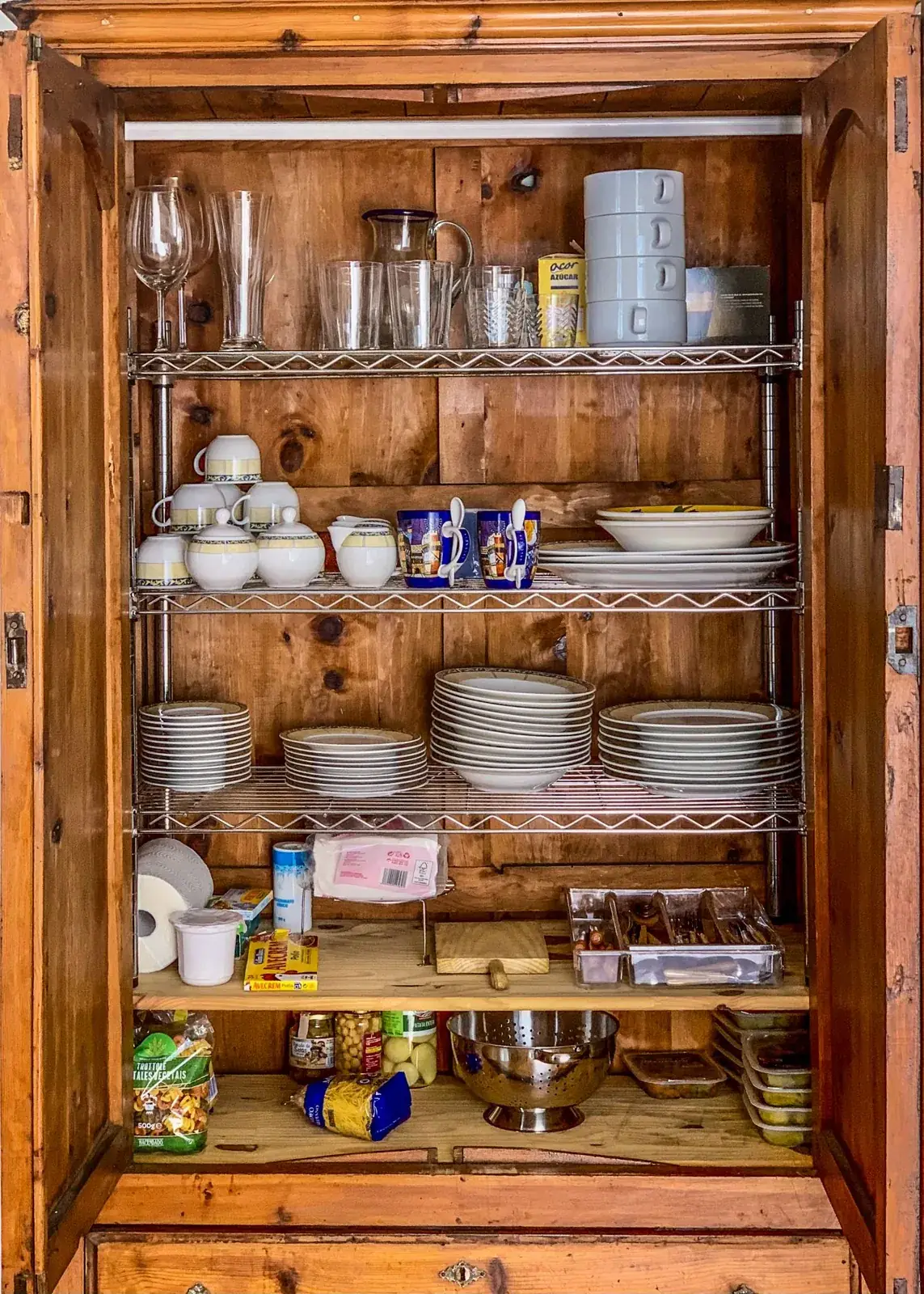
If shelves can be adjusted, set their gaps around the objects they hold. Short bottles do not need a tall empty space above them, while an upright folder needs room for a hand to grasp its top. Additional shelves can improve a shallow cupboard when fitted appropriately and within the unit's load guidance. Avoid creating slots so tight that contents can only be pushed in sideways.
For fixed shelves, a small stable riser may divide a tall gap, but check whether it actually improves access. A second tier that hides labels or requires removing everything below may add capacity without usefulness. Heavy objects belong where they can be handled comfortably. Keep fragile items away from positions where the door hardware could catch them as the cupboard closes.
Use the width in small groups
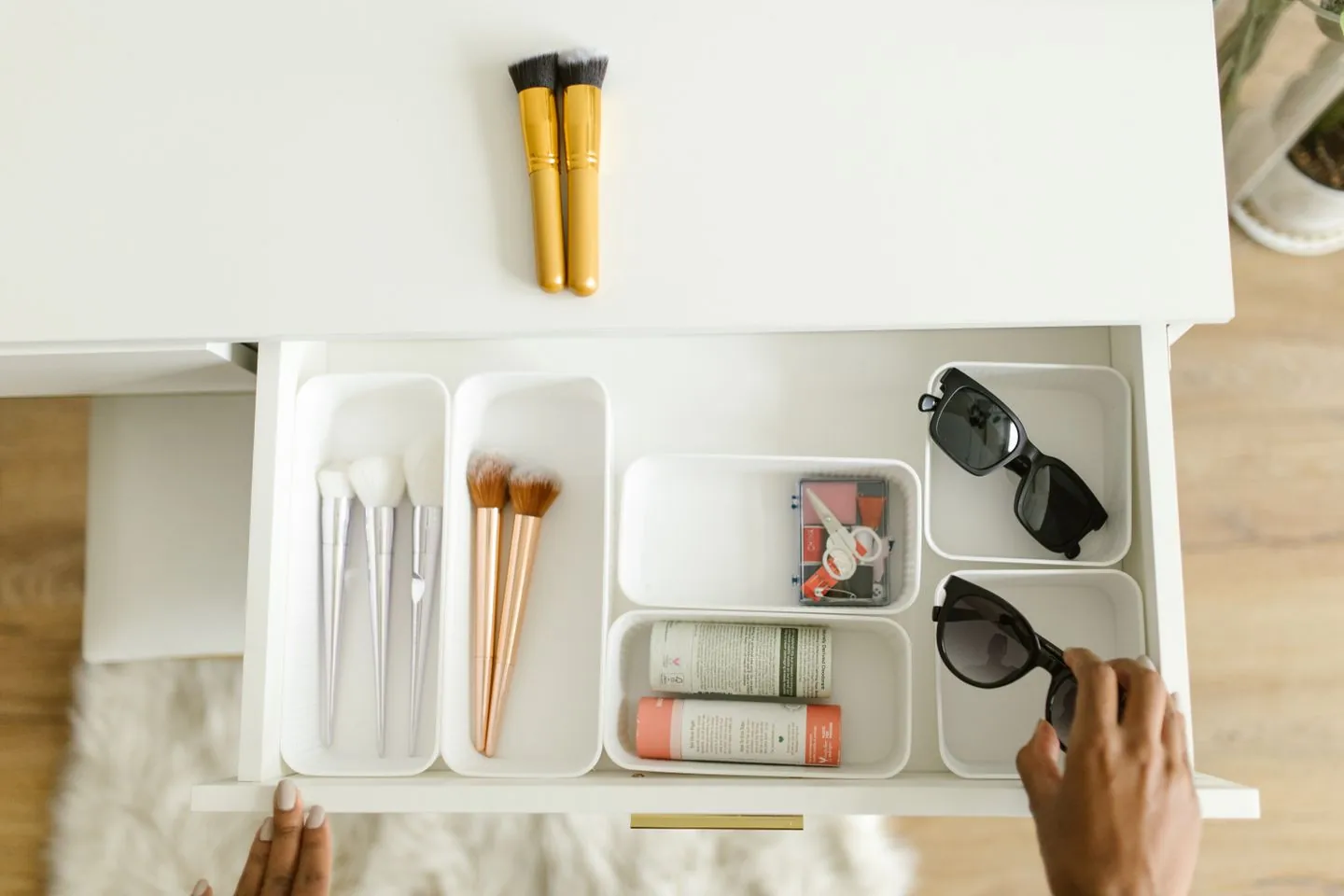
Choose shallow containers that hold one recognisable category. A tray of shoe-care items, a box of spare stationery or a row of cleaning cloths can be removed as a unit. Oversized baskets waste depth through thick sides and handles, so simple narrow boxes may work better. Leave a little clearance around each one; storage that only fits when pushed precisely into place is unlikely to stay orderly.
Door-mounted storage can help in some cupboards, but measure the closed space carefully and check the door and fitting specifications. A rack must not collide with shelves, strain hinges or prevent a full closure. In rented accommodation, check permission before drilling. It is often better to retain an uncomplicated door than to add an organiser that makes every opening awkward.
Keep the front edge readable
Place labels where they can be seen with the door open, and face packaging forward. Because the cupboard is shallow, a single visible row can make stock checks quick. Resist turning that advantage into several overlapping mini-rows. If loose packets fall forward, a low-fronted container can hold them upright without hiding their names.
Use the arrangement for a week before buying more fittings. Note which objects catch on the door or get left outside because returning them feels fiddly. Widen their space or move them elsewhere. Keep occasional reserves in a separate defined section, so daily items are not displaced by bulk purchases. A shallow cupboard works hardest when every position is accessible and its limits remain clear, rather than when it is filled to the point that closing the door becomes a careful manoeuvre.
Assign shallow cupboards shallow contents, then adjust shelf height and group width to keep everything accessible.
A Swishover guide · Practical ideas to adapt to your own home.
Spotted something we should improve?