Follow a normal morning
A wardrobe should help you assemble the clothes you actually wear. Before changing its interior, notice where dressing slows down. Perhaps work trousers are hidden behind occasion dresses, socks live across the room or clean jumpers remain on a chair because their shelf is full. These are different problems, and buying more hangers will not solve all of them. Lay out a typical weekday outfit and identify the storage location of every part. Aim to bring the things used together within a comfortable reach, while keeping enough separation to see individual garments. There is no need to rearrange everything by colour unless that helps you choose.
Give hanging space a clear purpose
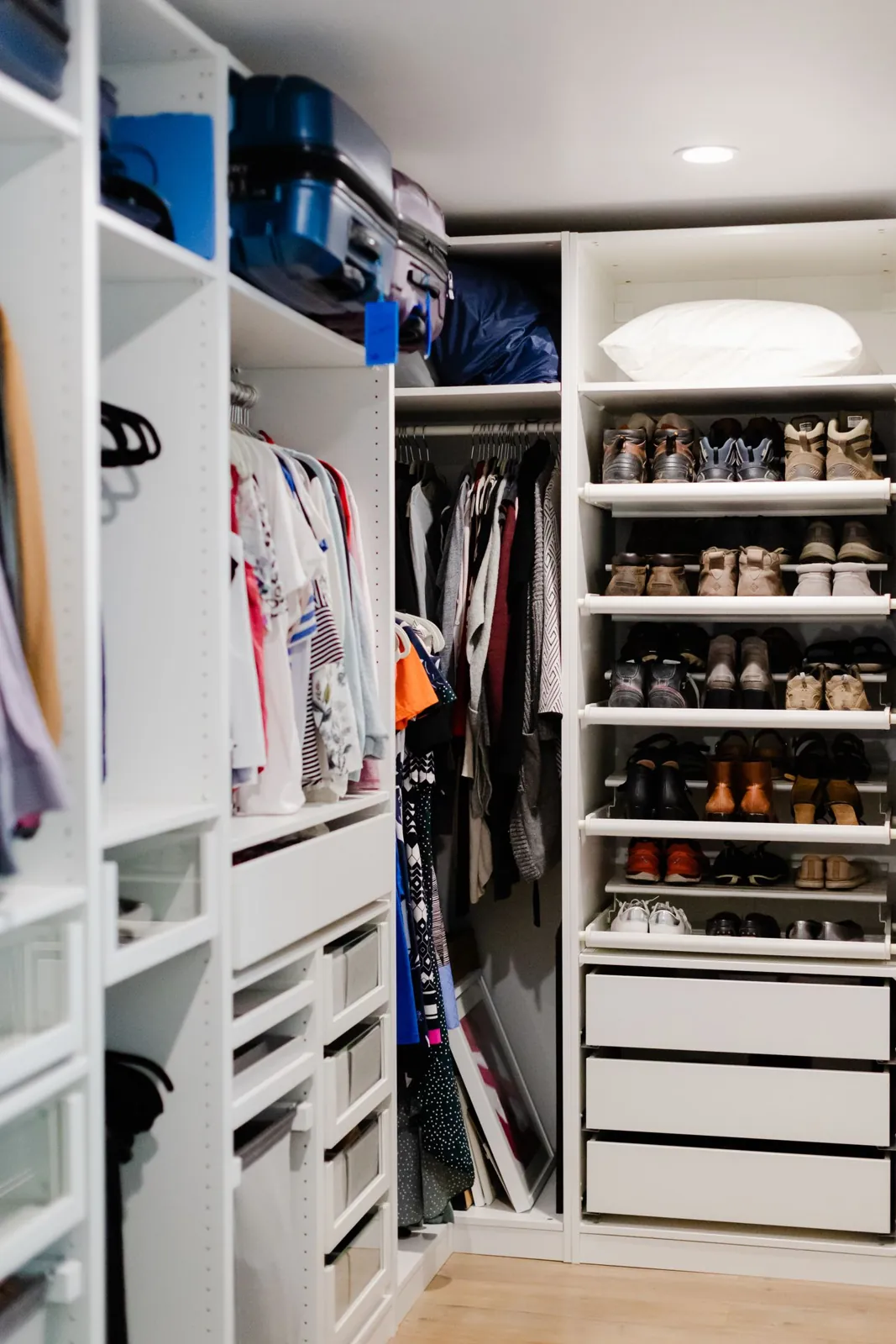
Separate long garments from shirts, jackets and folded trousers. Where the wardrobe allows, the shorter group may leave room for a drawer or basket below, but check that hems hang freely rather than resting on the contents. Use hangers suitable for the weight and shape of the garment; very thin hangers are not automatically better if shoulders slip or stretch. Leave enough space to slide one hanger sideways and lift it out. If that requires force, move occasional clothing elsewhere or reduce the contents. A dense rail hides options and makes returning freshly ironed clothes unnecessarily awkward, particularly when several people share the same wardrobe.
Fold to suit the container
Choose a folding method that makes the whole group visible. In a drawer, upright folded T-shirts can be easier to scan than a tall pile. On an open shelf, a short stack may be more stable and easier to lift. Neither method works well when the container is too deep to reach or packed tightly enough to crease everything. Group similar garments and try one drawer before committing to a system. Keep heavier knitwear folded if hanging would distort it. Shelf dividers can stop neighbouring piles leaning into each other, although the useful first step is usually making each pile shorter.
Connect storage to laundry
The wardrobe needs to accept clean washing with little preparation. Put underwear and everyday socks in open compartments that do not require perfect folding. Keep a small, defined place for clothing that can be worn again, such as a hook or a short section of rail, rather than mixing it unpredictably with freshly washed garments. This place should stay limited so that a second wardrobe does not develop on a chair. Set aside repairs in a separate bag with the relevant button or thread, and decide when they will be dealt with. Returning an unusable item to the main rail makes the next morning no easier.
Test the reach, then refine
Use the arrangement for several days before adding organisers. The most convenient positions belong to current daily clothes, not necessarily the most expensive or attractive pieces. High shelves can hold light, occasional items in labelled containers, while heavy boxes should remain at a manageable height. Avoid placing an unstable stack above your head. If a shared wardrobe has two routines, divide usable space fairly rather than assigning one person every difficult corner. Finish by leaving a little spare capacity for laundry returning all at once. A wardrobe that only works when half its contents are in the wash is still too full for its job.
Let dressing and laundry guide the layout, with daily clothes visible and easy to return.
A Swishover guide · Practical ideas to adapt to your own home.
Spotted something we should improve?