Name the lighting job
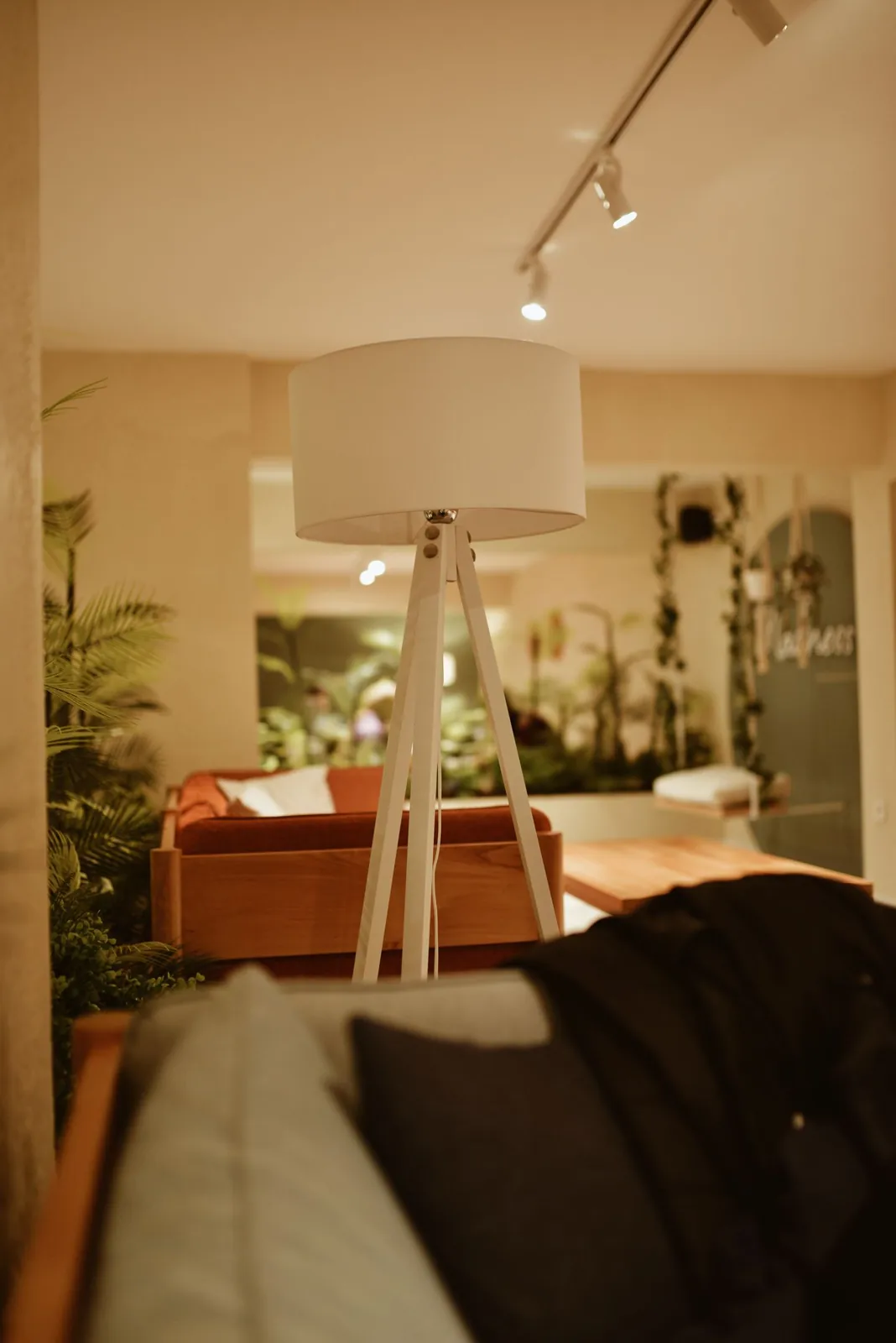
A floor lamp may illuminate a book, soften an empty corner or add general light to part of a room. Those jobs call for different designs. A directional reading lamp concentrates light in a useful place, while a shaded lamp may spread it more broadly. Decide what is currently difficult in the room before browsing shapes and finishes.
Look after dark, when the need is clearest. Switch on the lights you already have and notice whether the problem is insufficient task light, harsh contrast or an awkwardly positioned source. A new lamp should address that specific gap. Adding another bright light without understanding the existing arrangement can make the room busier without making it more comfortable.
Check the shade from seated eye level
The top of a lamp is only part of what you see while sitting. An open shade may expose a bright bulb from a nearby chair, even if it looks attractive when viewed standing up. Compare the shade height and shape with the intended seat. The light should be comfortable from normal positions, including when you lean back.
For reading, check whether the lamp can reach the page without your body casting a strong shadow. Adjustable arms are useful when their actual range suits the seat. Look at how easily they move and whether the position remains stable. A dramatic arc may require far more floor space than its small shade suggests.
Measure the base as well as the height
Mark the base footprint beside the furniture, including any projecting feet. Keep the walking route clear and allow doors or drawers to operate. A heavy base can improve stability but may be difficult to move or clean around. Follow the manufacturer's assembly and stability instructions rather than judging security from weight alone.
Consider children, pets and normal movement through the room. A lamp beside a busy turning point may be knocked even if the base fits neatly under a side table. Avoid placements that depend on everyone remembering to step around a barely visible stand. A slightly different position or more compact design may work better.
Read the electrical and bulb details
Check whether the lamp uses replaceable bulbs or an integrated light source, and understand any relevant replacement or servicing arrangements. For bulb fittings, follow the specified type and maximum rating. If dimming matters, confirm compatibility among the lamp, bulb and controls rather than assuming any dimmable bulb will work in any fitting.
Colour of light and brightness should suit the activity and neighbouring lights. Compare specifications carefully, but remember that shade material and room surfaces affect the result. A sample display or a suitable return policy can be helpful when the exact effect is hard to judge remotely. Avoid relying on a product photograph to show realistic brightness.
Plan the daily operation
Check the switch position and the route to a suitable socket. A foot switch hidden behind furniture may be inconvenient, while a cable stretched across a doorway is unsuitable. Keep leads safely routed without trapping them. Before buying, imagine turning the lamp on, reading, standing up and cleaning around it. The right floor lamp makes those ordinary actions easier while giving the room the light it actually lacks.
Test the lamp from the seat and route it will serve, including glare, controls and cable placement.
A Swishover guide · Practical ideas to adapt to your own home.
Spotted something we should improve?