Distinguish a shade from a complete light
Product listings may show a pendant shade, a fitting or a complete assembled light. Check exactly what is included and whether it is compatible with the existing installation. Do not assume a shade can attach to any pendant simply because the opening looks similar. Confirm the fitting dimensions, bulb requirements and any other compatibility details with the manufacturer.
Changes involving electrical work should use appropriate qualified help and any necessary property permission. A visual refresh is not a reason to improvise wiring or modify an incompatible fitting. Establish what can be changed safely before comparing decorative forms, so the eventual choice is practical to install.
Relate the size to the table
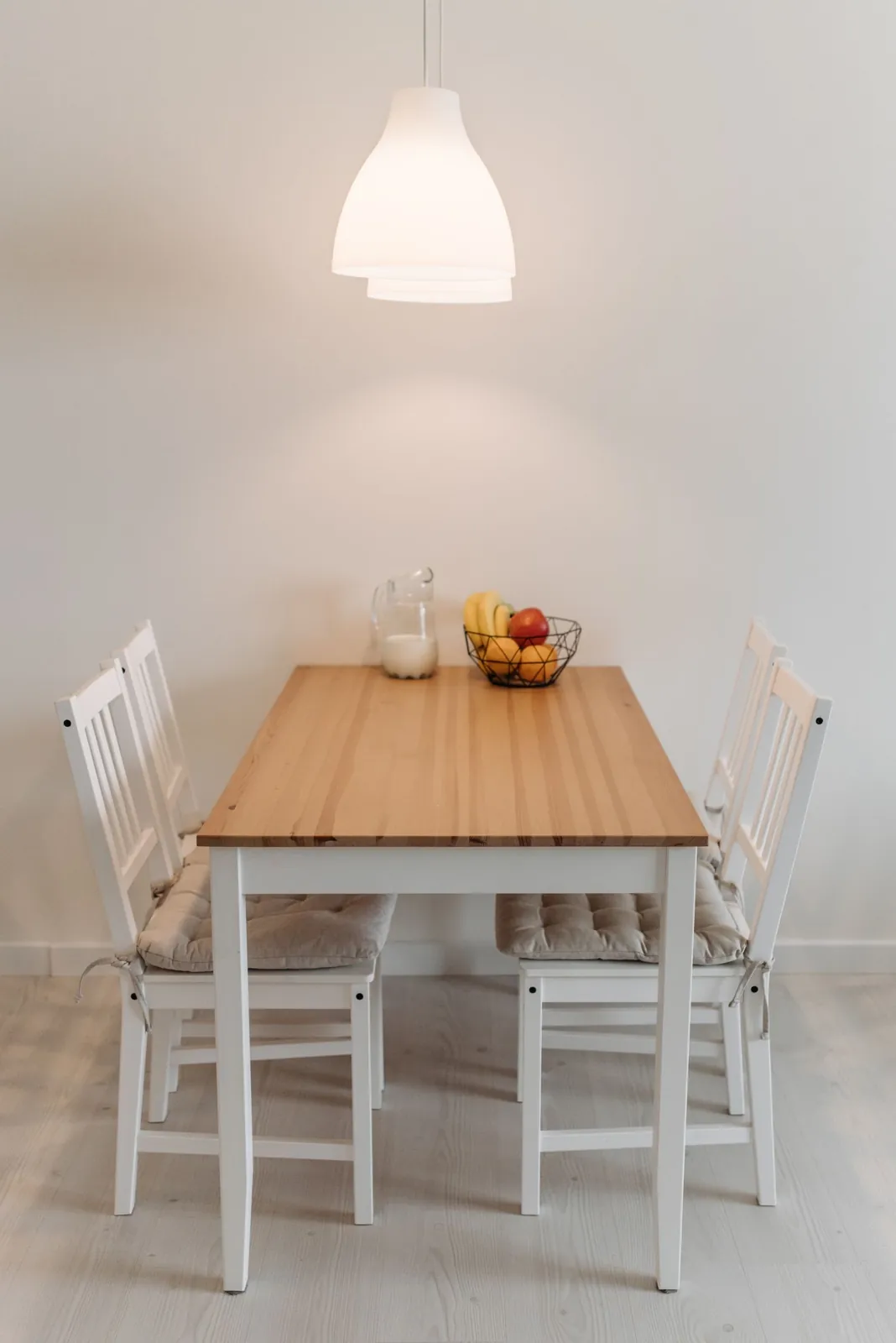
Measure the table and mark the proposed shade's outline with a safe temporary method that does not involve suspending an unsuitable object. Consider the view from the doorway and the occupied seats. A large shade can become a strong feature, but it should not overwhelm a modest table or intrude awkwardly into the room's circulation.
Check the complete height and the available suspension adjustment for the fitting. The suitable position depends on the shade, table and room, so follow product and installation guidance rather than relying on a single universal hanging measurement. People should be able to see one another comfortably, and the light should not create an obstruction during normal use.
Account for an extending table
If the table extends or moves regularly, consider the light in those arrangements too. A pendant centred over the everyday position may behave differently when the room is rearranged for a larger meal.
Look at where the light goes
An opaque shade directs light differently from a translucent or open design. Think about whether you need focused light on the table, a softer glow into the room or both. Existing nearby lamps may already provide background light, allowing the pendant to concentrate on the dining surface. The best arrangement depends on the whole room, not the pendant alone.
Check the bulb's visibility from seated positions. A design that looks beautiful when unlit can create uncomfortable glare during dinner. Shade material, bulb placement and the fitting's specification all affect the result. If viewing the product in person, look from roughly seated eye level as well as standing beneath it.
Consider daily care
A shade near a kitchen may collect dust or cooking residue differently from one in a separate dining room. Read cleaning instructions and consider how it can be accessed safely. Complex folds, fibres or open details may need more attention than a simple surface. Choose a design you can maintain without risky reaching or unsuitable cleaning methods.
Weight matters too. The fitting and support must be appropriate for the complete assembly, not just visually compatible. Check all relevant specifications and do not add extra decorative elements to a shade without explicit suitability. A pendant should remain secure and operate within its intended design throughout ordinary use.
Review the evening effect
Compare the intended bulb and light colour with other lamps in the room, using only compatible options within the fitting's limits. If dimming is important, confirm that the whole setup supports it. Before ordering, review size, installation, care and return terms together. A successful pendant makes the table a comfortable place to gather while its shape adds interest without dominating the meal or the view across it.
The shade should suit the electrical fitting and make dining comfortable from every seat.
A Swishover guide · Practical ideas to adapt to your own home.
Spotted something we should improve?