Assess the piece honestly
An old side table may be perfectly useful but wrong for its current position. Perhaps it is too low beside the sofa or its drawer cannot open fully next to a chair. Move it into clear space and check its dimensions, stability and condition. Look for loose joints, damaged feet or a top that needs protection before assigning it another job.
Do not treat age as proof that the table can handle anything. A delicate occasional piece is not necessarily suitable as a bench, step or support for a heavy appliance. Keep its new purpose within the construction's capabilities. If it needs structural repair, deal with that first or obtain appropriate advice rather than disguising the problem with a cloth.
Try it beside the bed
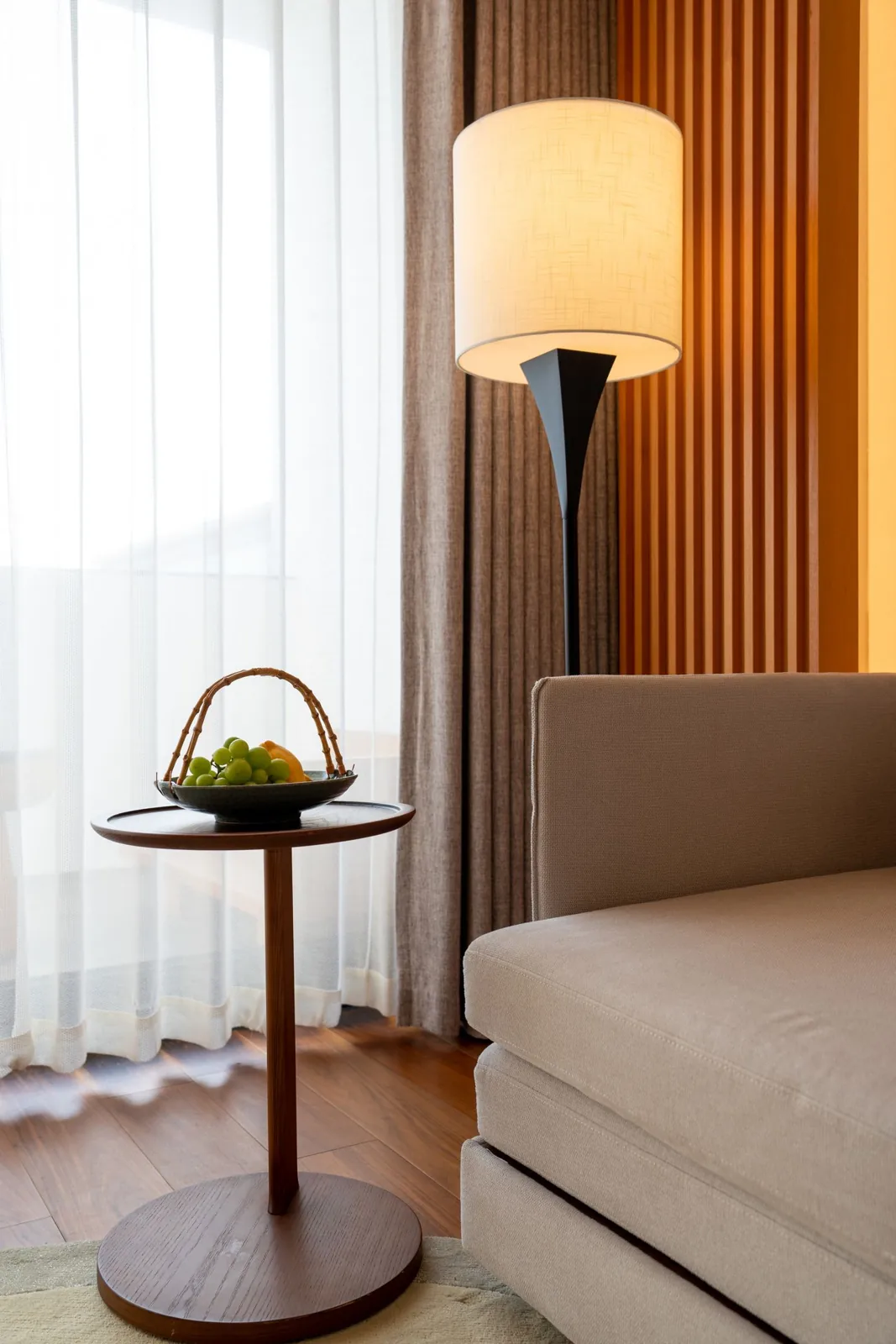
A table that feels undersized in a living room may be just right beside a bed. Check the top against the mattress height and reach for an imaginary glass of water while lying down. There should be enough usable surface for the things you actually need, without the lamp consuming all of it. A lower shelf can hold a book if it is easy to reach.
Consider cables and cleaning around the legs. A bedside position should not trap a charging lead where it can be damaged or put a lamp beyond comfortable reach. If the table has no drawer, a small contained tray can hold loose items, but avoid building a tall stack of boxes that defeats the advantage of a simple, open piece.
Give it a role near the entrance
A compact table can become a landing place for keys or a bag, provided it leaves a clear walking route and allows doors to open. Test the position with coats on and shopping in hand. Hallways often need less furniture than expected; the table earns its place only if it removes an awkwardness rather than creating a new obstacle.
A shallow dish and one useful light may be enough here. If the tabletop is vulnerable to water, do not make it the habitual home for wet umbrellas or a dripping plant pot. Let the material guide the task. The best reuse makes an existing object easier to enjoy without demanding a constant effort to protect it from predictable damage.
Support a quiet activity
Beside a reading chair, the table can hold a current book and a drink. Near a craft seat, it might support a small project box. Check its reach from the seated position and leave room for knees and feet. A useful surface can turn an underused chair into somewhere people naturally choose to spend time.
Keep the new role specific
Keep the contents specific to that activity. If the table becomes a general storage point for every small object in the room, the new role will quickly disappear. A single basket on a suitable lower shelf may be more helpful than several little containers competing for the top.
Change less than you expect
Try the new position for a week before repainting or replacing hardware. The table's existing finish may feel entirely different beside new surroundings. Use suitable protective pads beneath objects and follow care guidance for the material. Sometimes the most effective update is simply releasing a piece from the place where it no longer works and allowing it to solve a different, ordinary problem.
Match the table to a task it can comfortably perform, without forcing it into unsuitable service.
A Swishover guide · Practical ideas to adapt to your own home.
Spotted something we should improve?