Start with the plants rather than the pots
An untidy plant corner is often a collection of small decisions made at different times. One plant was moved closer to the window, another arrived as a gift, and a third has outgrown its original place. Before rearranging the pots, check which plants are comfortable in their current conditions. Healthy growth and the care guidance for each species are more useful than a matching set of containers.
Identify any plant you are unsure about before changing its position or care. Different plants tolerate very different light levels, watering routines and temperatures. A pleasing group should not put a sun-loving plant in a dim corner simply because its leaves look good beside a shade-tolerant neighbour. Where children or pets may reach plants, check species suitability through a reliable source too.
Remove dead leaves and clean dusty pots as appropriate. Deal with plant health separately from the styling exercise, isolating anything that may have a pest problem rather than adding it to a close group. A calmer arrangement begins with plants you can inspect and care for without moving half the room.
Reduce the number of competing positions
Try bringing compatible plants into two or three clear areas instead of placing one on every available surface. A larger plant beside a window may provide enough presence on its own. Smaller plants can share a broad shelf if there is adequate light and access. Leave some tabletops free so the greenery feels like a deliberate part of the room.
Vary height through the plants themselves where possible. A trailing plant, an upright leafy shape and a lower compact plant create different outlines without a complicated tower of stands. If using a stand, make sure it is stable and intended for the pot's weight. Keep leaves away from heaters, frequently opened doors and places where people brush against them.
Make watering straightforward
Decorative outer pots can conceal drainage pots, but they should not conceal problems. Check that water can be managed according to the plant's needs and that furniture stays protected. Lift pots to inspect beneath them periodically. A damp ring can develop unnoticed when a heavy plant remains in the same place for months.
Allow enough space to lift or reach each pot safely. If watering the back plant means stretching over fragile stems at the front, the arrangement is too tight. Grouping plants with similar needs can simplify the routine, but it does not mean every pot should receive the same amount of water on the same day. Check individual conditions rather than watering the display as one object.
Let the containers be quieter
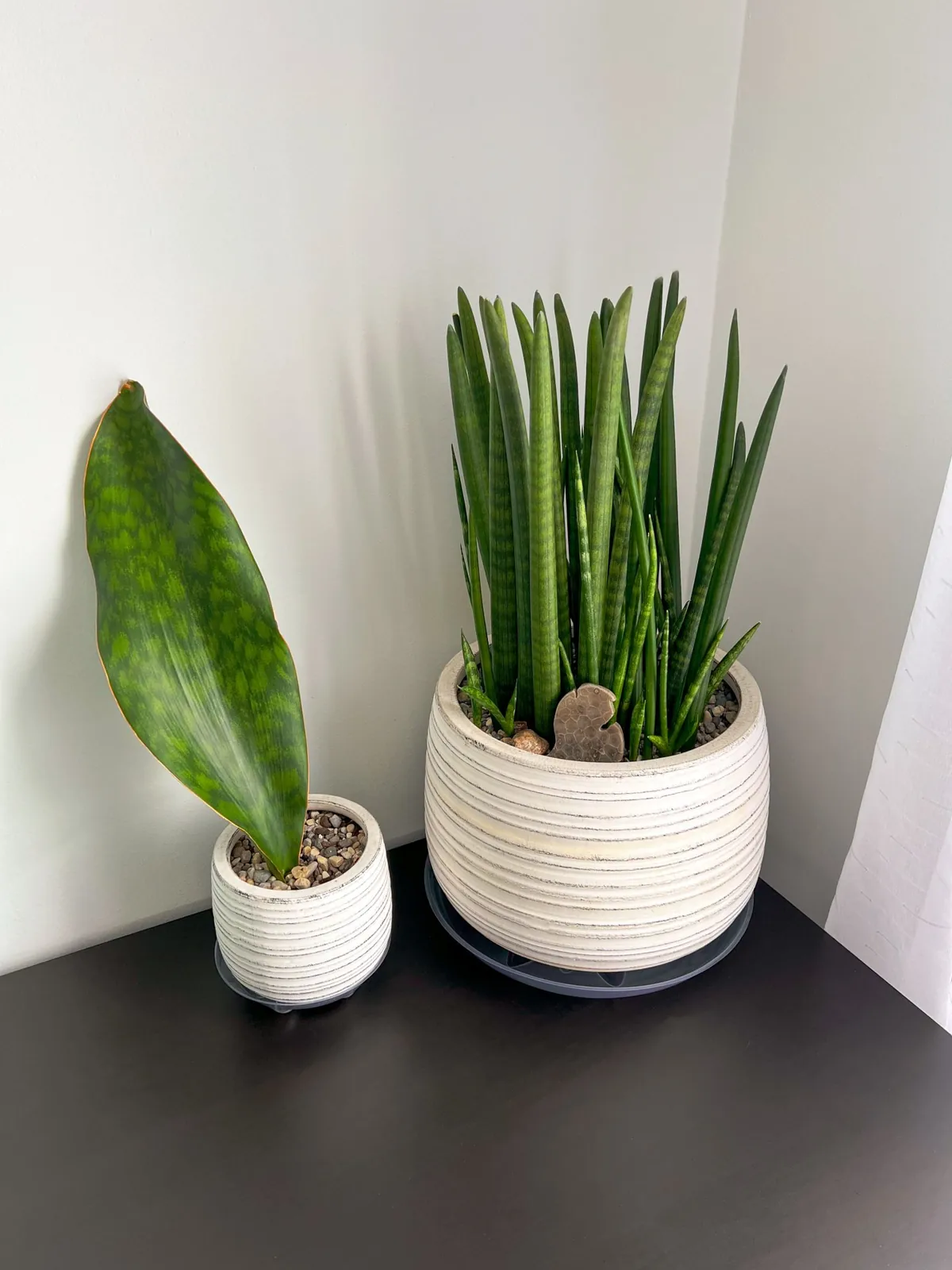
Pots need not be identical. Similar tones or a limited mix of finishes can connect different shapes while allowing the leaves to remain the main feature. Reuse suitable containers you already have before buying new ones. Check dimensions, stability and drainage arrangements carefully; an attractive pot that is difficult to move or inspect may make daily care harder.
View the arrangement from your usual seat once everything is in place. If stems overlap into one dense mass, create a little more separation. Leave room for growth and review the positions as the season changes. The most relaxed plant display is one that remains healthy, accessible and enjoyable after the initial arranging is finished.
Group plants by compatible care needs before thinking about the shape of the display.
A Swishover guide · Practical ideas to adapt to your own home.
Spotted something we should improve?