Map the complete route
Laundry is not finished when the machine stops. Clothes still need drying, folding or hanging, and returning to storage. Walk through that whole sequence in your home. Notice where items wait and where piles develop. The problem may be a distant basket, too little drying space or no clear moment for putting things away, rather than a lack of effort.
Keep the routine suited to the people using it. Carrying a heavy basket up stairs may be awkward, while several small loads may create unnecessary repetition for another household. Choose manageable amounts and suitable containers. A routine that works physically is more likely to remain consistent than one designed around a perfectly organised photograph.
Collect clothes where they are removed
A basket near the bedroom or bathroom can prevent worn clothes gathering on a chair. Check ventilation, access and the floor space it occupies. Damp items may need appropriate airing rather than being left in a closed heap. Follow garment care guidance and keep wet towels from becoming a forgotten layer beneath dry clothing.
If sorting is useful, make the categories understandable and limited to what your washing routine actually needs. Too many tiny compartments can be more confusing than helpful. Check pockets and care labels before washing; a storage system does not replace those steps. Keep laundry products safely stored in their original appropriate packaging and out of reach where required.
Match the load to the drying space
Plan washing around the available method of drying, not only the machine's capacity. Follow appliance and garment instructions, including suitable loads and programmes. A large clean load with nowhere appropriate to dry can create a new bottleneck. Consider the weather and household schedule before starting something that needs particular handling.
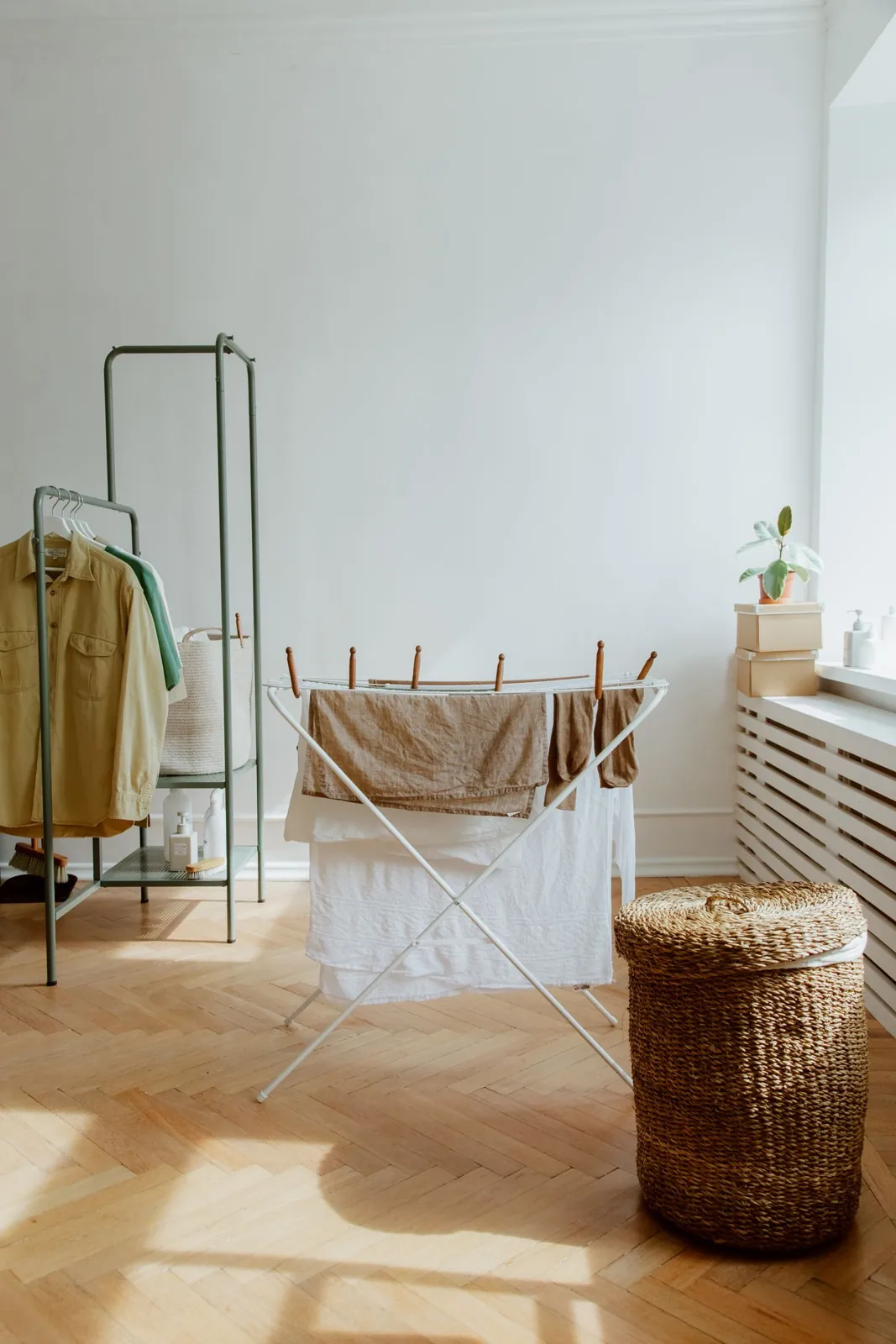
Indoor drying needs a suitable location and attention to moisture and ventilation. Avoid blocking routes, heaters or appliance ventilation, and follow the drying equipment's instructions. If condensation or damp is a recurring problem, investigate the cause rather than simply adding more laundry to the same crowded corner. The room must remain usable while clothes are drying.
Give clean laundry a defined pause
Choose a clean surface or container for items awaiting folding, separate from worn clothes. Keep that pause short enough that the pile does not become another wardrobe. Folding near the place where items will be stored may reduce carrying and encourage completion. For garments best hung, have the right hangers available before unloading them.
Let the drawer decide the method
Do not assume every household needs the same folding method. The useful result is clothing that fits its storage, remains in suitable condition and can be found easily. If a drawer becomes untidy every time one item is removed, review its capacity and arrangement. A complicated fold cannot compensate for a drawer that is consistently overfilled.
Build in the return to storage
Link putting away to a realistic point in the day, or divide it clearly among household members. Keep each person's clean items identifiable if laundry is shared. A short regular return is often easier than waiting for several loads to accumulate. Review the route whenever the home or schedule changes; the best routine follows the room and the people, rather than demanding a dedicated laundry space they do not have.
A workable laundry routine connects collecting, washing, drying and putting away in the space you have.
A Swishover guide · Practical ideas to adapt to your own home.
Spotted something we should improve?