Separate dressing from storing everything
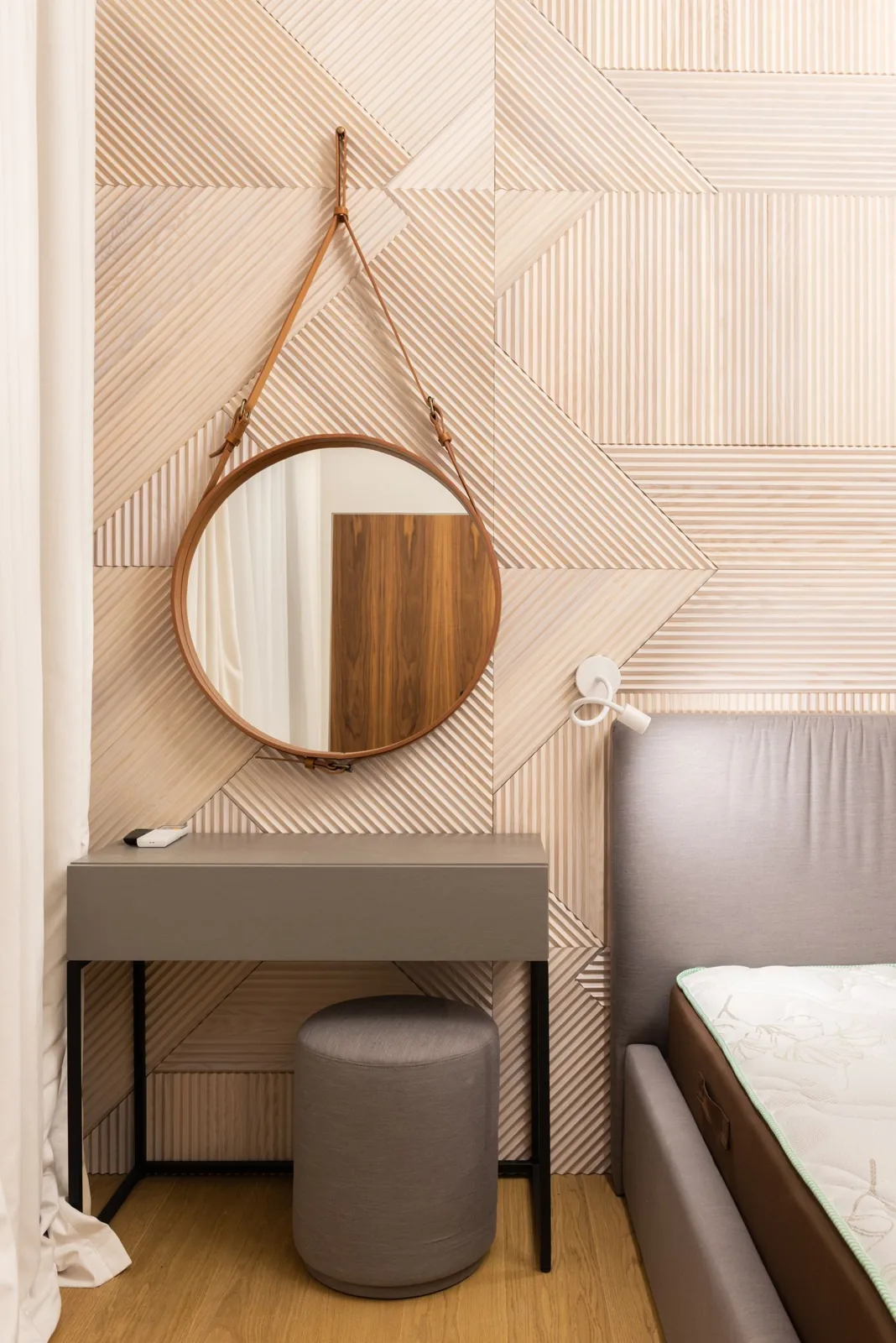
A dressing corner does not need to hold an entire wardrobe. It might simply provide a mirror, a place to sit and a small surface for daily items. Decide which part of getting ready is currently awkward. Perhaps jewellery is scattered, the only mirror has poor light or clothes are laid across the bed every morning.
Solve that particular problem first. A large vanity will not help if the main difficulty is access to clothing storage. Equally, a full-length mirror may be more valuable than additional drawers if there is nowhere comfortable to check an outfit. Let the routine determine the furniture rather than starting with a decorative idea of a dressing area.
Find light that tells the truth
Look for a position with useful, reasonably even light. Strong light from directly behind can make a mirror difficult to use, while a single overhead source may create shadows. Try a temporary mirror position at the time you normally get ready before fixing anything permanently.
If additional lighting is needed, choose an appropriate product and plan the cable safely. Keep it away from walking routes and any heat-producing equipment. Electrical alterations need qualified help. The aim is to see comfortably, not to create a bright theatrical arrangement that overwhelms a bedroom used for rest later in the day.
Fit the surface to its contents
Lay out the items you use daily and see how much room they require. A shallow console or part of an existing chest may be enough. Keep drawers or containers for the less frequently used things, and retain product labels and care information where needed.
If you sit at the surface, check knee room and the relationship between the seat and mirror. A chest of drawers is not automatically a comfortable dressing table because a stool fits in front of it. The seat should be stable and easy to move, with somewhere to go when the corner is not in use.
Place mirrors and equipment responsibly
A full-length mirror should be secure according to its installation requirements, not casually leaned where it could tip or slide. Check what it reflects and whether it creates glare. Leave enough standing space that you can use it without moving a chair or stepping into the main route.
Give heated styling tools an appropriate heat-resistant place during use and follow their instructions for cooling and storage. Do not pack them into a drawer while hot or let cables trail around the dressing seat. Practical details such as these are part of making the corner easy to use, not an afterthought to its appearance.
Keep the bedroom from becoming a preparation room
Choose a contained arrangement for small items. One tray for current favourites can be more manageable than rows of products covering the surface. Put worn clothes somewhere deliberate, whether that is a hook, a section of wardrobe or a laundry destination suited to the item.
At the end of the morning routine, the corner should take only a short reset. If clearing it requires sorting a large collection, reduce what remains there. A dressing place works best when it supports a few repeated actions well and then settles back into the room, leaving the rest of the space comfortable for its other uses.
Choose the routine you want to support and keep its supplies within comfortable reach.
A Swishover guide · Practical ideas to adapt to your own home.
Spotted something we should improve?