Pick a place within ordinary family life
A play corner works best where it can be used comfortably and supervised as appropriate for the child's age. An unused gap behind a sofa may look convenient on a plan but feel disconnected or difficult to watch. Consider light, nearby routes and the way adults use the room at the same time.
Keep access to doors, heating and essential controls clear. Look for hazards at the child's level, including cords, unstable furniture and objects that can be pulled down. Follow age guidance for toys and secure storage furniture according to its instructions. A play corner is still part of the room's wider safety arrangement, not a separate decorative scene.
Choose activities before containers
Lay out the toys or materials used most often. Building blocks, drawing supplies and pretend-play objects need different homes. Buying a matching set of containers first can leave large toys homeless while tiny pieces disappear into deep bins. Storage should make the activity easier to start and finish.
Keep a manageable selection available rather than displaying the entire collection. Other toys can be stored appropriately and rotated when interests change. The purpose is not to impose a perfectly minimal collection. It is to make the current choices visible and reduce the amount that has to be sorted every time the room is cleared.
Make the floor or table useful
Some play needs an open floor, while drawing or modelling benefits from a suitable surface. Choose according to the actual activities and the child's size. A small table that is quickly outgrown may be less useful than an existing surface with an appropriate seating arrangement. Check stability and follow product age recommendations.
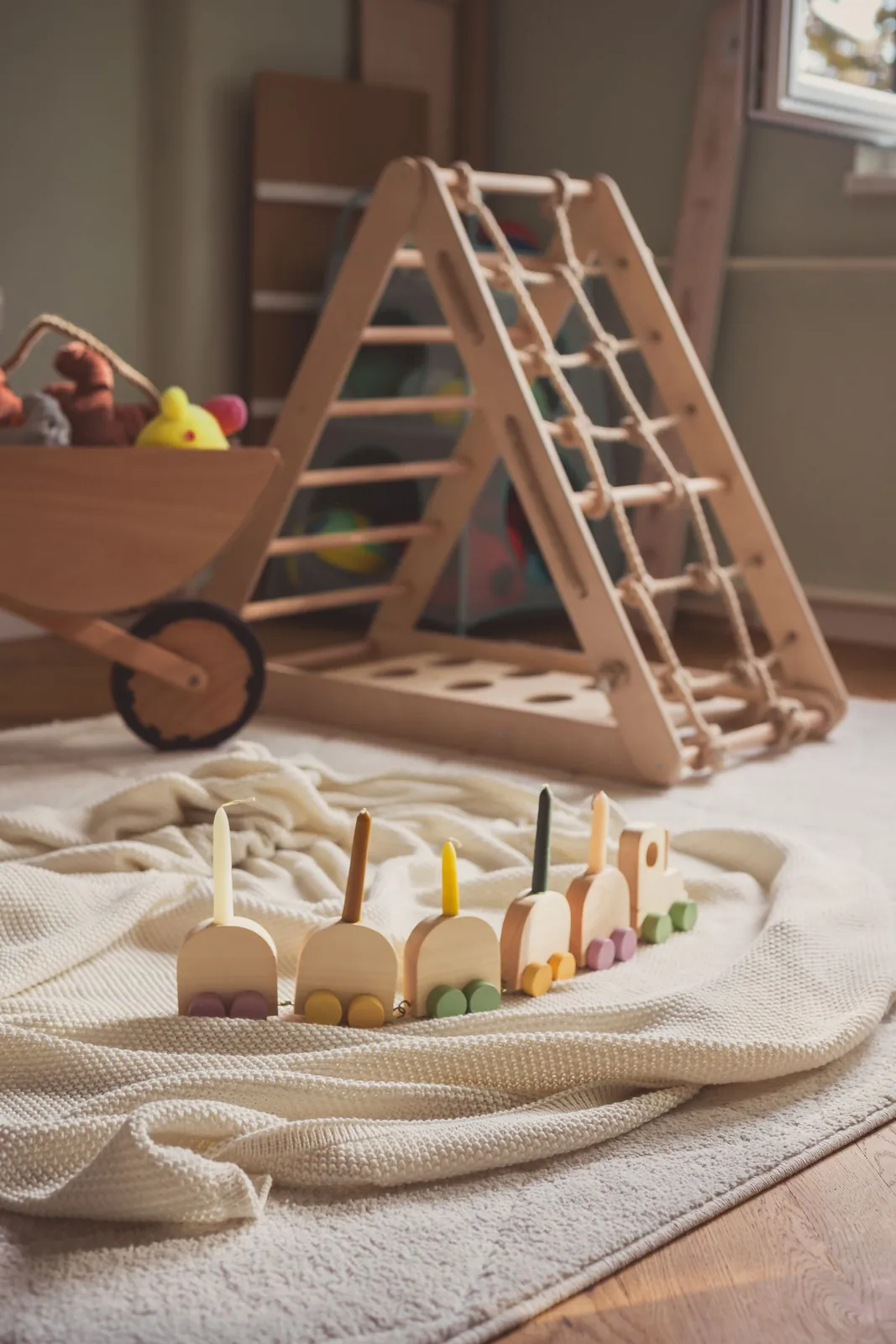
If a mat or rug defines the area, it should lie securely and suit the flooring. Avoid layers that slide when children move between sitting and standing. Keep enough clear space around the play surface that another person can pass without stepping through a construction or knocking over materials.
Let tidying match the child's abilities
Simple categories are usually easier to maintain than a complicated sorting system. Pictures or clear labels can help identify a container, while lightweight boxes may be easier to handle than large baskets filled to the top. Avoid expecting a child to distinguish several nearly identical organisers when tired.
Try the clearing routine together. If returning toys involves removing a lid, shifting another box and reaching a high shelf, the system needs simplifying. Keep small or potentially hazardous materials under appropriate adult control rather than making everything accessible for the sake of a consistent display.
Allow a little continuity
An unfinished model or drawing may deserve to stay out for another session. Set aside a limited place for that purpose, such as one shelf or a portable board suitable for the activity. This distinguishes something still in use from toys simply left across the floor.
Review the corner as interests and abilities change. A layout made for floor play may need a better surface for later projects. Move the furniture and edit the supplies rather than continually adding storage around the original arrangement. A flexible play corner remains useful because it can change, while the shared room still has space for the rest of family life.
Keep a small selection accessible and give unfinished play a realistic limit.
A Swishover guide · Practical ideas to adapt to your own home.
Spotted something we should improve?