Separate today's bags from the collection
The front door needs space for bags in current use, not every tote and rucksack the household owns. Gather the bags that arrive there over a typical week and note which are carried daily, occasionally or only for particular activities. Store spare luggage and unused bags elsewhere. A daily work bag may deserve a stable shelf, while a light shopping tote can fold into a small container. Treat these different shapes differently rather than trying to hang everything from the same short rail. The aim is to make arrival and departure easier while preserving a clear route through the entrance with the door fully open.
Match support to the bag
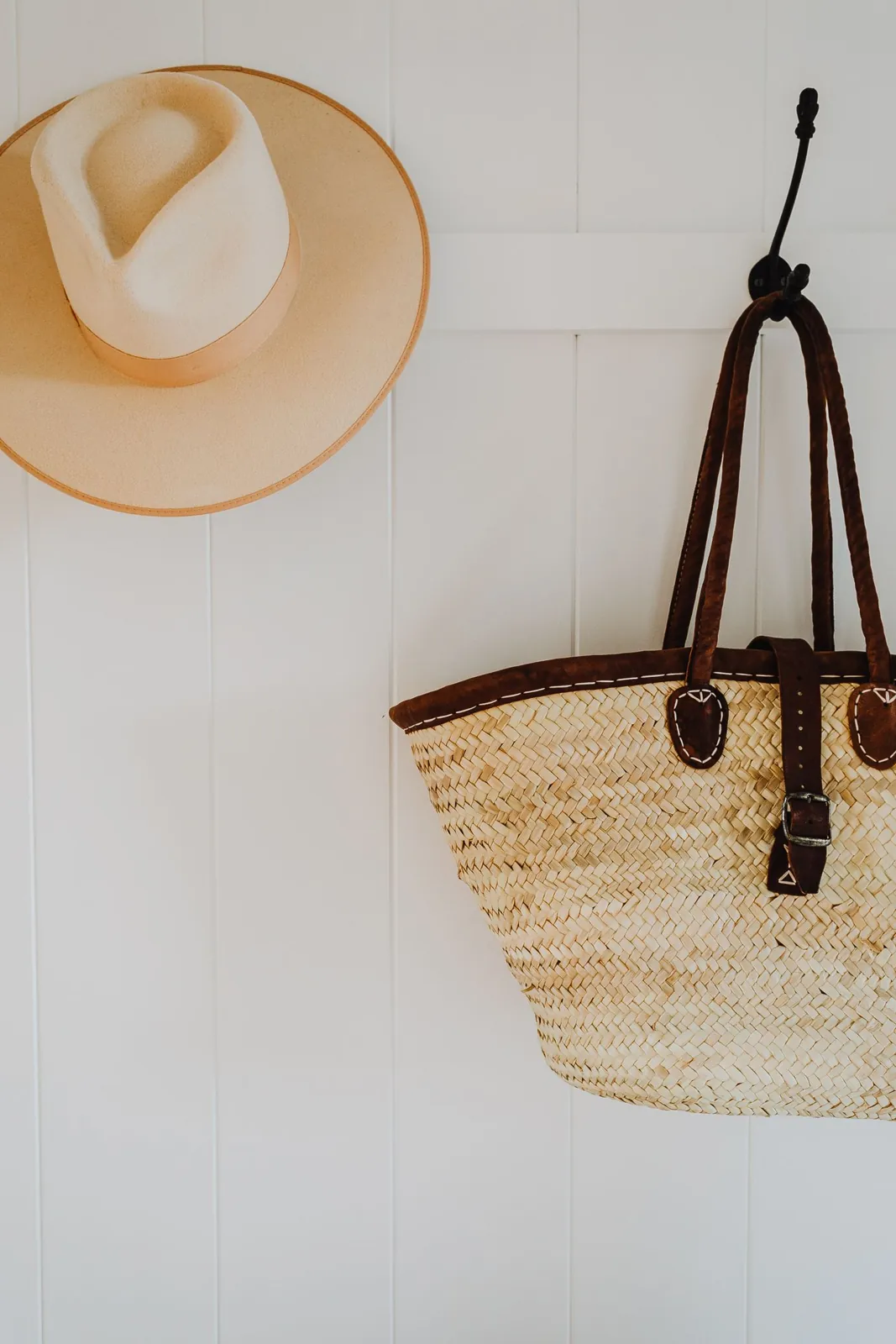
Hooks are useful for sturdy straps when the bag and hook are suitable for the load. A heavy, full work bag may be better on a shelf or in a cubby, where its base is supported. Check the fixing and weight limits of wall fittings, and use installation appropriate to the wall. Do not assume an adhesive hook can hold a loaded school bag because it holds an empty tote. Leave enough space between positions so straps do not tangle. If a bag has a shape that you want to preserve, follow its care guidance rather than hanging it in a way that pulls on handles for long periods.
Place storage in the real arrival path
Observe where people naturally stop after coming inside. A bag home just beyond that point may work better than one hidden behind a door or coat pile. Check the arrangement while carrying shopping, opening the door and helping a child with shoes. Storage should not reduce the safe walking route or make a bag project into it. Low compartments can be useful for children if they are stable, accessible and do not encourage climbing. A bench may combine a changing seat with bag space below, but make sure a large rucksack can be removed while somebody uses the seat. Test the action with the actual bag, not an approximate empty box.
Add a place for small departures
Bags often spread across the entrance because their contents need attention. Give keys a separate tray, incoming paper a short-stay slot and items needed tomorrow a small designated place. Do not empty every pocket onto a console without a plan for returning the contents. A work bag can be checked where it is normally prepared, rather than making the hallway responsible for office organisation. For shopping totes, keep a few folded together near the bag taken to the shops. If used bags are damp or dirty, clean and dry them as appropriate before returning them to enclosed storage with fabric items.
Keep the number visible
Make each daily position obvious, with a label only where it helps people distinguish shared compartments. Leave enough room for a bag to be returned without arranging its straps perfectly. If the storage is regularly full, check whether an occasional bag has quietly become a permanent resident before buying another hook. Rotate sports or activity bags according to the current routine, and remove things no longer used. A brief check before the next morning can return loose belongings to the right bag without turning the entrance into a packing room. The arrangement succeeds when the required bag is easy to find and the floor remains available for arriving home.
Support the bags used now, keep their return points obvious and store the wider collection away from the entrance.
A Swishover guide · Practical ideas to adapt to your own home.
Spotted something we should improve?