Decide which layers belong in the room
Throws and cushions accumulate easily because each one seems small on its own. Put the room's current collection on the sofa and decide what is actually used. A warm throw for evening reading and a couple of comfortable cushions have a clear purpose. Decorative extras that are always moved to the floor may need another home or a smaller role. Keep seasonal pieces separate so the everyday storage is not carrying the whole year's collection.
Think about what happens when somebody sits down. If cushions have to leave the chair, provide a reachable destination that is not the floor or another seat. The storage should accept them casually, without folding every corner into an exact shape. Otherwise the room will look organised only when nobody is using it.
Choose storage around the largest piece
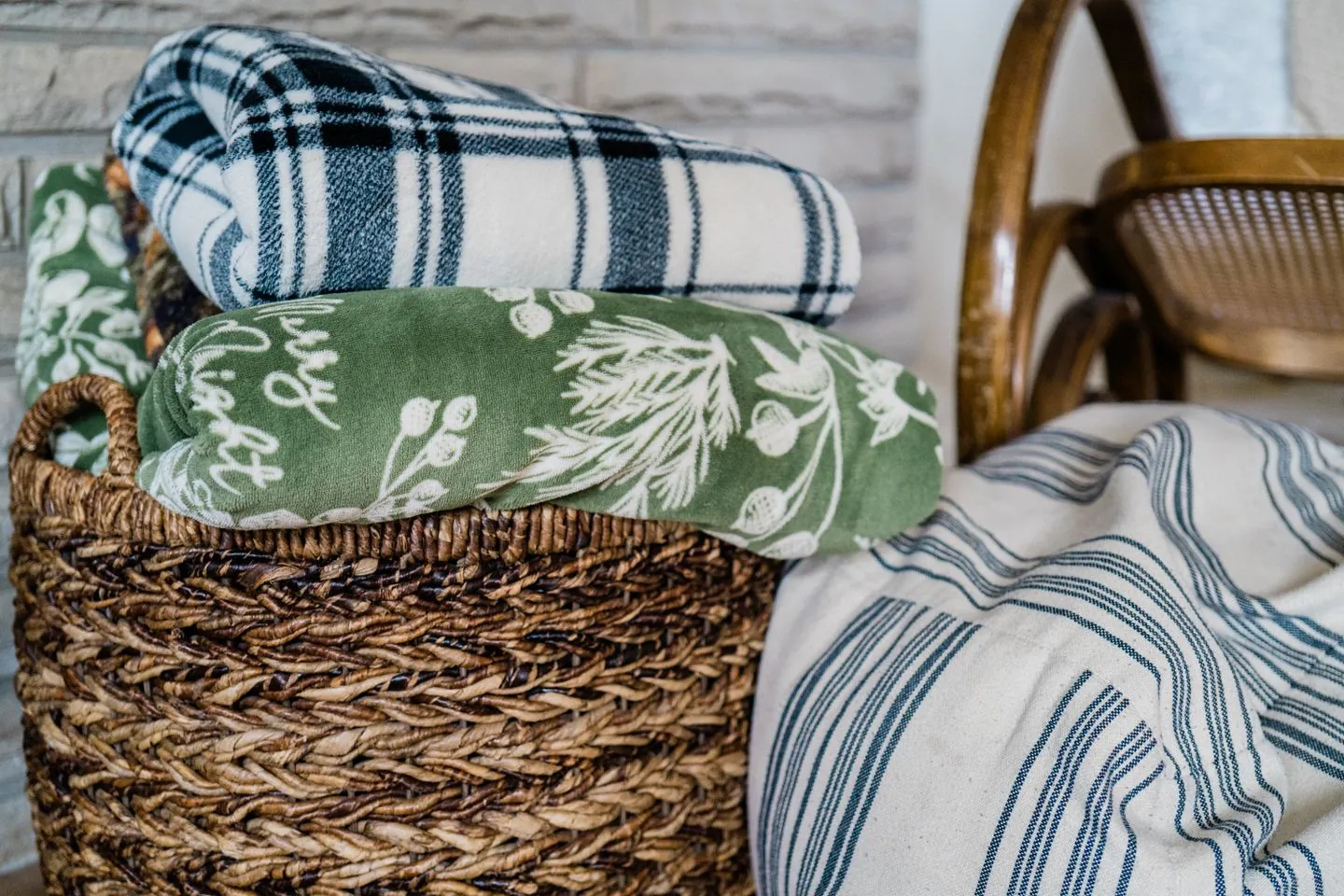
Measure the bulkiest cushion and try folding the thickest throw before selecting a basket or bench. A basket with a narrow neck can look generous but be frustrating when a square cushion catches at the opening. Smooth interiors help avoid snagging delicate fabrics. Handles are useful if the container moves during cleaning, although they must suit the intended weight. Leave room for the contents to be lifted without dragging neighbouring textiles out with them.
A lidded bench can contain occasional layers, but check that it is suitable for seating if it will be used that way and that its lid mechanism is appropriate for the household. Keep the area in front clear so opening it does not require moving the coffee table every evening. Open storage is often easier for the throw used most nights.
Keep fabrics ready to use
Follow the care labels when washing and storing soft furnishings. Everything should be clean and fully dry before it is enclosed; a throw brought in from a damp balcony needs attention before joining the indoor pile. Avoid compressing filled cushions for long periods unless their care guidance allows it. Fold a throw loosely enough that it can be taken out and spread over a lap without a complicated unwrapping process.
If a throw is used daily, draping it over the sofa arm may be its most practical home. Make sure it does not trail across a walking route or near a heater. A basket is useful when several people use the room, but it should not become a place for damp laundry, toys and unrelated objects simply because it is open.
Rotate without adding another pile
When the season changes, exchange the current layers for stored ones instead of adding the new selection on top. Label the occasional storage by room or season, and keep it in a dry location. Cushion covers can be folded separately when reusing the same inserts, saving more space than storing complete cushions for every change.
After an ordinary evening, check whether the arrangement is easy to restore. If a cushion never fits back into its basket, the basket is too small or the active collection is too large. If a blanket remains untouched for months, it may belong with occasional bedding. Keep enough flexibility for someone to leave a throw beside their seat, while giving the rest of the collection a place that does not consume useful seating.
Store the active layers within reach and rotate seasonal extras instead of building a larger permanent pile.
A Swishover guide · Practical ideas to adapt to your own home.
Spotted something we should improve?