Start with what lands here
The best drop zone is built around what you bring through the door. For one household that means keys, a work bag and a pair of shoes; for another it includes school bags, dog leads and letters. Look at the things that collect near the entrance over a normal week. Separate the items used every day from those that have simply never found another home.
Keep the daily group small. An entrance is a place to arrive, put something down and move on. Spare scarves, old post and rarely used bags can live elsewhere. Making that distinction before choosing furniture prevents a narrow hallway from becoming a row of storage pieces.
Choose one surface and one place to hang things
A shallow console, an existing shelf or the top of a small cupboard can provide a landing surface. Check its depth with the front door open and with someone walking past carrying shopping. A piece that looks slim against an empty wall may still interrupt the way you enter the home.
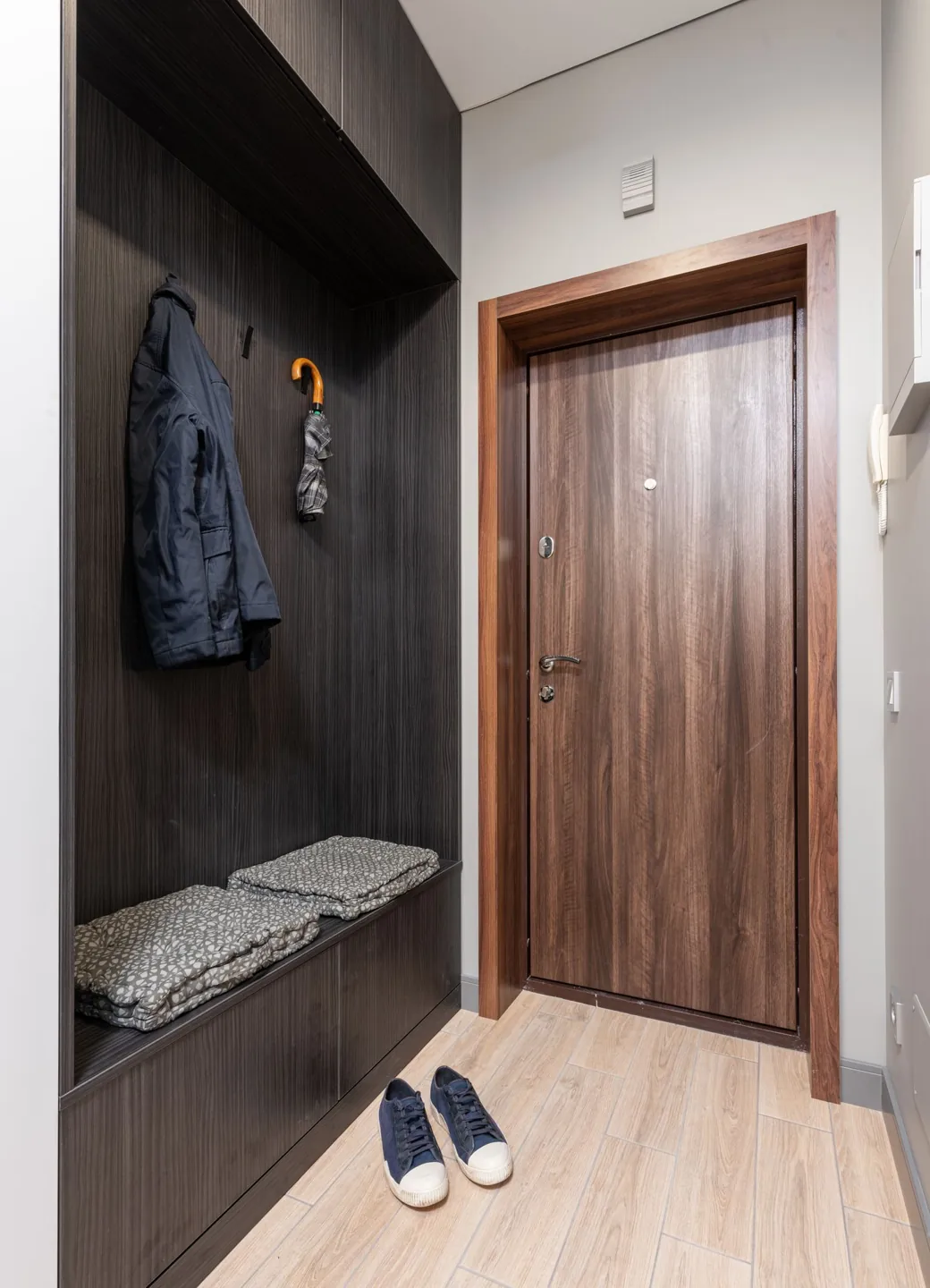
Add a small tray for keys and other pocket items, then leave the rest of the surface useful. Bags usually work better on hooks or in a separate compartment than piled on top. Any wall-mounted fitting needs an appropriate fixing for the wall and its intended load; a loose hook is not a useful storage solution. In a rented home, check permission before making changes.
Put the everyday shoes where they are easy to return
Give the shoes currently in use a low, accessible place rather than trying to store every pair by the door. A compact rack or the bottom shelf of a bench can work if it leaves the passage clear. Measure the actual shoes, including boots, before assuming a shelf will fit them.
If shoes arrive wet, choose a surface that can cope with that and allow them to dry before enclosing them. A washable tray may be more useful than another decorative basket. Keep footwear and bags away from door swings, and avoid stacking belongings on the route you need to use in a hurry.
Make the arrangement understandable to everyone
A system only works when the next person can see where things belong. Give each frequently used bag a straightforward place, with hooks at a usable height for the people who need them. Leave a little space around each item so returning it does not involve rearranging everything else.
Labels can help inside a shared cupboard, but they are not essential for an obvious tray or shelf. Watch what people do naturally. If a bag repeatedly lands on a chair, the assigned hook may be inconvenient, too high or already full. Adjust the setup before asking everyone to follow a more complicated routine.
Give paper a short stay
Use one small place for incoming letters and move anything needing action to where you handle it. The entrance should not become an archive. An occasional clear-out is easier when paper has a defined space rather than spreading across the whole console.
After a week, remove one thing that is not earning its position. You may find you need fewer containers than expected. A useful drop zone feels obvious: keys go here, the bag goes there, and the route into the home stays open.
Store the current daily essentials at the door. Give everything else a home further inside.
A Swishover guide · Practical ideas to adapt to your own home.
Spotted something we should improve?