Identify the genuinely dry area
Bathrooms contain different conditions within a small space. A corner away from splashes may still experience humidity, while a unit beside a shower may face regular water. Check the product's intended environment and placement rather than assuming anything sold in a bathroom colour is suitable. Material names alone do not tell you how joints, edges and finishes will perform.
Do not use new storage to conceal an existing damp problem. Persistent moisture, leaks or damaged surfaces need appropriate investigation. A cabinet placed tightly against a problematic wall can make inspection harder. Resolve the room's condition first, then choose furniture that can be used and maintained as intended.
List the contents and their needs
Daily toiletries, spare towels and cleaning products should not automatically share one open shelf. Consider who can reach each item and follow storage instructions, particularly for medicines and household chemicals. Some belongings may be better kept outside the bathroom entirely. The goal is appropriate storage, not moving every personal-care item into the wettest room.
Measure taller bottles and folded towels before comparing internal shelf sizes. Leave room to lift items out without scraping them past the shelf above. A narrow unit can hold useful quantities if the interior fits the contents, while a larger cabinet may waste space through awkward divisions. Adjustable shelves can help where their use and load guidance suit the product.
Test doors and drawers in the room
Mark the cabinet footprint and its opening space. Check access to the basin, toilet and shower, including normal cleaning movements. A unit that fits beside a fixture when closed may block it when a drawer opens. In a compact bathroom, the usable arrangement matters more than filling a previously empty gap.
Wall-mounted storage needs suitable fixing for the wall construction and expected load. Check for concealed services before drilling and obtain appropriate help where needed. Follow installation instructions and any tenancy requirements. A moisture-resistant cabinet is not automatically safe to hang from an unsuitable wall or improvised attachment.
Check that the cabinet can be assembled and installed in the available room. A unit built flat elsewhere may not pass through the bathroom doorway once complete, particularly in a home with a narrow landing.
Look at cleaning details
Raised feet may allow access beneath a unit, while a closed base may have different cleaning needs. Check whether water can collect around edges and how the surfaces should be wiped. Avoid choosing a design with inaccessible crevices if the room regularly needs quick cleaning. Handles and shelf fronts should also be easy to use with ordinary bathroom routines.
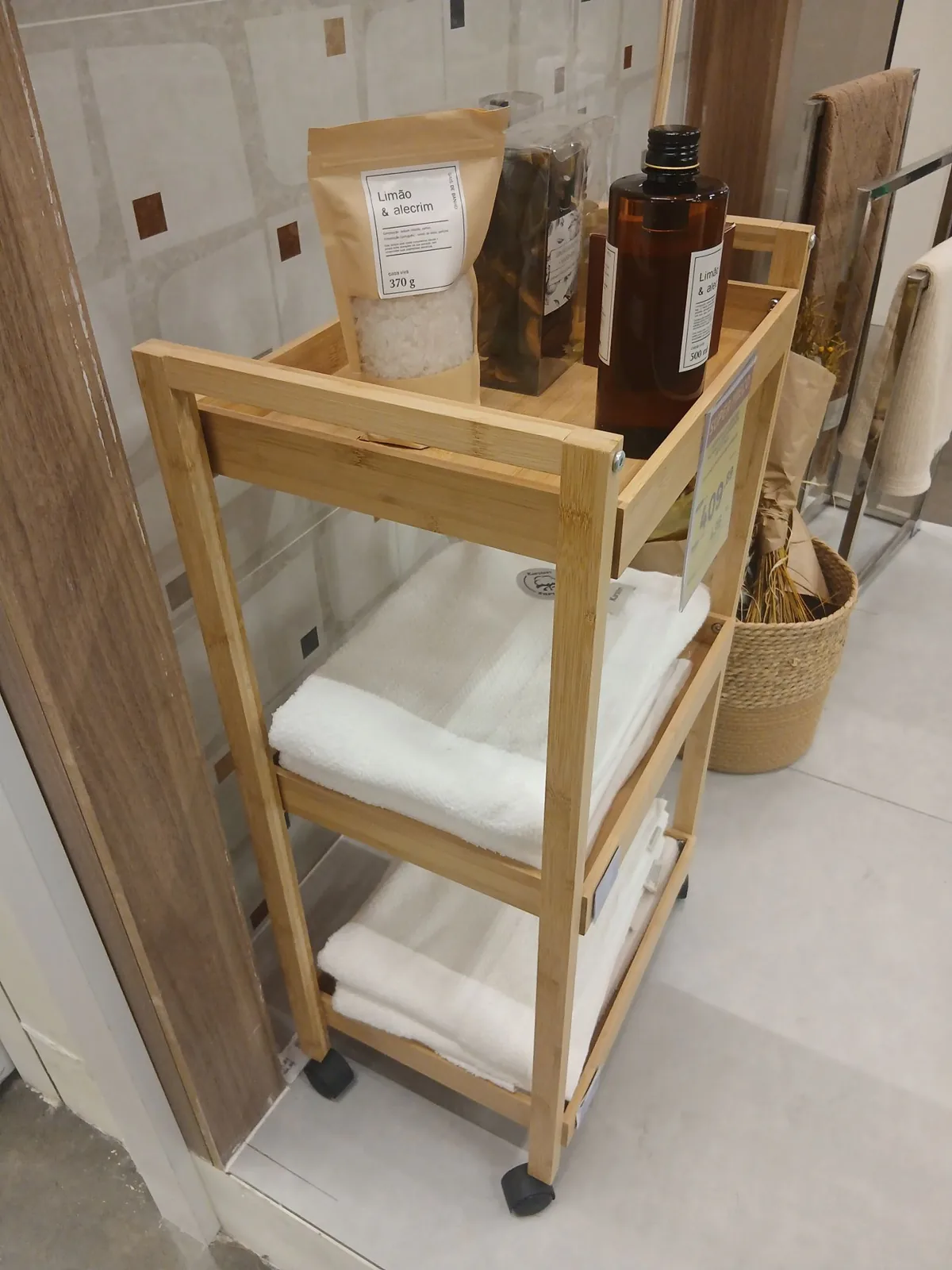
Open baskets can make daily items visible, but the material must suit the environment and contents. A fabric or natural woven container may not be appropriate where it remains damp. Removable liners and trays can help only when their care is practical. Choose the complete storage arrangement, including containers, rather than judging the cabinet on its empty appearance.
Leave some breathing room
Do not pack every shelf to capacity immediately. Spare space makes it easier to return items and notice leaks, spills or products that need replacing. Review the contents occasionally and keep labels readable. Before purchase, compare suitability, dimensions, installation and care together. Good bathroom storage reduces clutter while allowing the room and its contents to stay accessible, clean and appropriately dry.
Bathroom storage must suit the room’s conditions as well as the available gap.
A Swishover guide · Practical ideas to adapt to your own home.
Spotted something we should improve?