Decide which job comes first
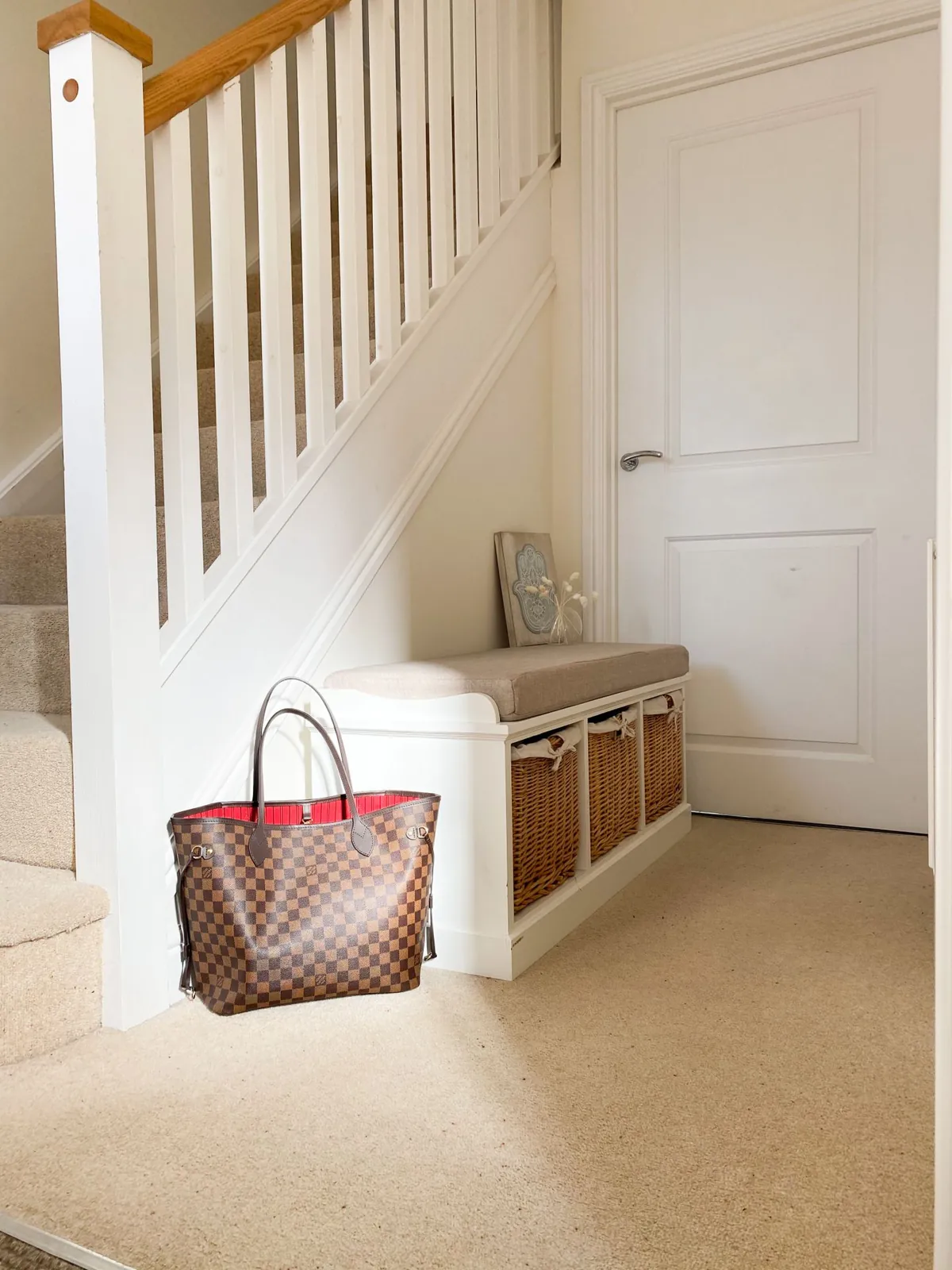
A storage bench promises seating and a place to put things, but the two functions are not always equally useful. At the entrance, sitting to put on shoes may be the main need. At the end of a bed, spare blankets may be the priority. Name the primary task before comparing designs so that a large compartment does not distract from an uncomfortable or unsuitable seat.
Check that the product is explicitly designed for sitting and follow its stated use and load guidance. A decorative trunk or storage box should not be treated as a bench without that confirmation. Inspect stability, assembly and any anchoring requirements. The piece needs to remain secure during the ordinary movement of sitting down and getting up.
Try the seating height and depth
A bench that is too low or deep can make putting on shoes more awkward rather than easier. Test a similar height if you cannot try the product in person. Consider who will use it and whether they need support from an arm or another suitable feature. A loose cushion should not be the only thing making an unsuitable bench tolerable.
Measure the footprint in the actual room, allowing for legs and projecting corners. At the foot of a bed, leave a usable route around it. In a hallway, check the door swing and passing space while someone is seated. The bench must fit the occupied room, not just the empty gap where it is intended to stand.
Examine how the storage opens
A lifting lid needs clear space above and a mechanism appropriate to the design. Follow guidance on hinges, supports and use around children, and check for pinch points or uncontrolled closing. Do not assume a heavy lid is safe simply because it feels solid. If the instructions or mechanism are unclear, choose another design or obtain reliable clarification before buying.
Drawers and front-opening compartments avoid lifting the seat, but need room in front. Test that opening space with nearby furniture and shoes in their normal positions. Open cubbies offer quick access but keep contents visible. Compare these trade-offs against the real routine rather than choosing the most concealed storage automatically.
Measure what goes inside
Check internal dimensions, not just the bench's overall size. Hinges, supports and thick walls can reduce useful capacity. A blanket needs different storage conditions from damp footwear, and unrelated items may not belong together in one closed compartment. Keep contents appropriate to the material and ventilation, and avoid trapping moisture inside.
If the bench will hold several categories, use a small number of suitable containers that can be removed easily. Do not fill it so tightly that retrieving one item requires emptying everything. Storage is valuable when it simplifies access, not merely when it allows the largest possible number of objects to disappear from view.
Think about the top on an ordinary day
A lift-top bench covered with decorative cushions or bags may rarely be opened. Choose a design that remains usable in its likely state. Check upholstery care, surface protection and cleaning beneath the base. Before ordering, review delivery access and assembly too. The most useful bench feels like a comfortable piece of furniture first, with storage that can be reached without undoing the whole arrangement around it.
A storage bench needs to support safe sitting, easy access and the items it is meant to hold.
A Swishover guide · Practical ideas to adapt to your own home.
Spotted something we should improve?