Empty it onto a clear surface
A desk drawer often mixes useful tools with the remains of old tasks. Take everything out and separate current stationery, active work materials, personal items and things that belong elsewhere. Test pens and remove dried-out ones. Check whether spare cables still match equipment you own. Keep confidential papers secure while sorting, and dispose of sensitive material appropriately rather than placing it in ordinary open recycling. The purpose is to understand what the drawer needs to do now. An old conference badge or handful of obsolete adapters should not determine the layout simply because they have occupied the same corner for several years.
Put the working tools first
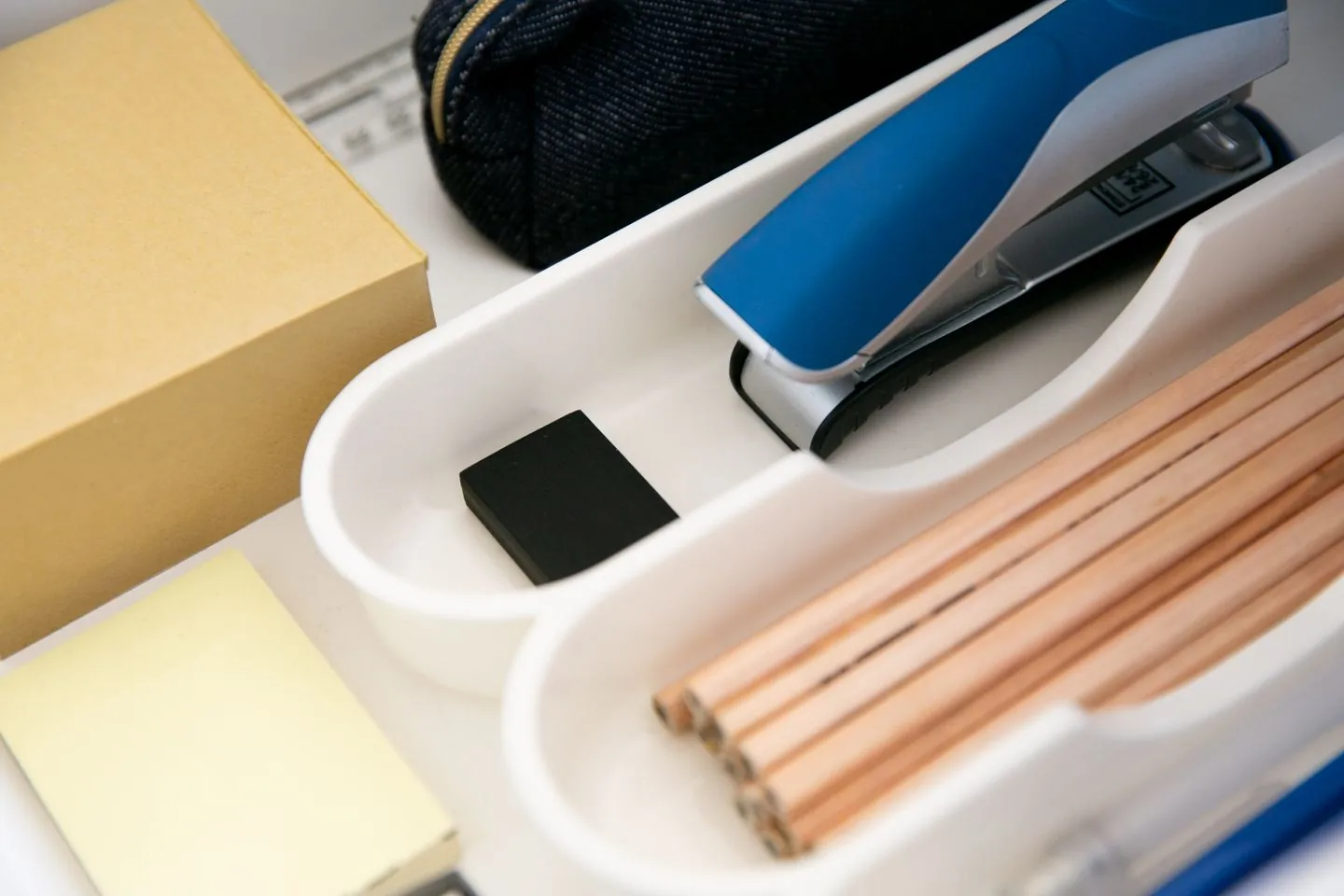
Choose the small set of items used during a normal working day: perhaps a pen, notebook, sticky notes, scissors and a charging lead. Put these near the front where they can be reached while seated without twisting or pulling the drawer to its limit. Tools used weekly can sit behind them, while bulk supplies may belong in a separate cupboard. Keep the top layer shallow enough to see each category. A drawer that requires lifting a tray every time you need a staple remover is effectively two drawers with only one convenient opening. Reserve layered storage for genuinely occasional items and keep it simple enough to remove in one movement.
Divide by shape and task
Measure the interior before adding organisers, including the height beneath the desk. Long narrow sections suit pens and rulers; a broader compartment can hold a notebook or calculator. Small removable dishes work for clips, but too many tiny containers use up space and make cleaning fiddly. Try the arrangement with spare boxes first. Leave a little room around scissors and other handled tools so they can be grasped safely. Keep sharp points protected or facing away from the reach. If the drawer slides abruptly, a suitable non-slip liner can reduce movement, provided it does not interfere with runners or hide a damaged base that needs repair.
Keep cables understandable
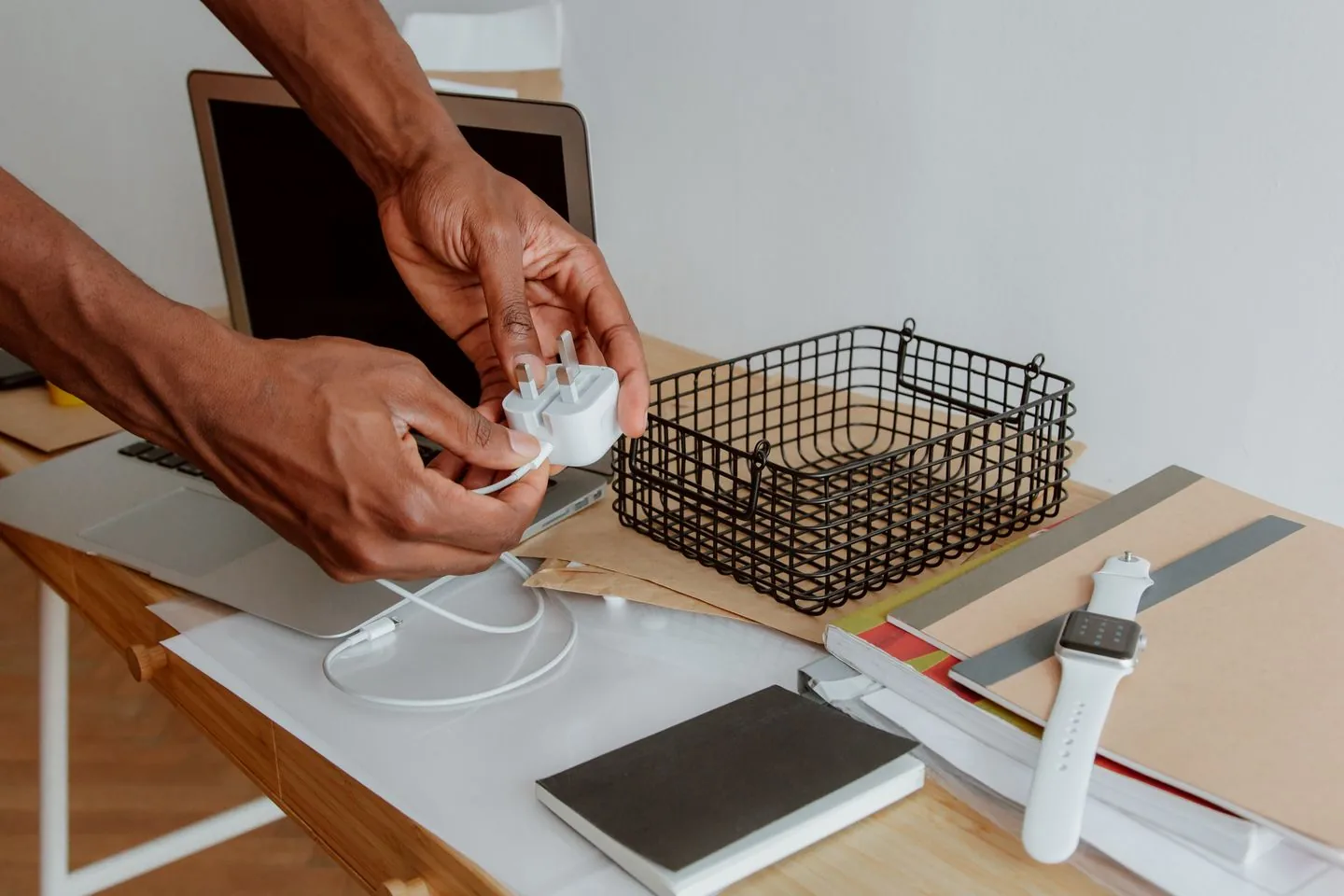
Store only the cables used at the desk in its prime drawer. Coil them loosely without tight bends, following any equipment care guidance, and use a reusable tie where helpful. Label unfamiliar ends with their device or purpose rather than assuming you will remember. Power adapters need more room than cables and may be better in a dedicated box nearby. Do not leave devices charging in a closed crowded drawer unless their manufacturer explicitly allows that arrangement. Batteries and small electronic accessories should be stored according to their instructions, with loose items protected appropriately. The aim is quick identification, not compressing every technology spare into the smallest possible compartment.
Make the drawer easy to close
At the end of a working day, return the tools to their sections and remove papers that require filing or action. An active document can stay in a separate folder, but the drawer should not become an unlabelled paper archive. Watch for items repeatedly left on the desktop: their storage may be too distant, too tight or shared with unrelated objects. Adjust the front section before adding another organiser. Leave some unused space so an ordinary return does not require exact placement. When the drawer opens smoothly and the daily tools are visible, the desktop can stay clearer without making each work session begin with a search.
Reserve the front for daily tools and keep paper, cables and small supplies in clear, shallow groups.
A Swishover guide · Practical ideas to adapt to your own home.
Spotted something we should improve?