Count devices and charging habits
Start with the devices that actually charge in the room. A couple of phones at night needs a different setup from a family collection of tablets, headphones and laptops returning at different times. Note the compatible chargers and cables rather than assuming that identical-looking connectors provide the same charging capability. Keep manufacturer guidance with the equipment where needed. Decide which devices should charge in this shared area and which already have a sensible home elsewhere. Reducing the number of locations can simplify things, but forcing every device onto one crowded surface may create new problems. The charging point should serve an ordinary day without stacking equipment on top of itself.
Choose a suitable surface
Use a stable, dry location with a clear surface and access to appropriate sockets. Keep equipment away from drinks, sinks, radiators and direct heat. Follow each device's charging and ventilation instructions, and avoid enclosing operating chargers or covering devices with fabric. A drawer full of warm adapters is not made suitable merely by hiding the cords. Leave enough space to connect and disconnect plugs without pulling on cables. If the chosen position requires leads across a doorway or walkway, choose another location or have a suitable electrical solution assessed. A charging station should remove a daily obstacle rather than create a trip hazard in the middle of a shared room.
Identify the leads
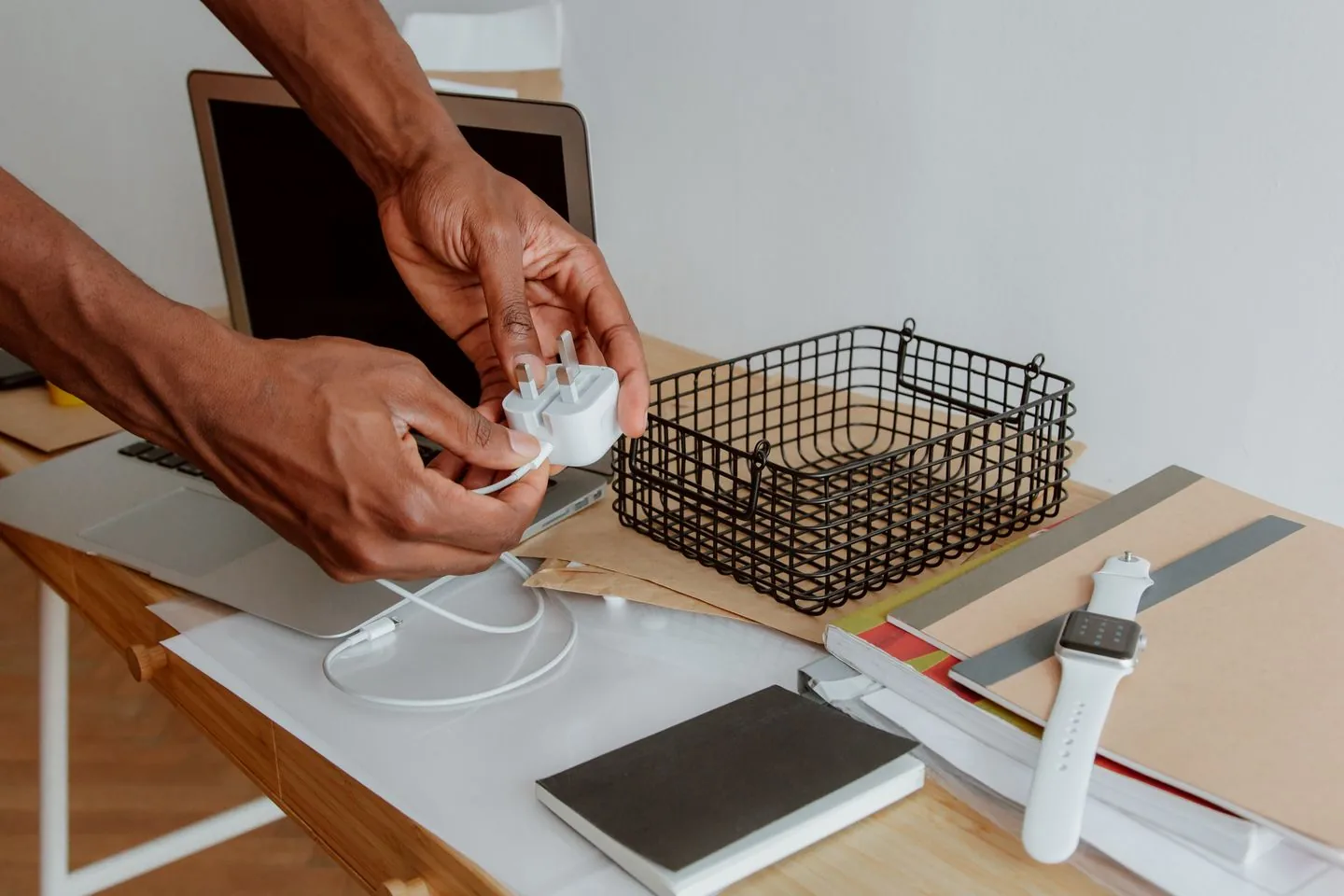
Label the device end of each cable where confusion is common, using a small tag that does not strain the connector. Keep only working, appropriate cables in the daily group and remove damaged ones from use. Coil excess length loosely with a reusable tie, leaving enough slack to pick up the device without tugging the plug. Avoid tightly bending cables at the connector or trapping them beneath furniture legs. Simple clips can keep ends from falling behind a table, provided they fit the cable and surface. Route the leads so their purpose is visible: a neat bundle is less useful if disconnecting one device requires untying all the others.
Give each device enough space
A shallow tray or stand can mark where devices rest, but it must not obstruct cooling or contradict the equipment instructions. Choose a layout that allows screens and connectors to be reached without lifting another person's device. If several people share the area, a small named position can be clearer than a rule about which charger belongs to whom. Keep headphones and other small accessories in a nearby dry compartment when they are not charging. Avoid balancing a phone on the narrow edge of a table simply to preserve a decorative arrangement. The surface should hold the whole device securely, with the cable approaching without pulling it towards the edge.
Separate storage from active charging
Spare leads and adapters can live in a labelled box, disconnected and organised by device. Keep that box distinct from the active charging surface so unused equipment does not accumulate around the sockets. Check the arrangement after several normal evenings: missing cables, crossed leads and devices left on the floor show where the setup needs adjusting. Follow the ratings and instructions for any extension equipment and do not chain extensions together. If the household has outgrown the available sockets, seek an appropriate electrical solution instead of adding more layers of adapters. A small, readable charging area is easier for everyone to use and inspect.
Keep charging equipment visible, ventilated and identified, with spare cables stored separately from devices in use.
A Swishover guide · Practical ideas to adapt to your own home.
Spotted something we should improve?